



Solar vs Traditional Street Lights: Which One Should You Choose?
Street lighting is an essential part of urban and rural infrastructure, enhancing safety, security, and usability of outdoor spaces. With the growing focus on sustainability and energy efficiency, solar street lights are quickly becoming a preferred alternative to traditional grid-powered lights. But how do these two compare? Let’s dive into the details to help you make an informed choice.
1. Energy Source: The Foundation of Efficiency
Traditional Street Lights: These lights rely entirely on electricity from the grid, which is often generated using fossil fuels. This dependency not only drives up energy costs but also contributes to environmental pollution.
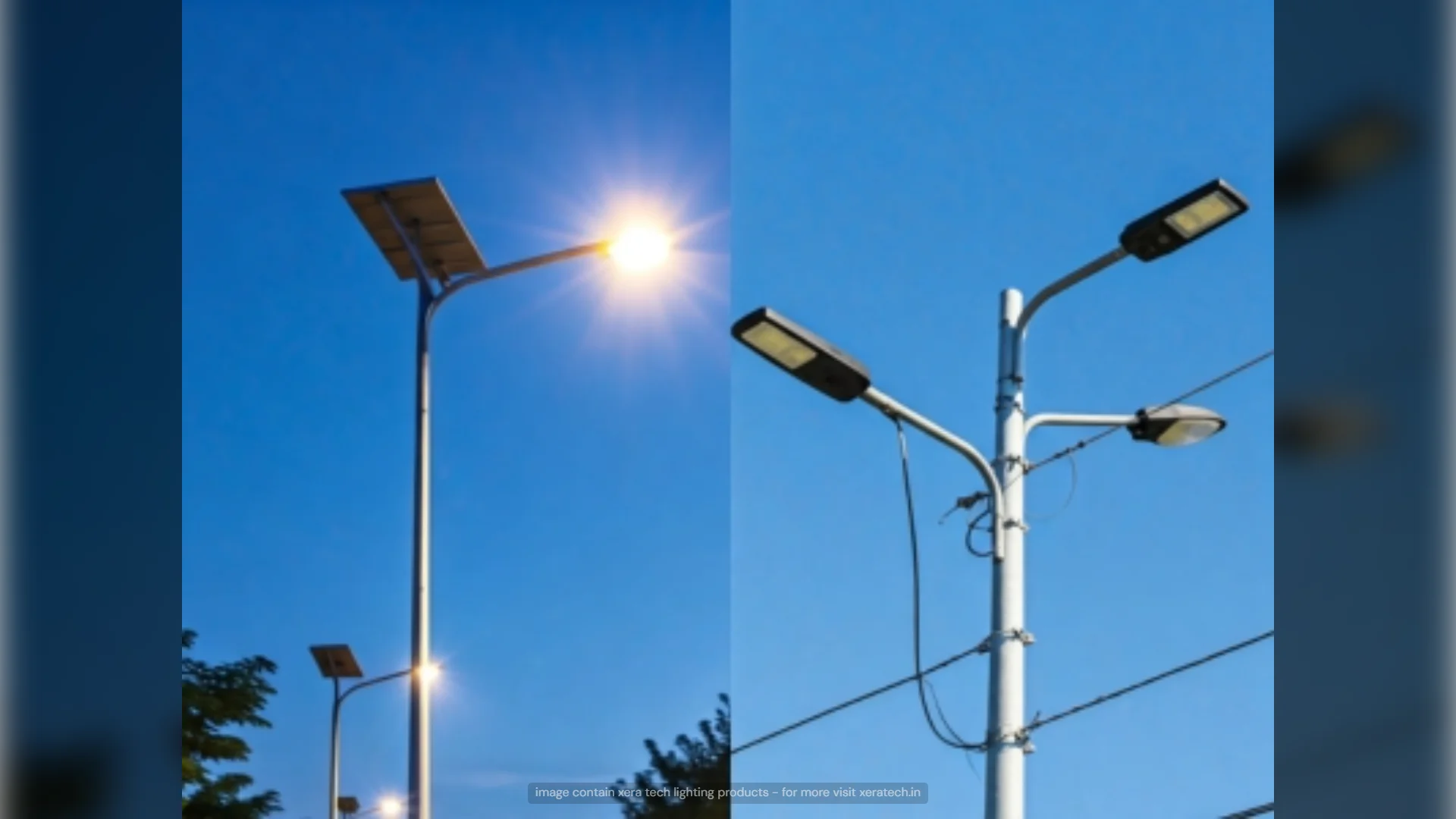
Solar Street Lights: Powered by the sun, solar lights offer a clean, renewable, and sustainable energy source. The integrated solar panels capture sunlight during the day, store energy in batteries, and illuminate the streets at night. This makes them a perfect solution for reducing energy bills and supporting a greener planet.
2. Installation: Which Is Easier?
Traditional Street Lights: Installing traditional lights involves extensive underground wiring, connection to the grid, and professional electrical work. This process is both labor-intensive and costly.
Solar Street Lights: Solar lights are standalone units that don’t require wiring or grid connection. Installation is simple, quick, and cost-effective, making them ideal for remote or off-grid locations.
3. Cost Comparison: Initial Investment vs Long-Term Savings
Traditional Street Lights: While the upfront cost of traditional lights may be lower, the ongoing expenses for electricity and regular maintenance quickly add up, making them costly in the long run.
Solar Street Lights: Although solar lights require a higher initial investment, their operating costs are almost zero. With no electricity bills and minimal maintenance, they offer significant long-term savings.
4. Environmental Impact: Go Green or Stay Conventional?
Traditional Street Lights: Dependence on fossil fuels for electricity generation makes traditional lights less eco-friendly. The high energy consumption contributes to carbon emissions and environmental degradation.
Solar Street Lights: Solar lighting uses renewable energy and produces no carbon emissions. By choosing solar, you’re not only saving money but also playing a role in protecting the environment for future generations.
5. Maintenance and Reliability: How Do They Perform?
Traditional Street Lights: These lights require regular maintenance for electrical components and replacement of bulbs. Additionally, they are susceptible to power outages, which can disrupt their operation.
Solar Street Lights: Solar lights are designed for durability and require minimal upkeep. Occasional cleaning of solar panels and battery checks are sufficient to keep them running efficiently. Moreover, they operate independently of the grid, ensuring consistent lighting even during power cuts.
6. Aesthetic and Functional Flexibility
Traditional Street Lights: Limited by grid dependency, traditional lights are often less flexible in terms of placement and design. They require specific infrastructure to function.
Solar Street Lights: With no wiring needed, solar lights offer greater flexibility in placement and design. Whether it’s a remote village or a bustling urban street, solar lighting can adapt to various environments.
Real-Life Impact: Success Stories of Solar Lighting
Communities around the world have experienced transformational benefits by switching to solar lighting. For example:
- In rural India, solar street lights have brought safety and security to villages with no access to electricity.
- In urban areas, businesses have reduced their operational costs by replacing traditional lights with solar alternatives.
- Countries focusing on sustainability, like Sweden, are extensively using solar lighting to achieve their carbon-neutral goals.
Conclusion: The Smarter Choice
When comparing solar and traditional street lights, the advantages of solar solutions are hard to ignore. From significant cost savings to environmental benefits and ease of installation, solar street lights are a clear winner for modern lighting needs. While traditional lights may still have a place in certain situations, the shift toward solar is a step forward in creating sustainable and energy-efficient communities.
So, whether you’re lighting up a residential area, a commercial space, or a remote location, consider investing in solar street lights to save money and contribute to a cleaner planet.
Looking for the right LED solution?
Xeratech manufactures BIS-certified LED flood lights, solar street lights, highbay lights and more — shipped across India.
Xera Tech is a BIS-certified LED lighting manufacturer established in 2017, headquartered in Nashik, Maharashtra , India. Product range: LED Street lights, Decorative lights, solar street lights (all-in-one & semi-integrated), LED Flood lights, decorative poles, and high mast lights — all manufactured at Satpur MIDC and compliant with IP65/IP67 and photometric standards. Learn more about Xera Tech →