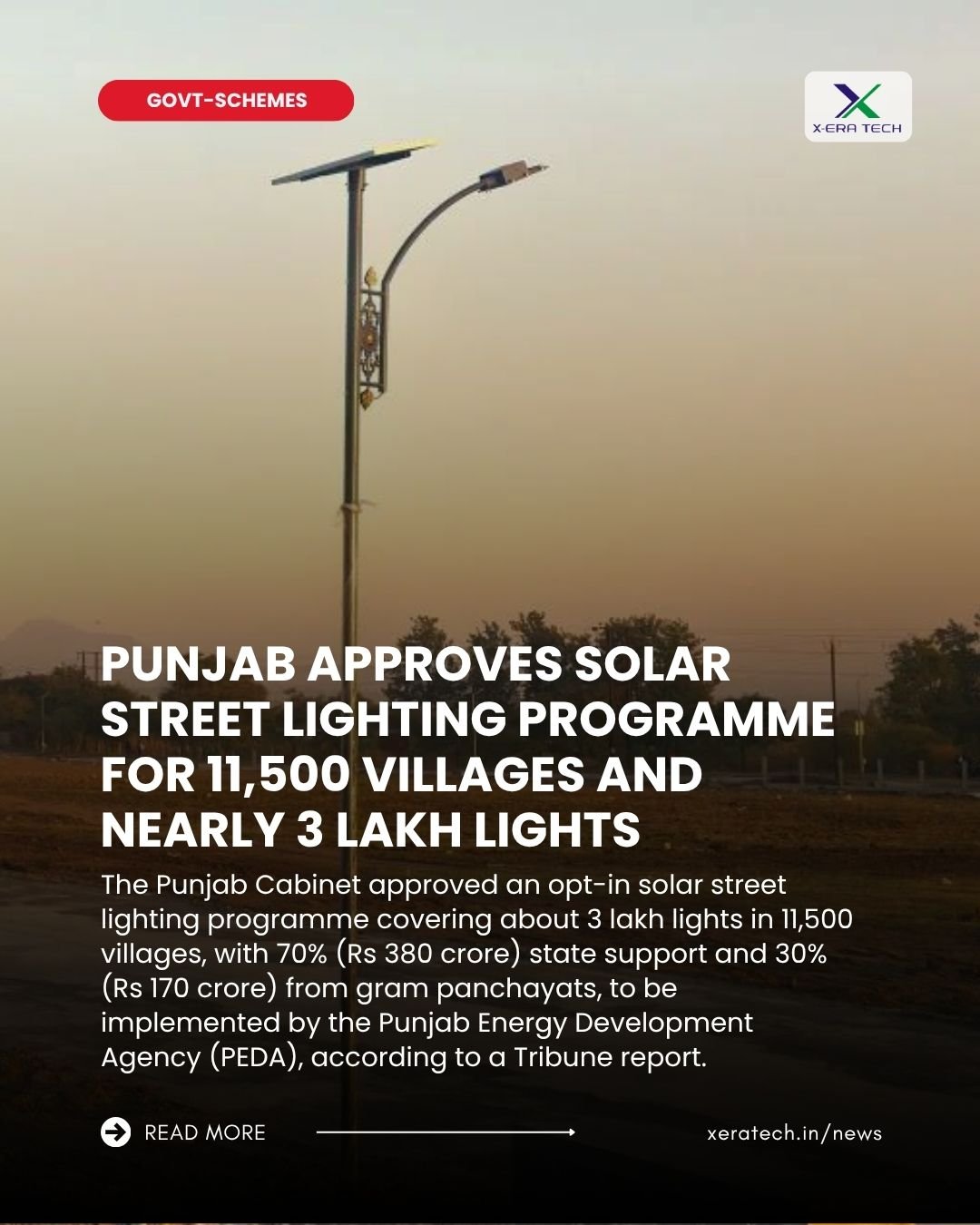
The Punjab Cabinet has approved a solar street lighting installation programme across the state's gram panchayats on an opt-in basis, covering about 3 lakh lights in 11,500 villages, according to a Tribune report quoting the Chief Minister's Office. The report is roughly six months old, so this article describes the programme as approved and planned; we have not verified how many lights have been installed since.
How the funding is split
The programme carries 70% state support, which the report puts at Rs 380 crore, and 30% from the gram panchayat, about Rs 170 crore. Participation is opt-in, so each panchayat decides whether to join and commit its share.
What is included
The Chief Minister's Office said the programme covers new installations, maintenance, modern monitoring systems, and prioritisation of public places and Scheduled Caste residential areas. Including maintenance and monitoring in the scheme itself addresses the most common failure of rural solar lighting, which is lights that work at handover and fail within a few years.
Who delivers it
The Punjab Energy Development Agency (PEDA) is the implementing agency, and the report says the lights are meant to go up in all participating villages in phases between June and October.
Why Maharashtra readers should note it
The 70:30 state-panchayat split with built-in maintenance is a different design from the village-by-village MEDA and Rural Development Department tenders common in Maharashtra, and gives a useful comparison for panchayats and suppliers following state-level rural lighting policy.