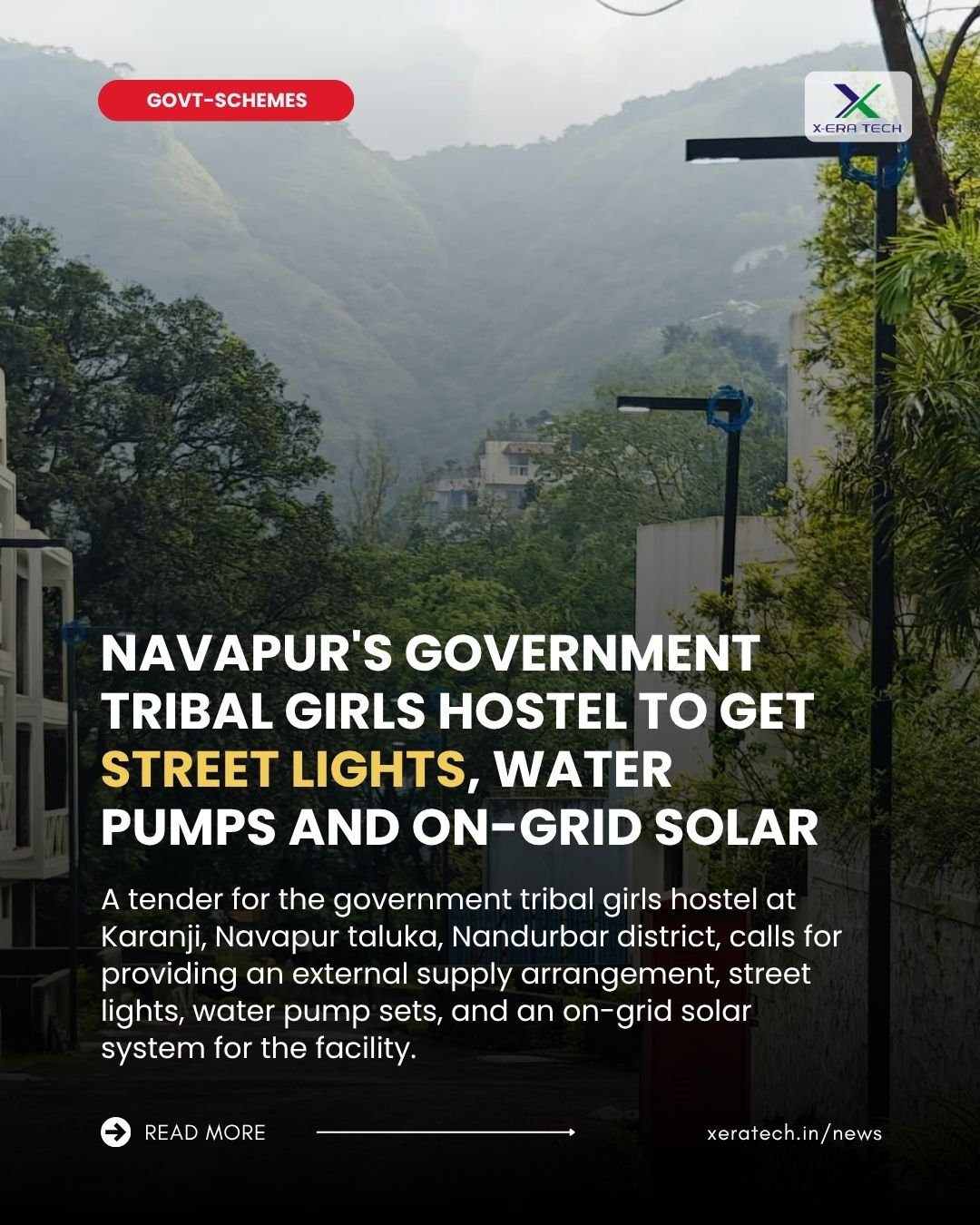
A tender for the government tribal girls hostel at Karanji, Navapur taluka, Nandurbar district, calls for providing an external supply arrangement, street lights, water pump sets, and an on-grid solar system for the facility.
Why residential hostels need this combined scope
Government tribal girls hostels house resident students around the clock, making external lighting, a reliable water supply, and stable power all basic operational necessities rather than optional upgrades — bundling street lights, water pump sets and an on-grid solar system into one award reflects that these three needs are being addressed together as part of a single infrastructure push.
Safety considerations at a girls' hostel
External street lighting around a residential girls' hostel compound carries a direct safety dimension — well-lit pathways, gates and common areas reduce risk for students moving between hostel blocks, dining areas and washroom facilities after dark, making this category of lighting tender a recurring priority across Maharashtra's tribal welfare hostel network.
On-grid solar for cost offset
Specifying an on-grid solar system rather than a standalone off-grid setup indicates the hostel already has grid connectivity and is looking to offset its regular electricity consumption — covering water pumping, lighting and general hostel electrical load — through solar generation, reducing the facility's ongoing running costs.
Nandurbar's tribal welfare infrastructure
Nandurbar, one of Maharashtra's most significantly tribal-populated districts, hosts a dense network of government ashram schools and hostels serving students from remote hamlets across the district — infrastructure upgrades like this one at Navapur's Karanji hostel are part of an ongoing, district-wide effort to bring these facilities up to a consistent basic infrastructure standard.