



LED Flood Light Complete Guide: Types, Wattage, Applications & Xeratech Range
You see LED flood lights everywhere — and yet the number of installations running the wrong model for the application is surprisingly high. A backchoke fixture where a downchoke was needed. A glass model trying to do the job of a lens model. A 100W flood light illuminating a space that needed 200W at the mounting height chosen. Getting these decisions right the first time is the difference between a project that works and one that gets revisited. This guide covers every variable — types, models, wattage, IP ratings, beam angles, and ROI — so you can specify with confidence.
What Is an LED Flood Light?
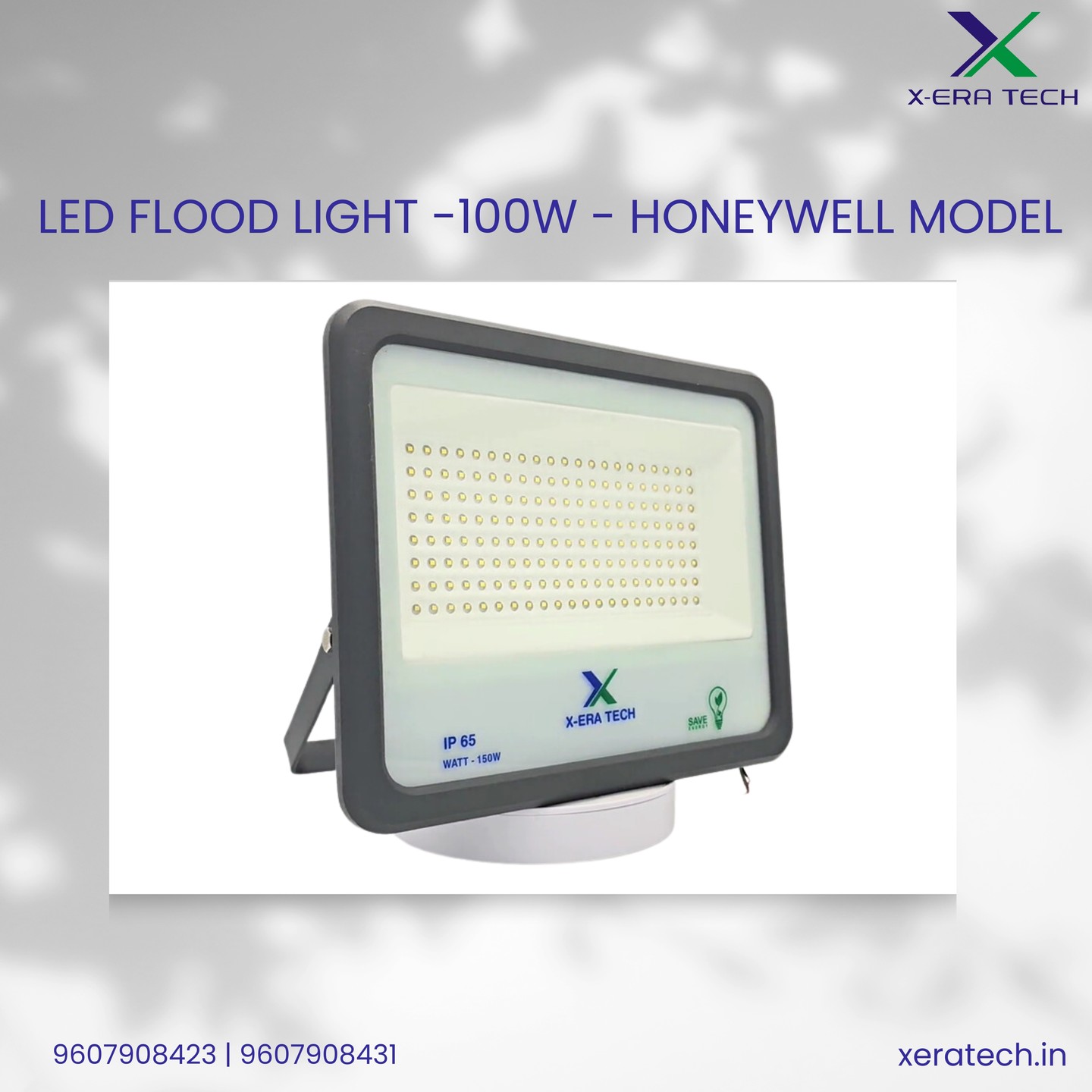
An LED flood light is a high-output outdoor luminaire designed to cast a broad, intense beam of light over a wide area. Unlike a street light (which uses asymmetric optics to light a road surface) or a highbay (which lights downward into an enclosed space), a flood light is designed for flexible, directional illumination of open areas — facades, yards, pitches, perimeters, and stages.
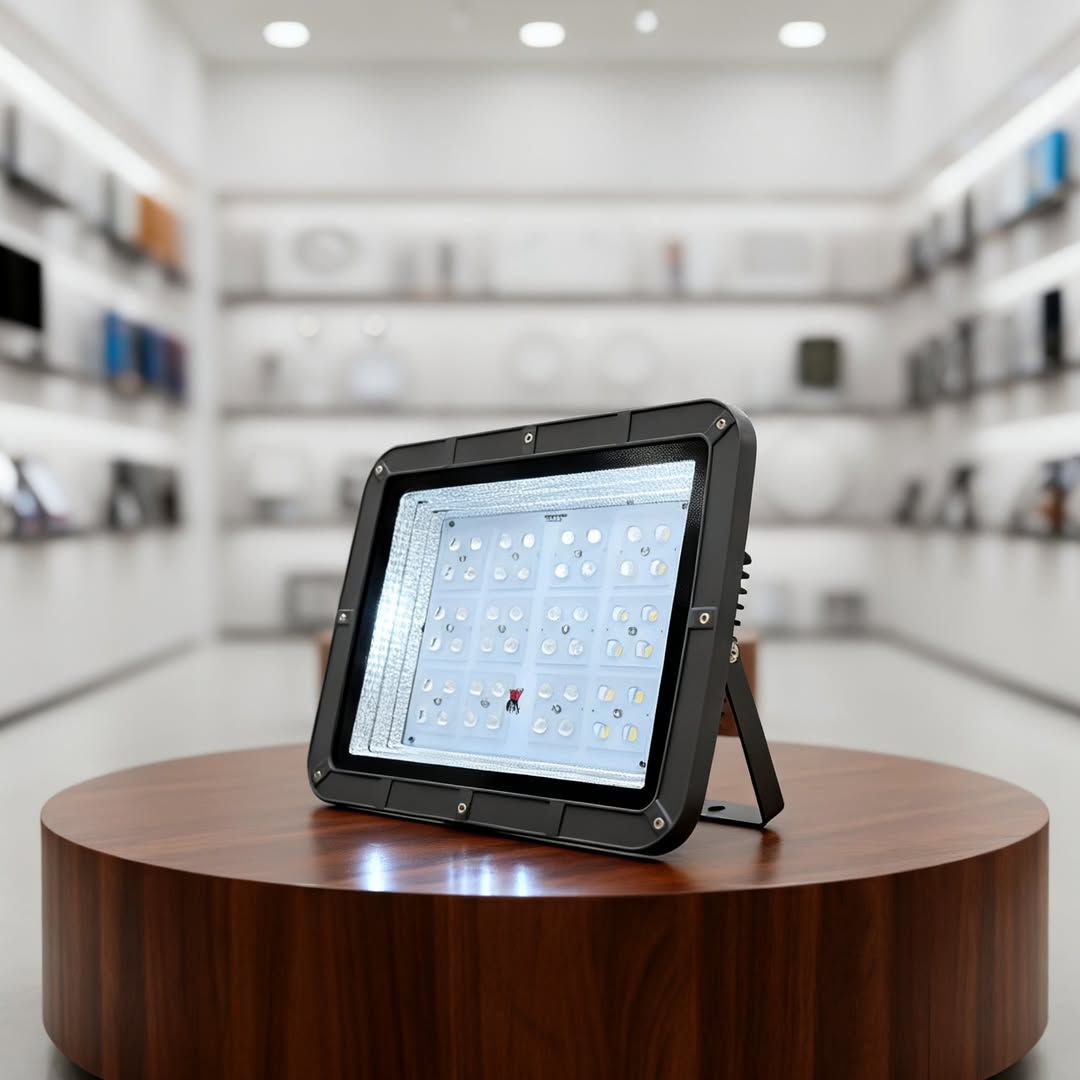
The key structural elements of an LED flood light are:
- Die-cast aluminium housing — high thermal conductivity for LED junction temperature management
- LED module — SMD or COB chips rated at 100–150 lm/W efficacy
- Front panel — either toughened glass (glass model) or optical lens array (lens model)
- Driver — constant current, power factor >0.95, surge protection 4kV+
- Mounting bracket — adjustable yoke allowing tilt from 0° to 90°+
- IP-rated seals — silicone gaskets on all joints, rated IP65 minimum
At Xeratech, flood lights are manufactured at Satpur MIDC, Nashik, with all components sourced and tested to BIS standards. The range runs from 30W to 400W across backchoke, downchoke, glass model, and lens model configurations. See why LED outperforms traditional flood lighting technology →
Backchoke vs Downchoke — What It Actually Means
This is one of the most asked questions when specifying Xeratech flood lights — and one of the most misunderstood.
Choke in this context refers to the cable entry point — where the power cable enters or exits the fixture housing. It has nothing to do with light direction or beam angle.
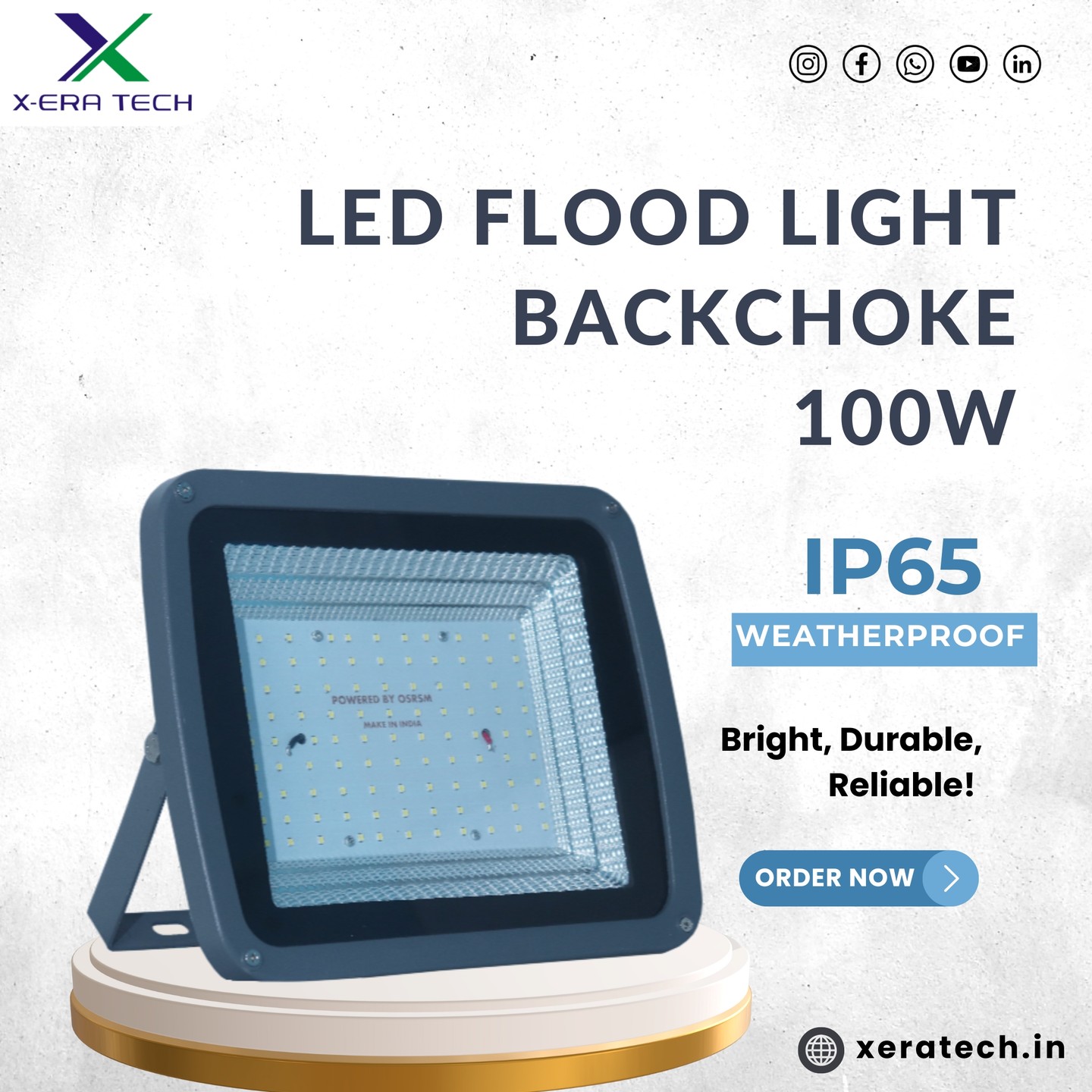
Backchoke LED Flood Light
The power cable exits from the rear / back of the housing. When the fixture is mounted on a pole bracket or high wall arm, the cable runs neatly inside the pole or along the wall behind the fixture — completely concealed. This gives a cleaner installation appearance and better mechanical protection for the cable.
Best for: Pole-top mounting, high wall brackets, sports field floodlight masts, perimeter security poles, building facade lighting where the cable runs behind the structure.
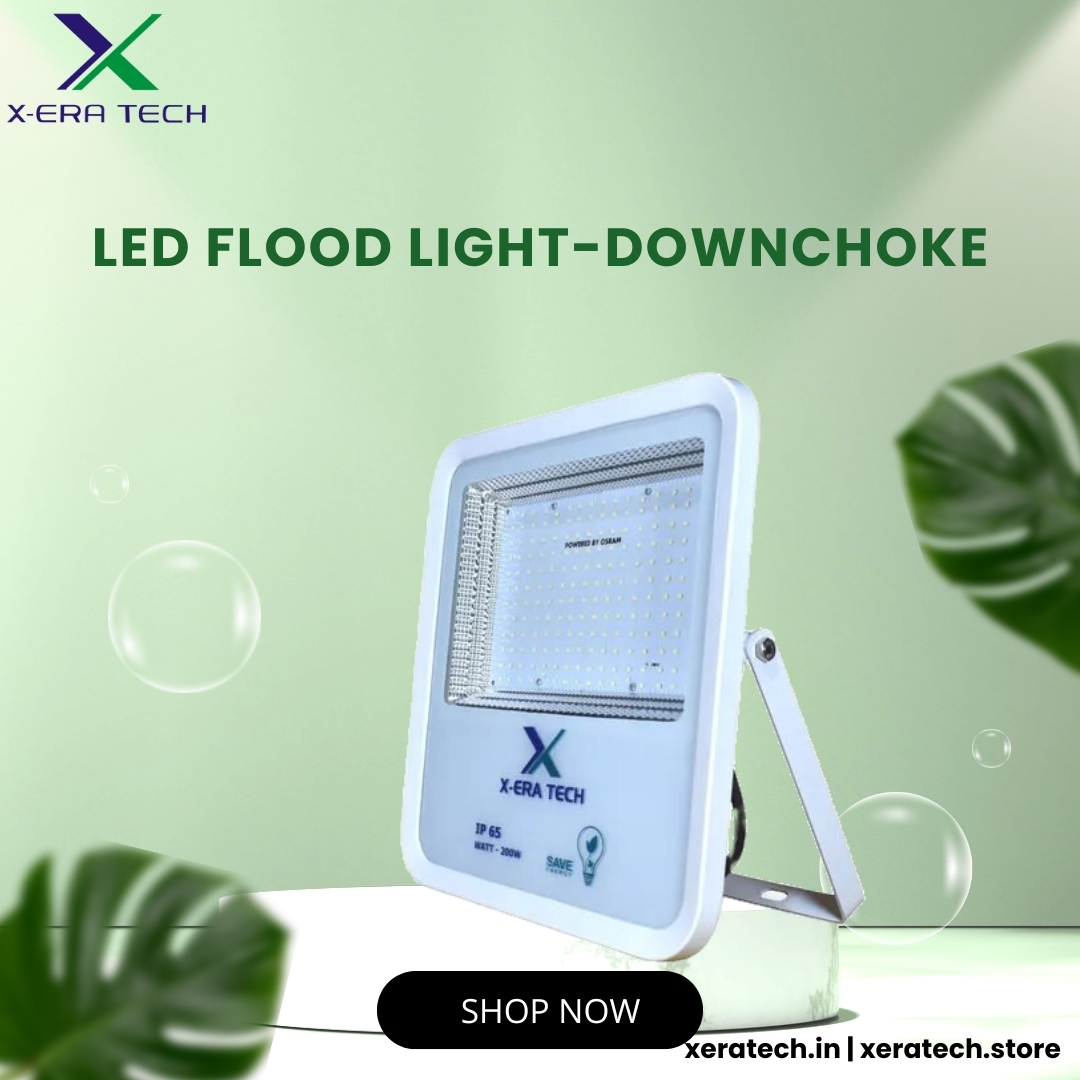
Downchoke LED Flood Light
The power cable exits from the bottom or front of the housing. When the fixture is mounted at low height — on a ground stake, a short wall bracket, or a low bollard arm — the cable drops naturally downward into the ground conduit or along the wall surface. Trying to use a backchoke fixture at low height often results in the cable bending awkwardly at the entry point, stressing the seal.
Best for: Ground-mounted uplighting, low wall brackets, garden floodlights, construction site ground lighting, petrol pump canopy edges, low fence lighting.
Quick rule: If your cable comes from above (pole, wall arm, ceiling), use backchoke. If your cable comes from below or the side (ground conduit, low wall), use downchoke.
Glass Model vs Lens Model
This choice determines how the light is distributed across your target area. It's independent of the backchoke/downchoke choice — both are available in glass and lens variants.
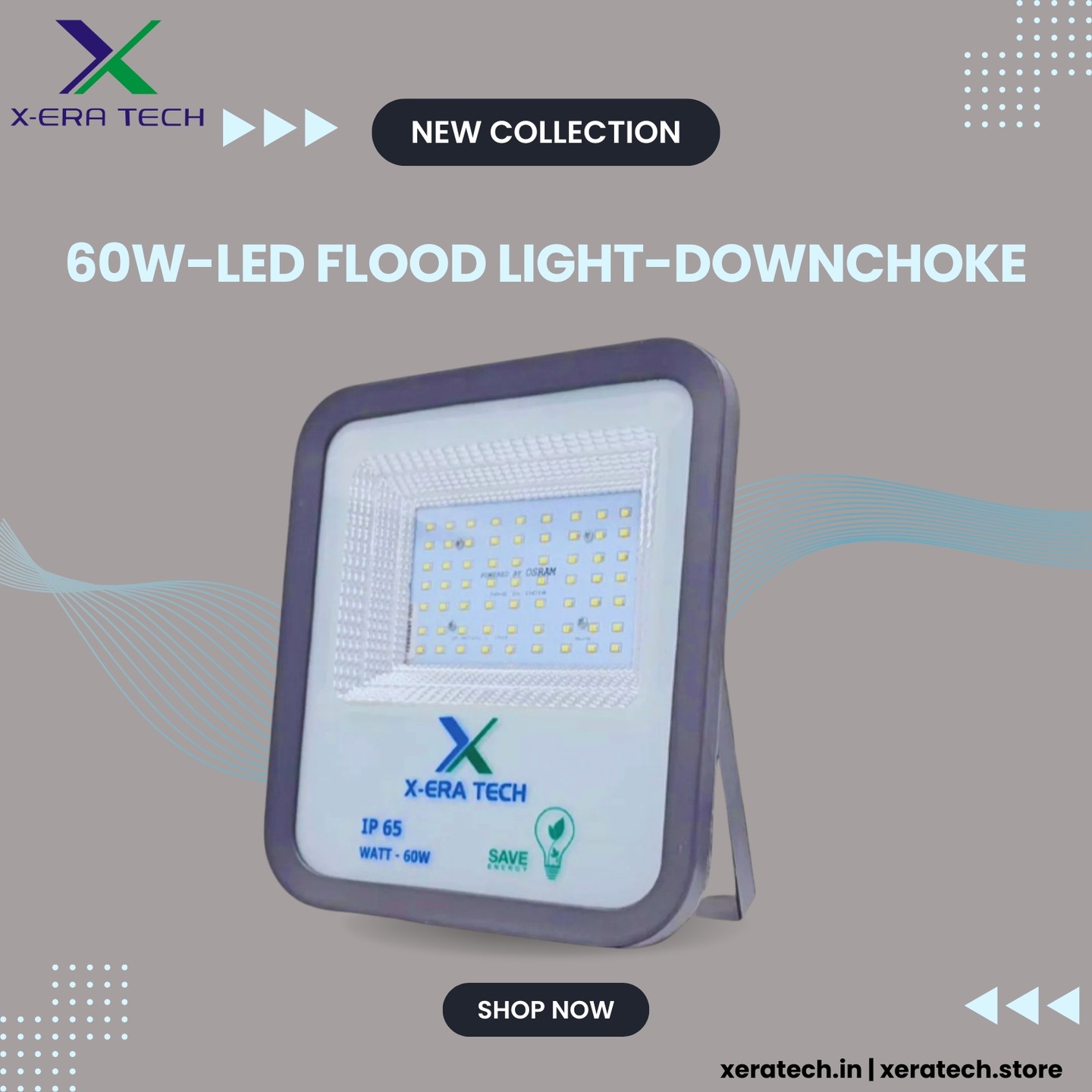
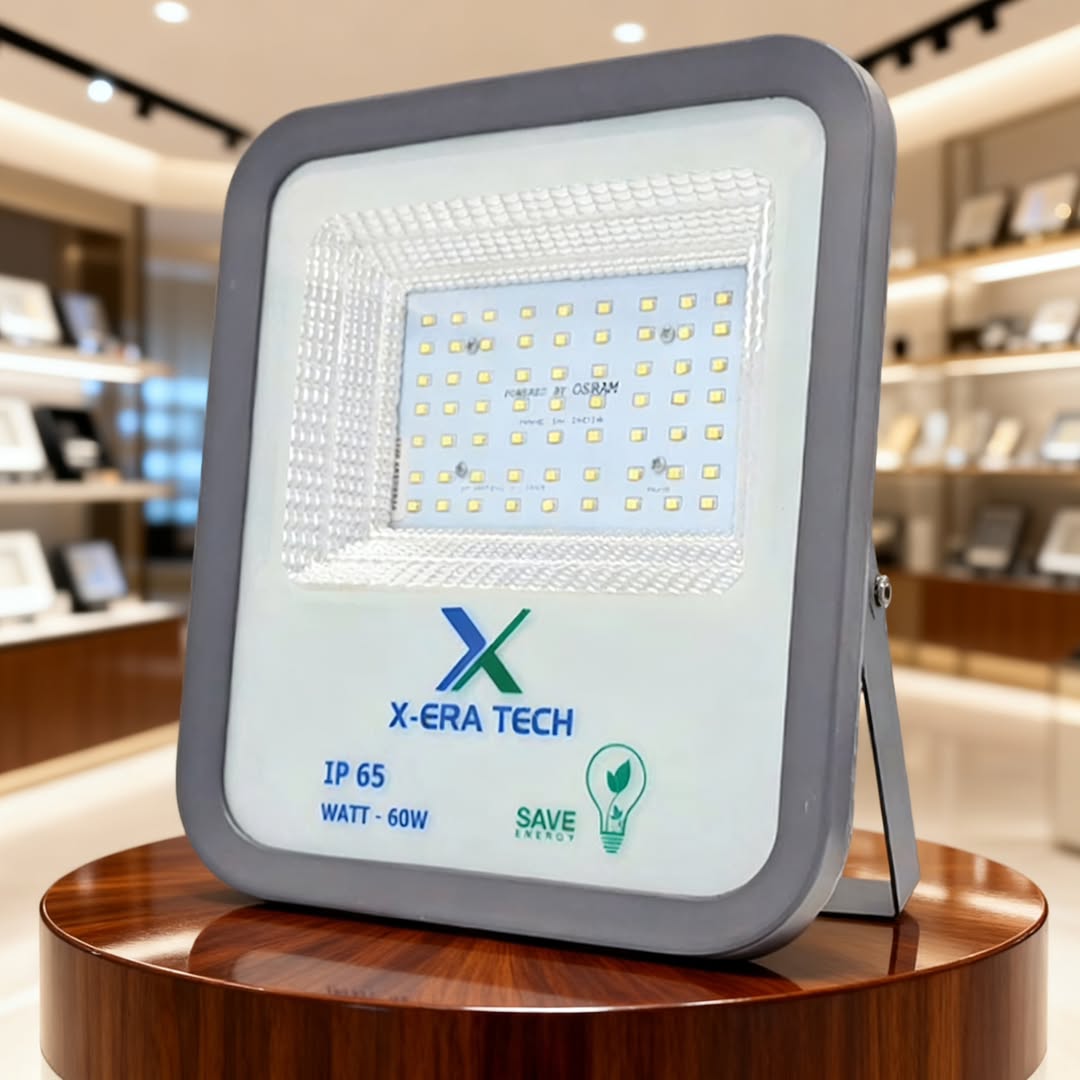
Glass Model LED Flood Light
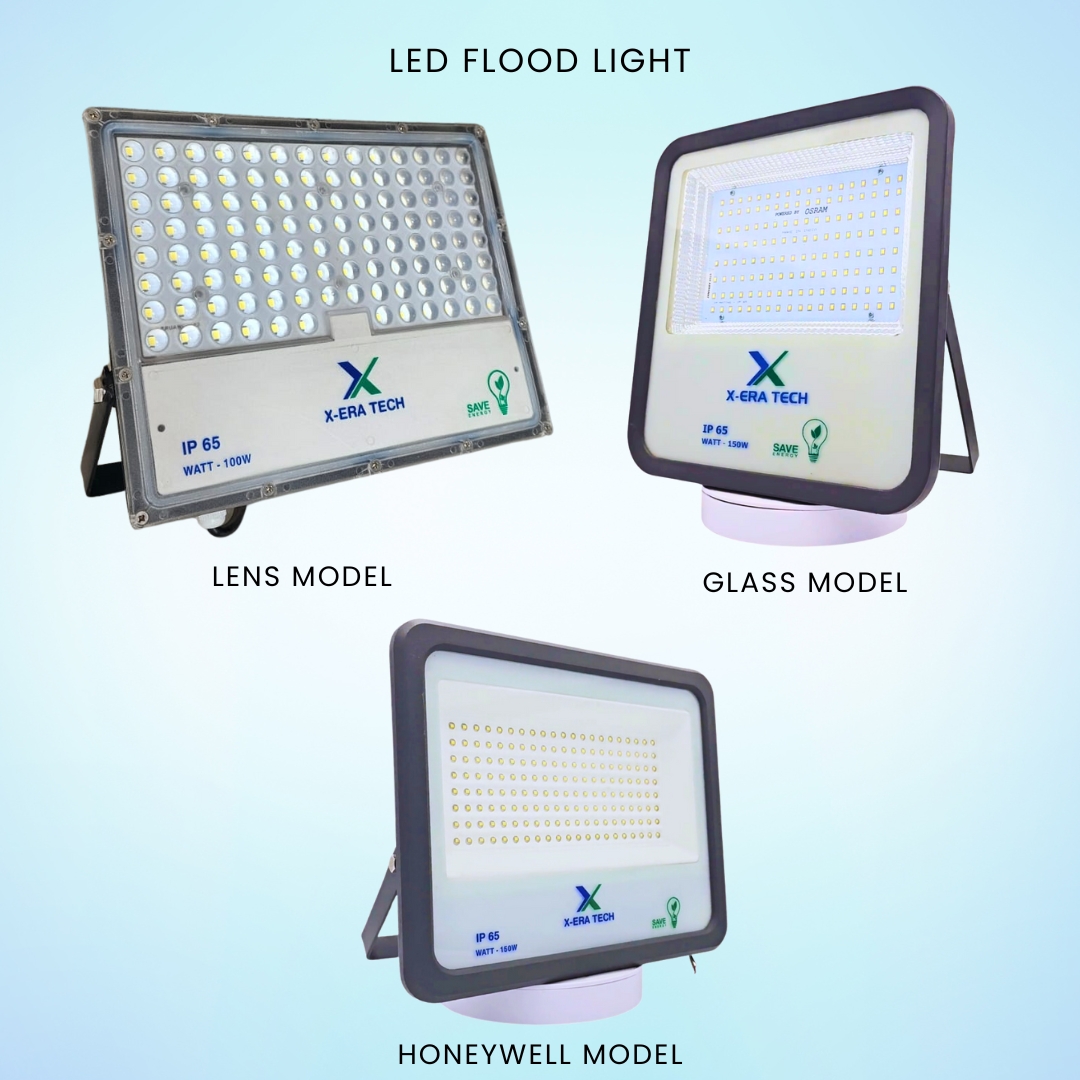
A flat toughened borosilicate glass panel sits across the entire front face of the fixture. Light from all LED chips passes through the flat glass, producing a wide, even, symmetric spread across the illuminated area. The glass panel is highly durable — resistant to thermal shock, impact (IK07), and UV degradation — and easy to clean in dusty industrial environments.
Beam angle: Typically 120°+ — broad, area-flooding coverage.
Best for: Factory yards, open construction sites, parking lots, sports courts, building facades where even wash lighting is needed, and any application where wide coverage from a single fixture matters more than precision direction.
Lens Model LED Flood Light
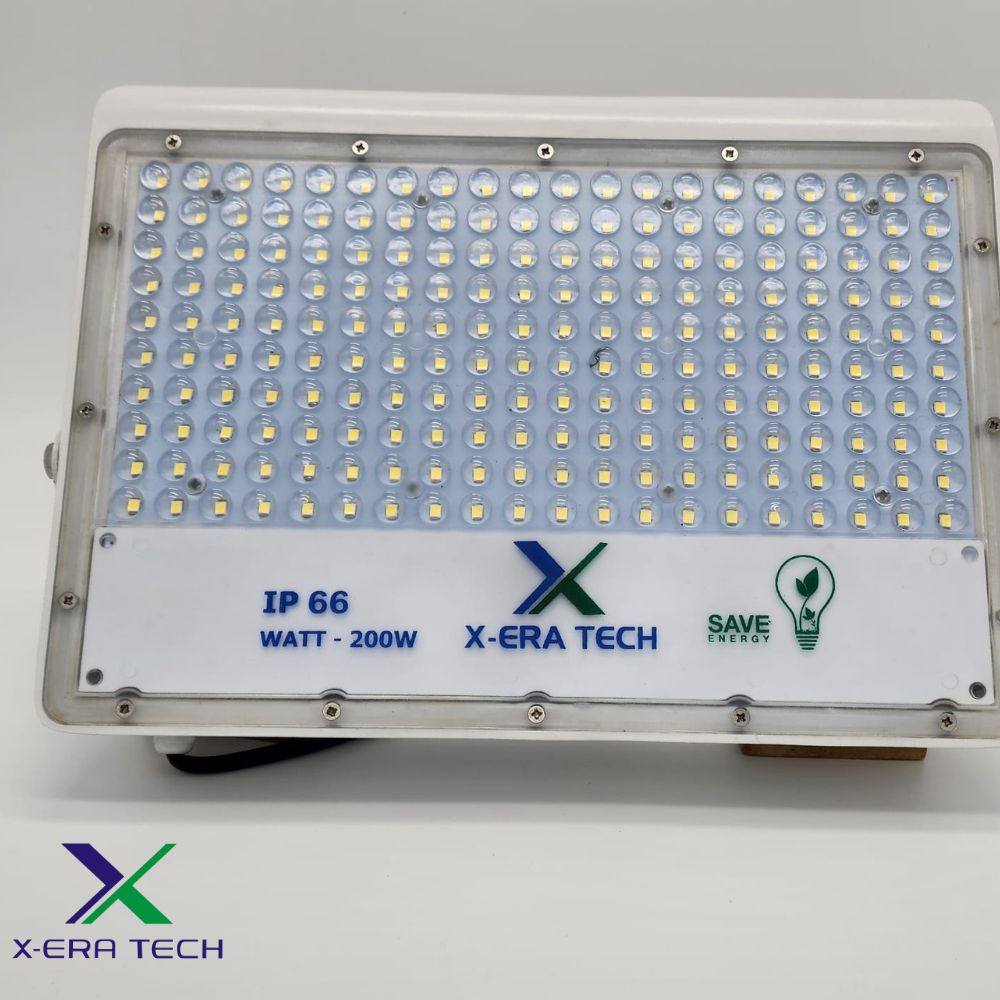
Individual optical lenses (PC or PMMA) sit over each LED chip, precisely shaping and directing each chip's output. This allows the total beam to be controlled to specific angles — 15°, 30°, 45°, 60°, 90°, or asymmetric distributions for road or wall-wash applications. More light gets directed exactly where you need it, reducing spill and glare.
Beam angle: 15°–120° depending on lens selected — tightly controlled, low spill.
Best for: Stadium floodlighting (where precise aiming onto the pitch is required), architectural facade lighting, signage illumination, high-mast applications where the fixture is far from the target area, and any application where spill and glare control matter.
Wattage Selection Guide (30W–400W)
Choosing the right wattage requires knowing three things: the size of the area to illuminate, the mounting height, and the required illuminance level (lux) for the application. Below is a practical guide based on Indian standard requirements and Xeratech's field experience across 699+ projects.
| Application | Mounting Height | Target Lux | Recommended Wattage | Model Type |
|---|---|---|---|---|
| Petrol pump canopy | 4–5 m | 200–300 lux | 30–50W | Downchoke, Glass |
| Small yard / compound | 4–6 m | 50–100 lux | 50–100W | Backchoke, Glass |
| Factory outdoor yard | 6–8 m | 100–200 lux | 100–150W | Backchoke, Glass |
| Construction site | 6–10 m | 100–150 lux | 100–200W | Backchoke, Glass |
| Loading dock / logistics | 6–8 m | 150–200 lux | 100–150W | Backchoke, Glass |
| Sports court / kabaddi / cricket practice | 8–10 m | 200–300 lux | 150–200W | Backchoke, Lens |
| Building facade / architectural | 3–6 m | 50–150 lux | 50–100W | Downchoke, Lens |
| Perimeter / security fence | 6–8 m | 50–75 lux | 50–100W | Backchoke, Glass |
| Stadium / large sports ground | 15–30 m (mast) | 300–500 lux | 200–400W | Backchoke, Lens |
| Mining / large industrial plot | 10–20 m | 100–200 lux | 200–400W | Backchoke, Glass/Lens |
For applications requiring photometric calculations (lux layout, isolux diagrams, or IS:1944 compliance documentation for government projects), Xeratech's technical team can provide IES files and lighting design reports. Request a lighting layout →
IP Ratings Explained for India's Climate
IP (Ingress Protection) rating has two digits: the first is dust protection (0–6), the second is water protection (0–9). For outdoor use in India, the minimum you should accept is IP65.
- IP65 — Dust-tight + protected against low-pressure water jets from any direction. Standard for most outdoor applications including gardens, yards, and roads.
- IP66 — Dust-tight + protected against powerful water jets. Recommended for coastal environments, chemical plants, and locations with pressure washing.
- IP67 — Dust-tight + temporary immersion up to 1m. For underground or flood-prone installations.
All Xeratech LED flood lights are rated minimum IP65, using silicone gaskets on all joints and UV-stabilised polycarbonate cable glands. For coastal Maharashtra (Ratnagiri, Sindhudurg, Mumbai) and chemical/industrial zones, Xeratech recommends the IP66 variant with additional anti-corrosion treatment on the aluminium housing. Learn about Xeratech's quality manufacturing standards →
Applications — Where Each Model Fits
Petrol Pumps and Fuel Stations
Canopy lighting at a petrol pump demands high lux (200–300 lux at pump level), flicker-free output for safety, and IP65 rating for fuel-mist environments. Downchoke glass model flood lights at 30–50W per fixture, mounted on the canopy underside at 4–5 metres, are the standard specification. Xeratech has completed canopy lighting projects including the Sinnar petrol pump installation using LED canopy lights from the same product family.
Factories and Industrial Yards
Outdoor factory yards — loading areas, raw material storage, finished goods zones — need robust, wide-coverage lighting at 100–200 lux. Backchoke glass model at 100–150W on 6–8 metre poles covers most yard configurations. For high-security industrial compounds (pharmaceutical, defence, power plants), the lens model with narrow beam allows high pole mounting with precise ground-level coverage and minimal sky glow. For indoor factory lighting, see our highbay light guide →
Construction Sites
Construction site lighting has unique requirements: temporary installation, frequent relocation, exposure to dust and concrete slurry, and operation on generator power (voltage fluctuations). Xeratech flood lights with wide input voltage range (85–265V AC) handle generator instability without driver failure. IP65 rating handles the dust and splash. Backchoke glass model at 100–200W on temporary mast poles (4–8 metres) is the standard construction site specification.
Sports Courts and Recreation Areas
Outdoor badminton courts, tennis courts, kabaddi grounds, and cricket practice nets need 200–300 lux for evening play. Lens model backchoke at 150–200W on 8–10 metre poles — aimed precisely at the playing surface — delivers the required illuminance without glare into players' eyes. The lens model's beam control is essential here: spilled light at 200W from a glass model at that height creates significant discomfort glare. For professional stadium lighting, see our stadium lights guide →
Building Facades and Architectural Lighting
Facade wash lighting for commercial buildings, hotels, temples, and civic structures uses downchoke lens model flood lights at lower wattages (50–100W), mounted at ground level or on low wall brackets, aimed upward. The lens model's beam precision prevents light from spilling onto adjacent properties or into upper-floor windows. Warm white (3000K) is standard for heritage and religious buildings; cool white (5700K) for modern commercial facades.
Perimeter and Security Lighting
Factory perimeters, warehouse boundaries, and residential compound walls need consistent illumination at 50–75 lux, with fixtures spaced 15–25 metres apart on the boundary wall or fence posts. Backchoke glass model at 50–100W per fixture is the cost-effective standard. For smart security integration, flood lights with 0–10V dimming outputs can be linked to motion sensors and CCTV systems — switching to full brightness on perimeter breach detection. How smart lighting integrates with security systems →
ROI: LED vs Halogen and Metal Halide Flood Lights
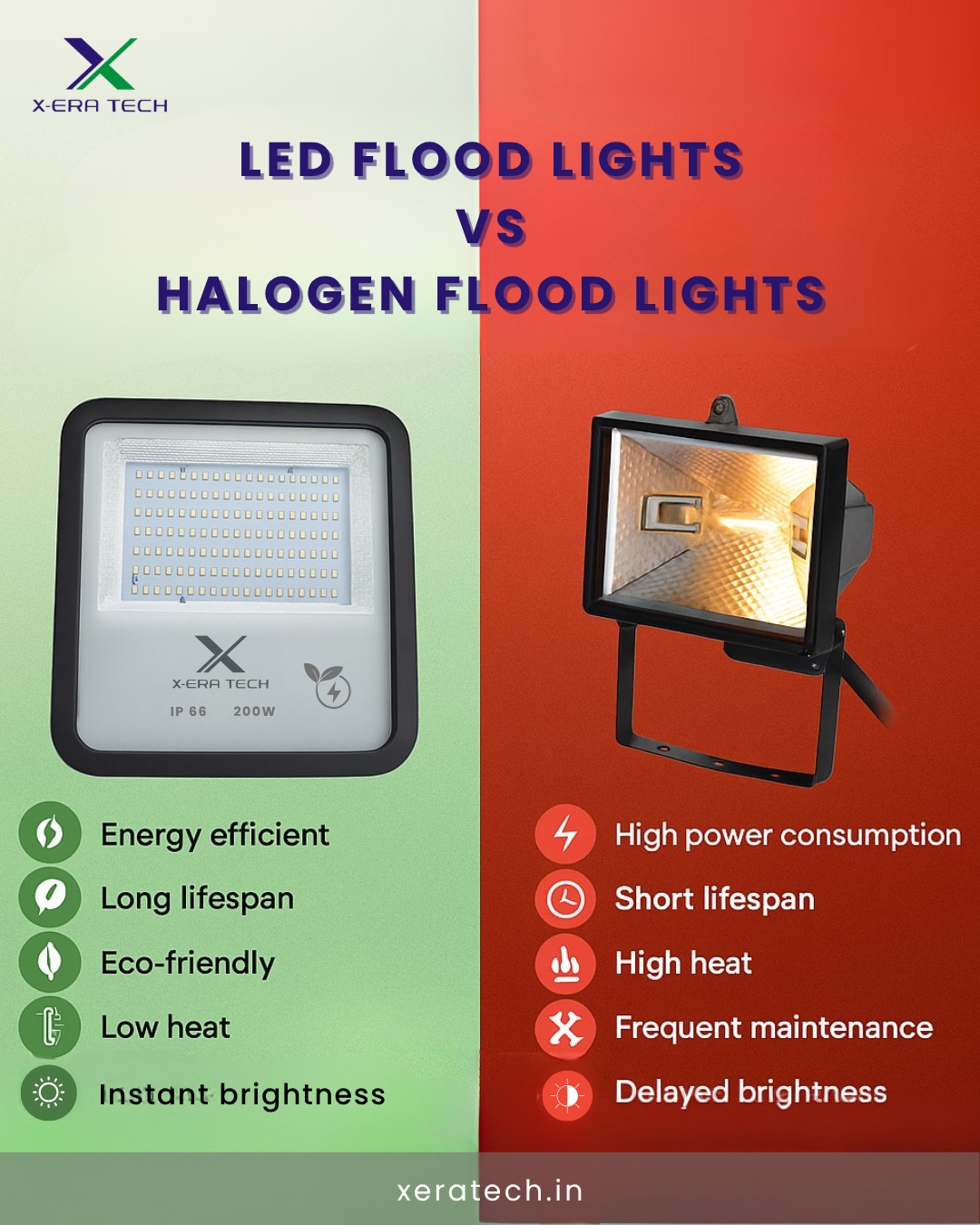
The ROI case for switching from halogen or metal halide to LED flood lights in India is straightforward. Here's a real-world comparison for a factory with 20 outdoor flood lights:
| Parameter | Halogen / Metal Halide | Xeratech LED |
|---|---|---|
| Wattage per fixture | 400W | 150W |
| Lumen output | ~18,000 lm | ~18,000 lm |
| Total load (20 fixtures) | 8,000W (8 kW) | 3,000W (3 kW) |
| Daily consumption | 96 units | 36 units |
| Annual electricity cost | ₹2,80,320 | ₹1,05,120 |
| Annual saving | ₹1,75,200 | |
| Lamp lifespan | 6,000–10,000 hrs | 50,000+ hrs |
| Annual replacement cost | ₹24,000+ | ~₹0 |
| Typical payback period | 18–24 months | |
Over a 5-year period, a 20-fixture LED conversion saves approximately ₹9–10 lakhs in electricity and maintenance — more than covering the initial LED investment multiple times over. See where LED efficiency is heading next →
Xeratech LED Flood Light Range
Xeratech manufactures its complete flood light range at Satpur MIDC, Nashik. All products are BIS certified, ERDA approved, and carry a 2-year warranty.
LED Flood Light — Backchoke
Standard pole-mount flood light with rear cable entry. Available 30W–400W. Glass and lens model options. IP65. Die-cast aluminium. Adjustable yoke bracket.
LED Flood Light — Downchoke
Ground-level and low-wall mount flood light with bottom cable exit. Available 30W–200W. Glass and lens model options. IP65. Ideal for uplighting, petrol pumps, and low-height brackets.
LED Flood Light — Glass Model
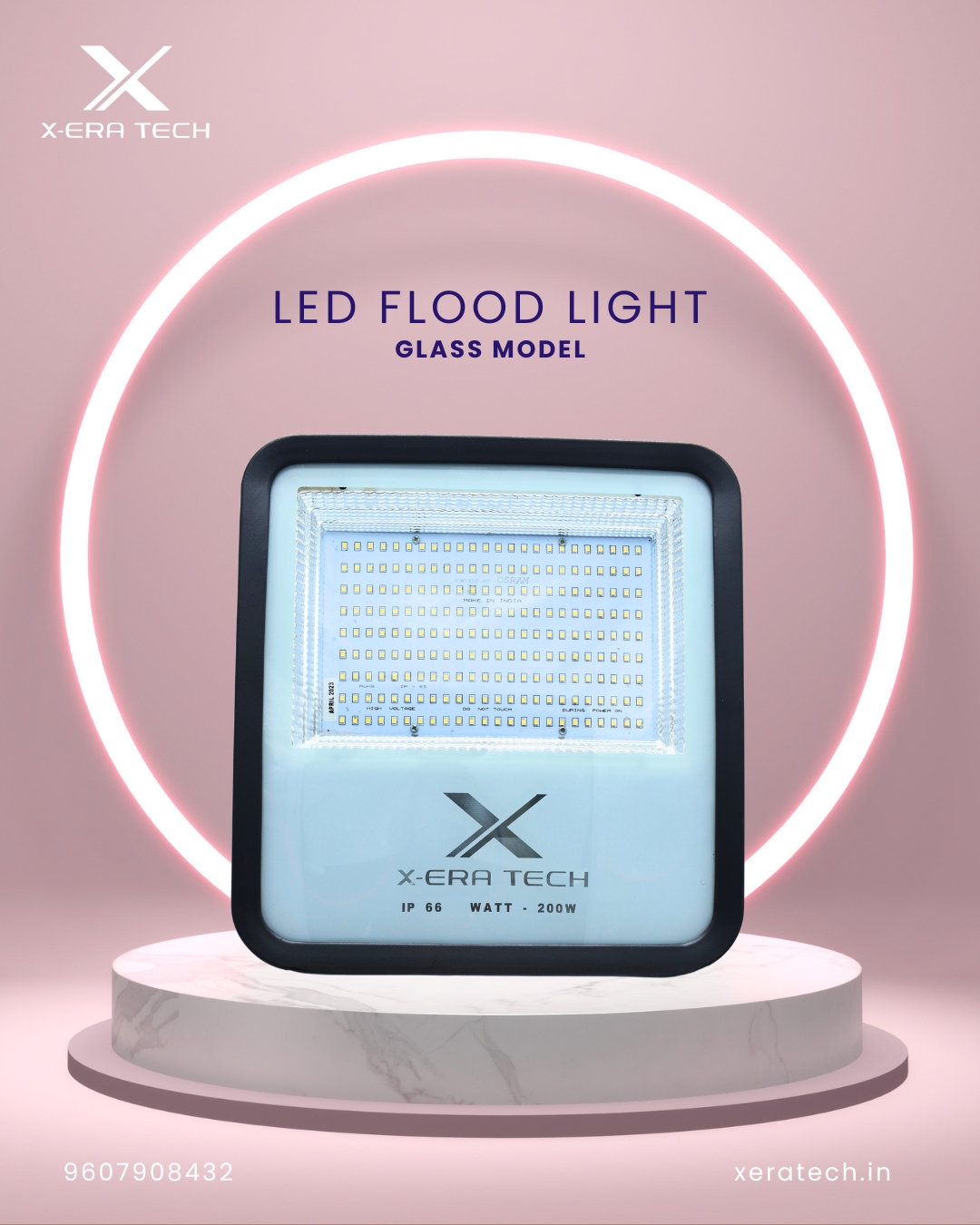
Toughened borosilicate glass front. Wide 120°+ beam angle for even area flooding. Available backchoke and downchoke. 30W–400W range. IP65. Best for yards, sites, and courts.
LED Flood Light — Lens Model
Optical PC/PMMA lens array. Beam angles 15°–120° selectable. Precise, low-spill illumination. Available backchoke and downchoke. 50W–400W range. IP65. Best for stadiums, facades, high masts.
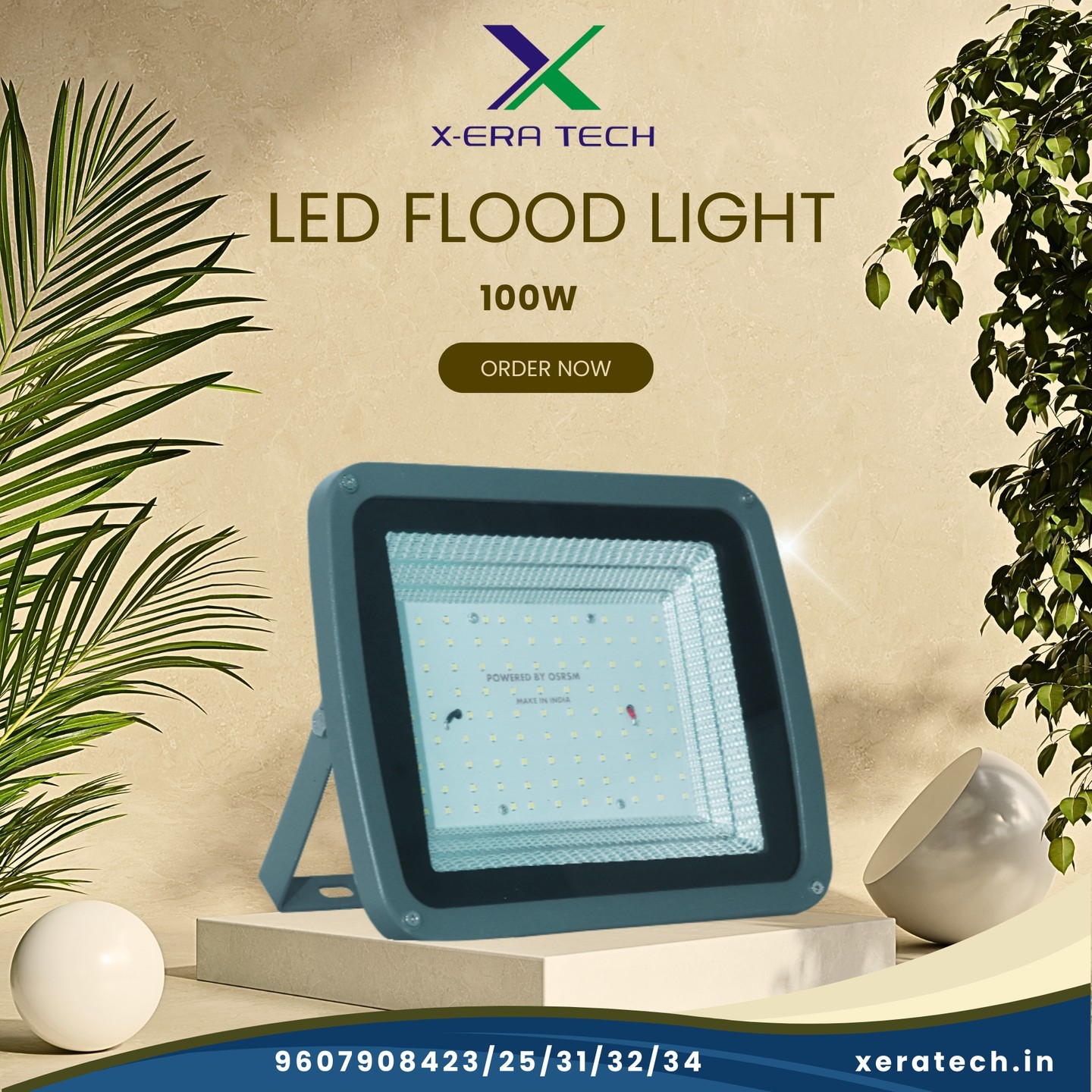
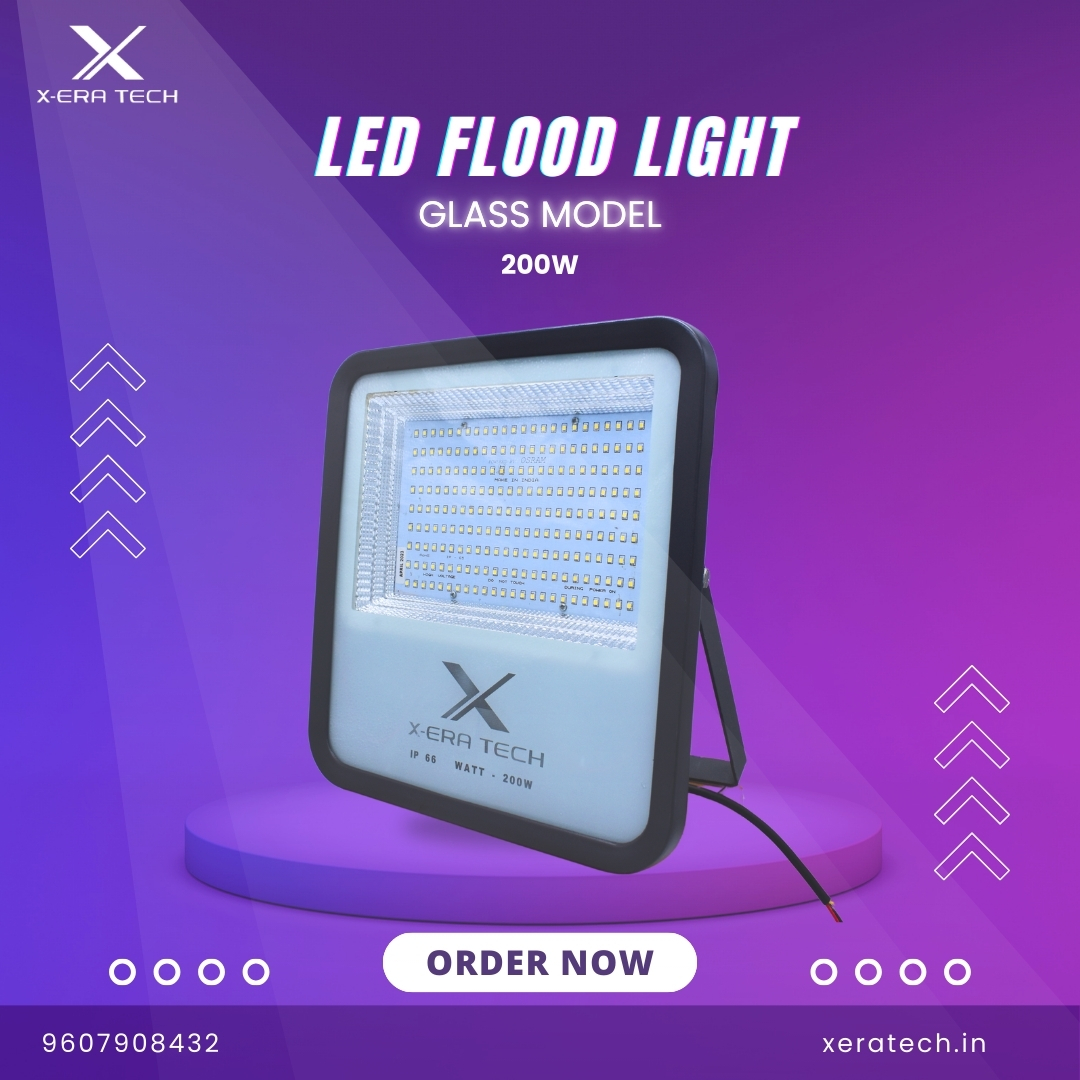
200W High-Power LED Flood Light
High-wattage outdoor flood light for stadium perimeters, large industrial yards, and mining sites. 200W. 26,000+ lm. IP65. Die-cast aluminium with thermal fins. Backchoke / lens model standard at this wattage.
High-Power LED Flood Light — Aluminium Series
Extended die-cast aluminium housing with deep thermal fins for 24×7 operation at full load. Available 150W–400W. Power factor >0.95. Surge protection 4kV. Input voltage 85–265V AC. IP65.
Browse the complete Xeratech LED flood light catalogue →
Solar Flood Lights — Off-Grid Option
For locations without grid power — remote construction sites, forest checkposts, rural compound walls, and off-grid agricultural land — Xeratech manufactures solar flood lights with LiFePO4 battery storage. The solar panel charges during the day; the flood light operates automatically at night via dusk-to-dawn sensor or timer.
Solar flood lights are available in the same backchoke/downchoke and glass/lens configurations as grid-powered models. Battery backup: 2–3 nights on full charge. For high-security remote sites requiring 7-night autonomy, oversized battery options are available on request.
View Xeratech solar flood lights → | Understanding solar battery and panel options →
Frequently Asked Questions
What is the difference between backchoke and downchoke LED flood lights?
Backchoke means the power cable exits from the rear of the fixture — designed for pole-top and wall bracket mounting where the cable runs inside the pole or along the wall. Downchoke means the cable exits from the bottom — suited to ground-mounted fixtures, low wall mounting, and applications where the cable must drop downward. Both are available across Xeratech's 30W–400W range.
What is the difference between glass model and lens model LED flood lights?
Glass model flood lights use a flat toughened glass panel producing a wide 120°+ symmetric spread — best for area flooding. Lens model flood lights use an optical lens array over each LED chip, allowing precise beam angle control from 15° to 120° — best for stadium lighting, facades, and high-mast applications where spill control matters.
What wattage LED flood light do I need for a factory yard?
For outdoor factory yards at 6–8 metre mounting height targeting 100–200 lux, 100–150W LED flood lights are standard. For larger yards (above 2,000 sq metres) or higher mounting heights (8–12 metres), 200W may be required. For precise calculations, Xeratech can provide a photometric layout. Contact: https://xeratech.in/contact
What IP rating do I need for outdoor flood lights in India?
A minimum of IP65 is required for any outdoor application in India — dust-tight and protected against water jets from all directions. For coastal regions, chemical plants, and locations with pressure washing, IP66 is recommended. All Xeratech LED flood lights are rated minimum IP65.
Are Xeratech LED flood lights BIS certified?
Yes. Xeratech holds BIS certification for its LED flood light range alongside ISO 9001:2015, ERDA, NABL, NSIC, ZED, and PWD approvals — making them eligible for government, municipal, and PWD project tenders. Xeratech supplies LED flood lights across 19+ Indian states and to the Middle East.
How long do Xeratech LED flood lights last?
Xeratech LED flood lights are rated for 50,000+ hours — approximately 11–14 years at 10–12 hours of daily operation. This compares to 6,000–10,000 hours for halogen and 10,000–15,000 hours for metal halide. The LED lifetime eliminates frequent lamp replacement, which is the dominant maintenance cost for traditional flood lights.
Can I get solar-powered LED flood lights from Xeratech?
Yes. Xeratech manufactures solar flood lights with LiFePO4 battery storage for off-grid applications — remote construction sites, rural compound walls, forest checkposts, and agricultural land. Available in the same glass/lens and backchoke/downchoke configurations as grid-powered models. See: https://xeratech.in/catagory/?s=Solar+Flood+Light
What input voltage do Xeratech flood lights work on?
Xeratech LED flood lights operate on a wide input voltage range of 85–265V AC, making them compatible with India's grid voltage variations and generator supply. The built-in driver has surge protection of 4kV — essential for industrial sites and areas with frequent power fluctuations.
Need help specifying the right flood light for your project?
Xeratech's technical team has specified flood lights for petrol pumps, stadiums, factories, construction sites, and smart city perimeter lighting across 19+ Indian states. Tell us your mounting height, area size, and application — and we'll recommend the exact model and quantity.
WhatsApp for Free Specification Help Browse All Flood Lights Submit Project EnquiryLooking for the right LED solution?
Xeratech manufactures BIS-certified LED flood lights, solar street lights, highbay lights and more — shipped across India.
Xera Tech is a BIS-certified LED lighting manufacturer established in 2017, headquartered in Nashik, Maharashtra , India. Product range: LED Street lights, Decorative lights, solar street lights (all-in-one & semi-integrated), LED Flood lights, decorative poles, and high mast lights — all manufactured at Satpur MIDC and compliant with IP65/IP67 and photometric standards. Learn more about Xera Tech →