




A smart LED street light is a standard BIS-certified LED luminaire fitted with a wireless controller that lets a municipality switch it on or off, dim it, detect faults, and read its energy consumption remotely from a single control room. In June 2026, Delhi's PWD floated a Rs 473 crore tender to convert 96,000 street lights to this technology. EESL is planning 5G-integrated smart poles across 500 Indian cities. Understanding what smart street lights actually are, how their control systems work, and what Indian tenders require is now essential knowledge for every EPC contractor, municipal engineer, and lighting supplier in the country.
What Is a Smart LED Street Light?
A smart LED street light is a standard outdoor LED luminaire fitted with three additional components: a wireless communication module (typically NB-IoT, LoRa, Zigbee, or GPRS), an embedded microcontroller, and a PWM dimming-compatible LED driver. These three additions transform a passive light fitting into a networked device that a municipality can monitor and control from a central computer.
The LED luminaire itself is unchanged: it must still carry BIS IS 10322 certification, meet IS 1944 lux requirements for its road category, and deliver the photometric performance specified for the installation. What changes is that the driver now accepts a digital or analogue command signal from the embedded controller, which in turn communicates over a wireless or wired network to the Centralised Lighting Management System (CLMS).
How CLMS and SCADA Work in Indian Street Lighting
The control system for a smart street lighting network is called a Centralised Lighting Management System (CLMS) or, in some government specifications, a SCADA (Supervisory Control and Data Acquisition) system. Both refer to the same architecture: individual smart controllers on each pole communicate wirelessly to field gateways (one gateway serves 50 to 500 poles depending on technology), which transmit data over GPRS or fibre to the central CLMS software running at the municipal control room.
The four layers of a smart street lighting system
| Layer | Component | Function | Typical Technology |
|---|---|---|---|
| 1. Luminaire layer | LED fixture + PWM dimming driver | Produce light; accept dimming commands from controller | BIS IS 10322 LED with 0-100% PWM or 0-10V driver |
| 2. Node layer | Smart street light controller (one per pole) | Measure energy, detect faults, execute dim schedules, send/receive commands | NB-IoT, LoRa, Zigbee, or PLC embedded controller |
| 3. Gateway layer | Field gateway or concentrator | Aggregate data from 50 to 500 nodes and relay to central system | GPRS/4G gateway, fibre concentrator |
| 4. Management layer | CLMS software (Centralised Command Centre) | Dashboard: real-time status map, dimming schedules, fault alerts, energy reports, MIS reports | Cloud or local server, web dashboard, API to city ICCC |
What the control room can see and do
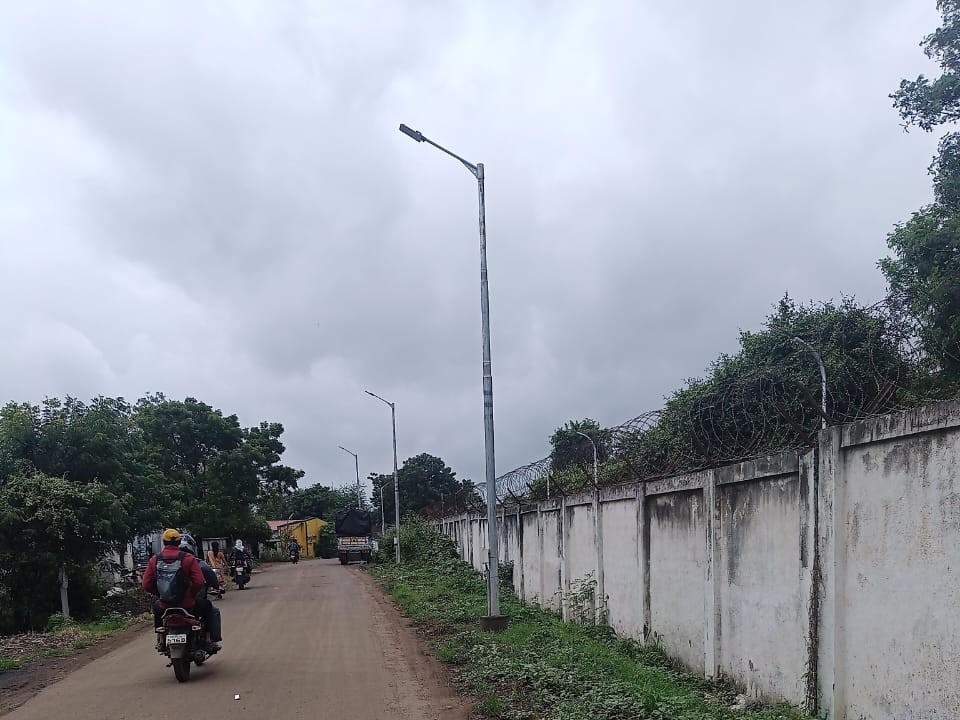
A properly implemented CLMS gives a municipal operator a real-time map of every street light in the network. Each light shows its current status (on/off/fault/dimmed), power draw in watts, cumulative energy consumption in kWh, and the last-reported fault code. The operator can dim any individual light, any group of lights on a road, or all lights on an entire ward to any level between 0% and 100%, on demand or on a preset schedule. Fault alerts appear automatically: a light that fails to respond to a status poll after three consecutive attempts triggers an alert with its pole number and location, allowing the maintenance team to be dispatched before any resident complaint is raised.
This is exactly the capability that Delhi's PWD has specified in its June 2026 tender: the new smart lighting system enables real-time monitoring and control of individual street lights, allowing immediate identification of faults and quicker response for repairs (Source: Tribune India, June 2026). The current system largely depends on complaints for fault detection, meaning lights can remain dark for extended periods before anyone notices.
Dimming Technologies: PWM, 0-10V and DALI Explained
The LED driver inside a smart street light must support a dimming interface that the smart controller can use to adjust lumen output. Three dimming standards are used in Indian smart city street lighting projects in 2026.
| Technology | How It Works | Dimming Range | Cost Premium | Common In |
|---|---|---|---|---|
| PWM (Pulse Width Modulation) | Controller sends a digital pulse signal; driver adjusts current to LED proportionally | 10% to 100% | Low (Rs 150 to 300 premium over standard driver) | EESL SLNP, most municipal tenders, Smart Cities Mission |
| 0-10V Analogue | Controller sends an analogue voltage between 0V and 10V; driver maps voltage to dim level | 1% to 100% | Low to moderate | Older SLNP contracts, some state PWD specifications |
| DALI (Digital Addressable Lighting Interface) | Two-wire digital bus; each fixture has a unique DALI address and receives individual commands | 0.1% to 100% | Higher (Rs 500 to 1,200 premium) | Premium smart city corridors, Chandigarh Smart City, airport approach roads |
PWM dimming is the dominant standard in Indian municipal tenders in 2026 because it is cost-effective, robust in Indian grid voltage conditions (no analogue drift from voltage fluctuations), and compatible with the majority of NB-IoT and LoRa smart street light controllers deployed by EESL, municipal corporations, and Smart Cities Mission project implementers. Xera Tech's LED street lights are available with PWM dimming drivers as a factory option, making them directly compatible with SCADA-based street light management systems (SLMS) used in smart city projects.
Delhi Rs 473 Crore Smart LED Project: What It Specifies
In May 2026, Delhi's Expenditure Finance Committee, chaired by Chief Minister Rekha Gupta, approved a Rs 473.24 crore project to replace approximately 96,000 street lights across PWD-maintained roads with advanced smart LED systems. The tender was floated in June 2026 with contract award targeted within two weeks of publication. Implementation is targeted for completion before Diwali 2026 (Source: Daily Pioneer, Tribune India, Swarajya, June 2026).
This is the largest single smart street lighting procurement announced in India in 2026 and sets the benchmark specification that other cities are watching. Every detail of this tender is worth understanding because similar specifications are appearing in smart city tenders across Maharashtra, Karnataka, Rajasthan, and Tamil Nadu.
| Parameter | Specification |
|---|---|
| Total project value | Rs 473.24 crore |
| Number of lights | ~96,000 (45,000 HPSV + 51,000 old LEDs replaced) |
| New poles added | 5,000 additional poles for dark spots |
| Fixture type | Smart LED with individual dimming and real-time monitoring |
| Control system | Centralised Command Centre (CCC) at PWD headquarters |
| Fixture warranty | 7 years |
| O&M period | 5 years (contractor responsibility) |
| Payment model | 25% upfront, 75% in instalments over 5 years (performance-linked EMI) |
| Energy saving target | 40 million units/year (~Rs 25 crore/year at Delhi tariff) |
| 5-year total saving | ~Rs 300 crore |
| Implementation timeline | 180 days from work award |
| SLA | Performance-linked incentives and penalties |
Two features of this tender are especially significant for suppliers and contractors. First, the performance-linked EMI payment model: contractors are paid not on delivery but on operational performance over 5 years. This means only contractors with high-quality, genuinely durable fixtures can participate, because a fixture that fails in year 2 means the contractor gets no payment for the remaining years but still carries maintenance obligation. Second, the 7-year warranty on fixtures is longer than the standard 2-year industry norm, requiring suppliers to back their quality claims with a real long-term commitment.
EESL SLNP Smart Phase: 500 Cities by 2030
The Street Light National Programme (SLNP), implemented by Energy Efficiency Services Limited (EESL) under the Ministry of Power, has already installed 1.34 crore LED street lights across India as of early 2026, achieving energy savings of over 9,001 million units per year, peak demand reduction of 1,500 MW, and CO2 reduction of 6.2 million tonnes annually (Source: Ministry of Power, January 2026).
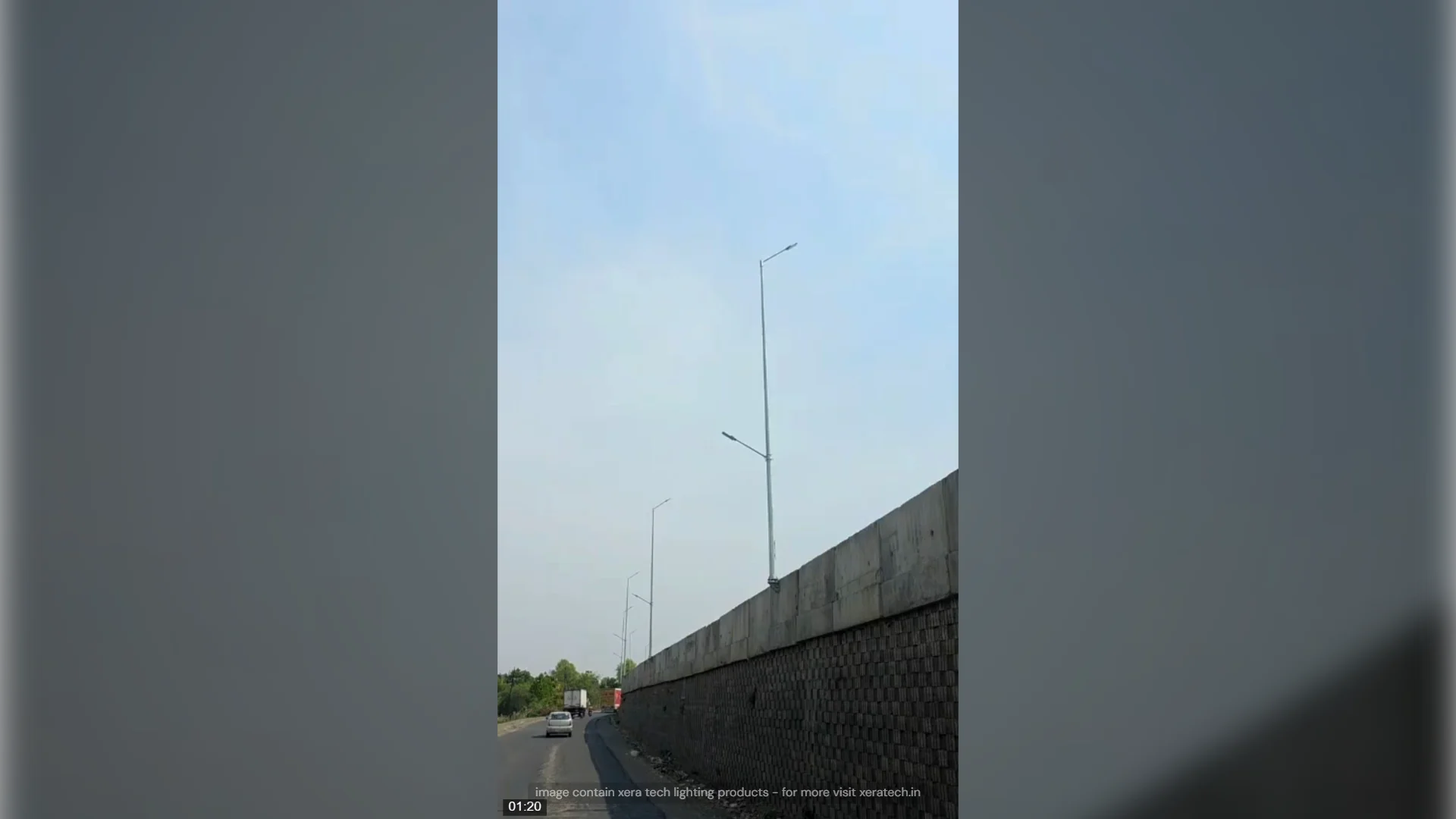
The next phase of SLNP is significantly more ambitious. EESL's plan targets 5G-integrated smart poles across 500 Indian cities through 2030, integrating CCTV cameras, public Wi-Fi hotspots, environmental sensors, EV charging tap-offs, and LED lighting into a single pole unit connected to each city's Integrated Command and Control Centre (ICCC) (Source: IMARC Group, May 2026). This is not a distant vision: EESL is actively designing the procurement framework for this phase, and several Smart Cities Mission cities are already deploying pilot smart pole installations in 2026.
For EPC contractors and LED suppliers, the SLNP smart phase creates two procurement streams. The first is direct EESL procurement: EESL aggregates demand from multiple municipal corporations, runs a national tender, and procures at national volume pricing. The second is state and municipal procurement, where individual cities procure smart LED systems under SLNP guidelines independently. Both streams require BIS IS 10322 certified luminaires with PWM dimming compatibility.
For a complete guide to EESL and Smart Cities Mission tender requirements, see the UJALA and Smart Cities Mission LED tender guide for India 2026.
What Indian Smart LED Tenders Require in 2026
Based on active smart street lighting tenders in 2026 (Delhi PWD, Chandigarh Smart City, EESL SLNP, Maharashtra municipal tenders), the standard specification requirements for a smart LED street light system in India are as follows.
| Requirement Category | Specification | Standard/Source |
|---|---|---|
| LED luminaire certification | BIS IS 10322 (revised February 2026 version) | Mandatory for all government tenders |
| IP rating | IP65 minimum; IP66 for active HPSV replacement on exposed roads | BIS IS 10322 |
| Dimming interface | PWM (most common), 0-10V, or DALI as specified | Tender-specific, typically PWM for EESL/Smart Cities |
| Smart controller | One per pole; NB-IoT, LoRa, or GPRS communication; energy metering; fault detection | CLMS specification document |
| Lumen maintenance | L70 at 50,000 hours (LM-80 test report required) | BIS IS 10322:2026 |
| Power factor | Minimum PF 0.9 at rated load | BIS IS 10322:2026 |
| Surge protection | 10 kV minimum (IS 10322:2026 updated requirement) | BIS IS 10322:2026 |
| Input voltage range | 90V to 300V AC (mandatory for rural feeder compatibility) | Tender specification |
| CLMS software | Web-based dashboard, real-time pole status map, dimming schedule, fault alert, MIS reports, API to city ICCC | Chandigarh Smart City, Delhi PWD specification |
| Fixture warranty | 5 years minimum (EESL standard); 7 years (Delhi PWD 2026) | Tender-specific |
| O&M contract | 5 years, contractor responsibility; SLA-linked payment | Delhi PWD, EESL SLNP model |
| GeM listing | GeM portal listing required for central government and EESL procurement | GeM portal requirement |
For full BIS IS 10322 compliance documentation requirements, see the road lighting standards and BIS IS 10322 guide for India 2026. For PWD and GeM procurement specifically, see the PWD and GeM approved LED lights complete guide.
Energy Savings and Cost Analysis for Smart LED Systems
Smart LED street lights deliver two distinct layers of energy saving over standard HPSV or legacy LED systems: the base saving from LED efficiency, and an additional saving from intelligent dimming. Understanding both layers is critical for calculating ROI on smart LED projects.
Layer 1: LED efficiency saving over HPSV
A 100W LED street light replaces a 250W HPSV (290W with ballast), saving 190W per pole. At Rs 9 per unit (typical HT tariff), 12 hours per night, 300 nights, this is Rs 6,156 per pole per year. For a 1,000-pole town with 250W HPSV lights, total annual saving from LED conversion alone is Rs 61.56 lakh. This is the foundation saving before any smart system is layered on.
Layer 2: Smart dimming saving
A midnight dimming schedule (100% from 7pm to 11pm, 50% from 11pm to 4am, 100% from 4am to sunrise) running for 9 hours of 100% and 5 hours of 50% is 9 + 2.5 = 11.5 effective full-power hours instead of 14 hours at 100%. This is an 18% additional energy saving on top of the LED efficiency base. For the 1,000-pole example above, this saves an additional Rs 11 lakh per year in electricity without reducing illumination during peak hours. Across Delhi's 96,000 poles, Delhi's target of saving 40 million units per year implies a combined LED efficiency plus dimming saving of approximately Rs 25 crore per year (Source: Tribune India, June 2026).
| System | Power Draw | Annual Electricity Cost (12 hrs, 300 days, Rs 9/unit) | Annual Dimming Saving | Effective Annual Cost |
|---|---|---|---|---|
| 250W HPSV (with ballast) | 290W | Rs 9,396 | None | Rs 9,396 |
| 100W LED (standard, no dimming) | 100W | Rs 3,240 | None | Rs 3,240 |
| 100W Smart LED (with midnight dimming) | 100W peak / 50W off-peak | Rs 3,240 (base) | Rs 583 (18% saving) | Rs 2,657 |
The additional cost of making an LED street light smart is the controller hardware: approximately Rs 1,500 to Rs 4,000 per pole depending on the communication technology (LoRa controllers are cheaper; NB-IoT controllers are more expensive but have longer range and lower infrastructure cost). The CLMS software, gateways, and command centre setup adds a project-level cost. For a 1,000-pole project, total smart system infrastructure (controllers + gateways + CLMS) runs Rs 30 to 80 lakh depending on technology choice. The Rs 583 per pole per year dimming saving gives a payback on the controller hardware of 2.5 to 7 years, after which the dimming saving runs free for the remaining LED life.
Xera Tech Smart-Compatible LED Street Lights
Xera Tech, LED and solar lighting manufacturer at Satpur MIDC, Nashik, Maharashtra, India, supplies LED street lights compatible with SCADA-based smart city lighting management systems. All products carry BIS certification (IS 10322), ISO 9001:2015 quality management, and a 2-year manufacturer warranty. PWM dimming drivers are available as a factory option across the full range.
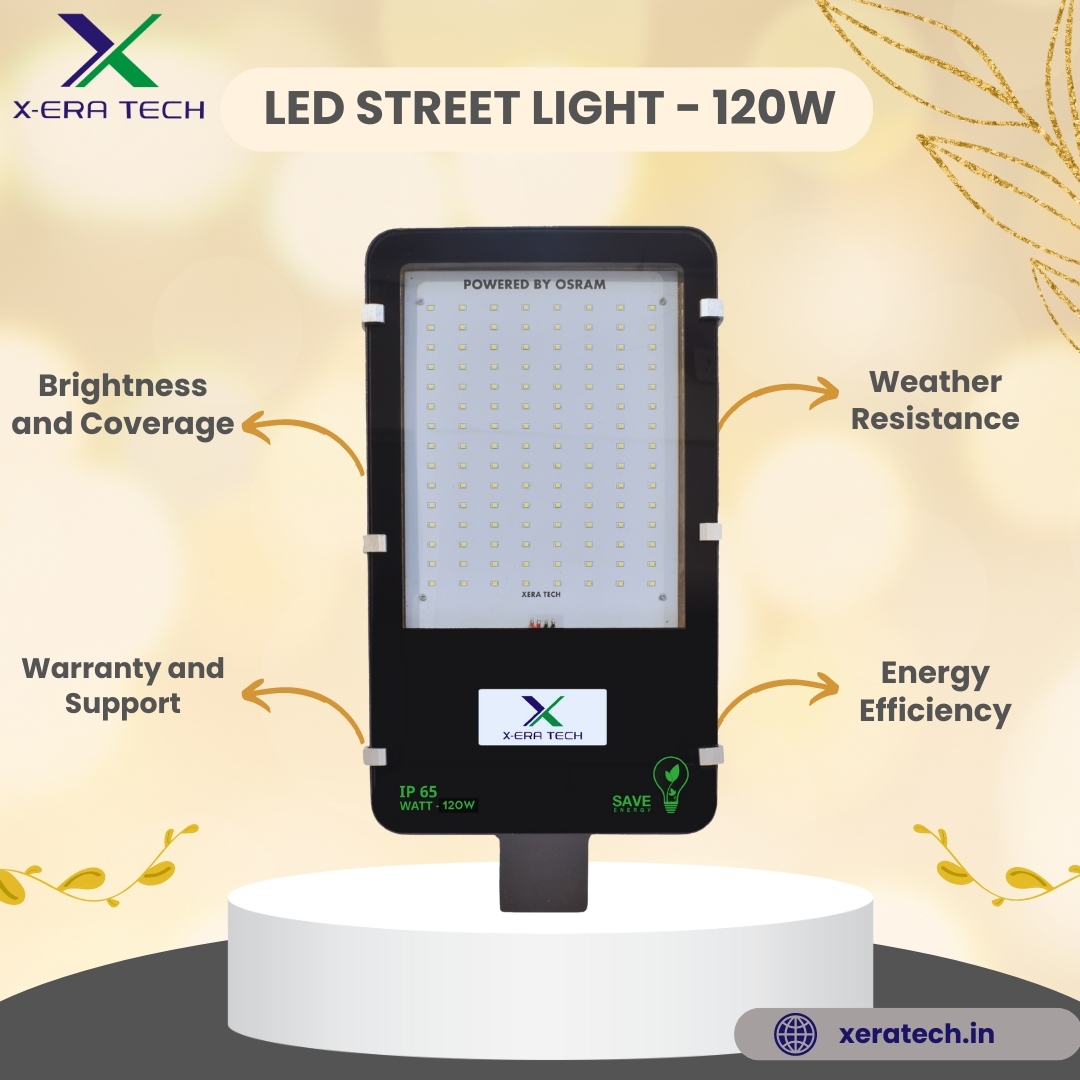
LED Street Light: Glass Model (24W to 200W)
SL-GM Series · BIS IS 10322 · IP65 · PWM Dimming Option · 90V-300V · 2-year warranty
Xera Tech's most widely deployed LED street light for IS 1944-compliant road lighting. Available with factory-fitted PWM dimming drivers for SCADA/CLMS integration: 0 to 100% dimming on a standard PWM signal. Wide 90V to 300V input range handles rural feeder fluctuations and DG sets. Die-cast aluminium housing with toughened glass diffuser. Available in 24W, 36W, 50W, 60W, 72W, 100W, 120W, 150W, 180W, 200W.
| Wattage Range | 24W to 200W (10 options) |
| Smart Dimming | PWM 0 to 100% (factory option) |
| IP Rating | IP65 |
| Input Voltage | 90V to 300V AC |
| Power Factor | >0.95 |
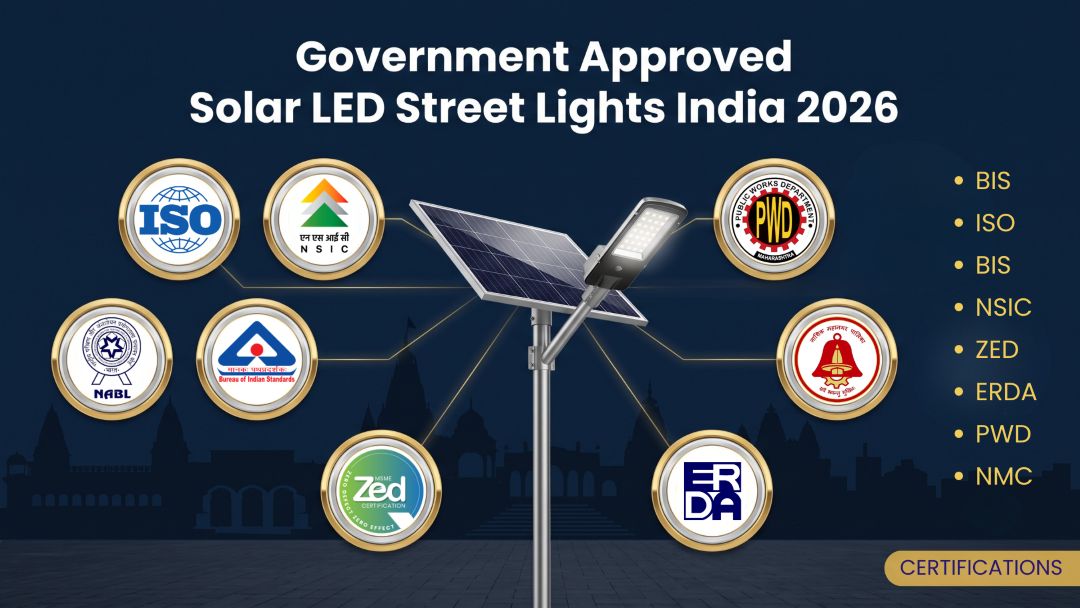
| Certifications | BIS IS 10322 · ISO 9001:2015 · PWD · ERDA · GeM |
| Rated Life | 50,000 hours |
| Warranty | 2 years (extended warranty on request) |
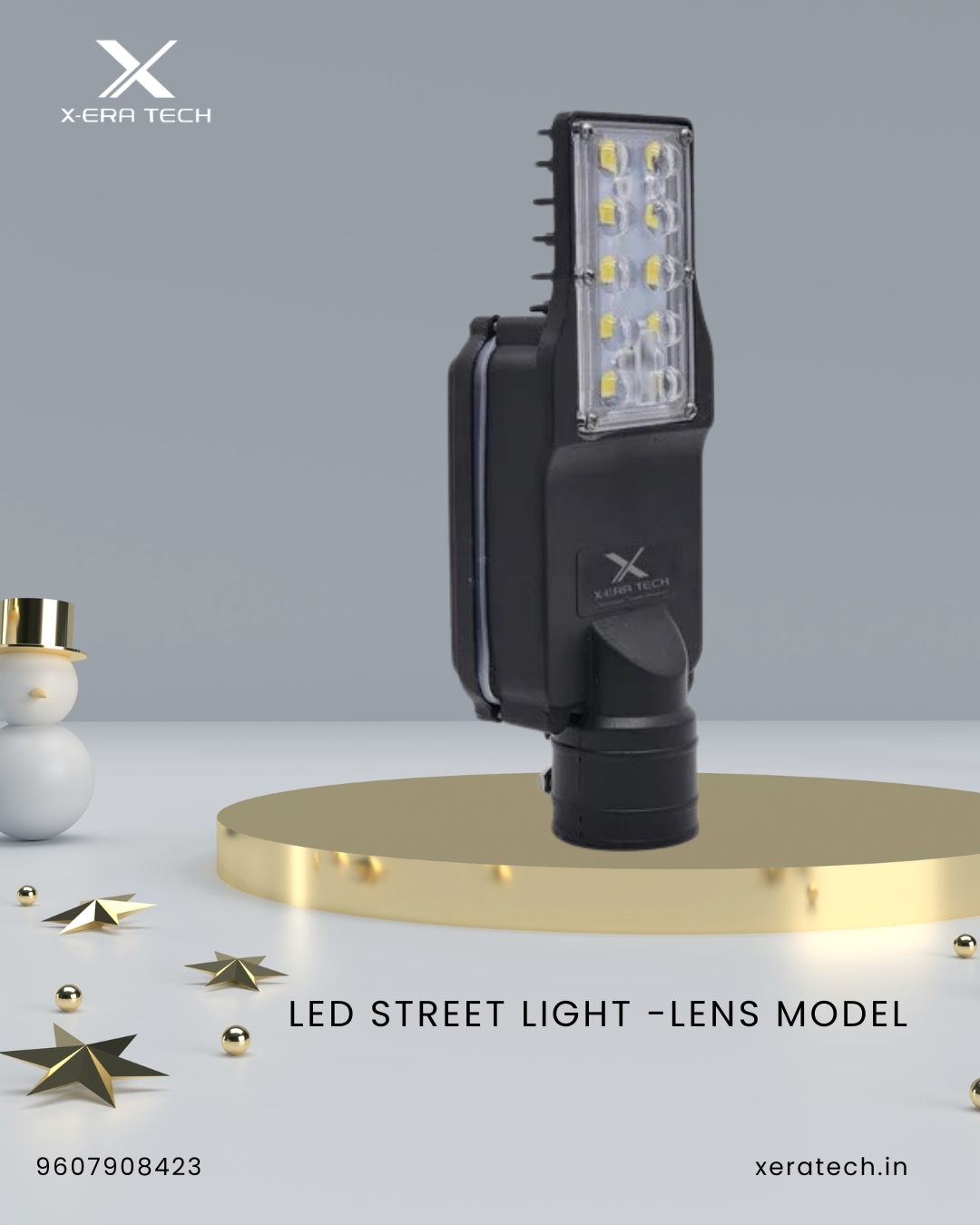
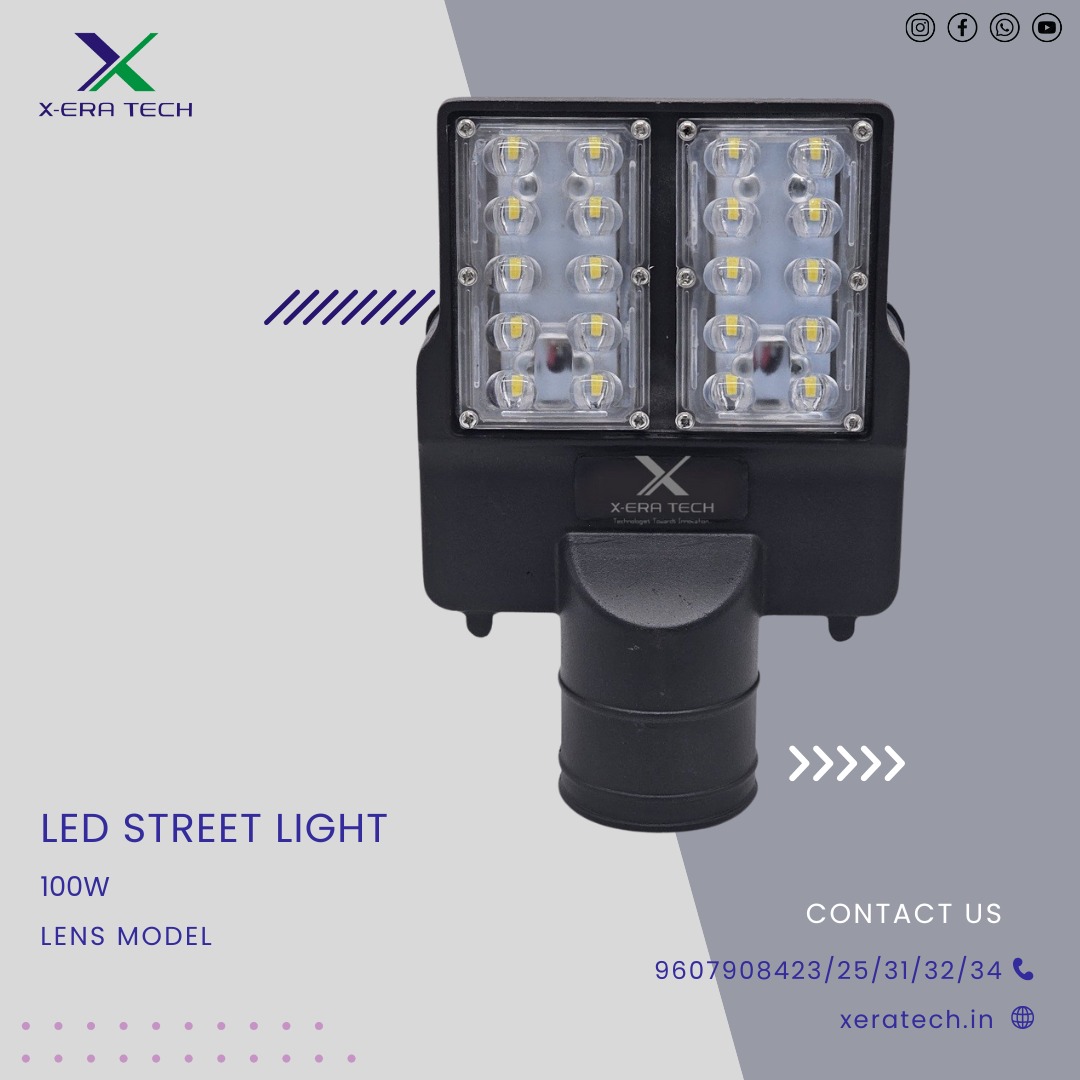
LED Street Light: Lens Model (24W to 200W)
SL-LM Series · BIS IS 10322 · IP65 · PWM Dimming Option · Precision Optics · 2-year warranty
The Lens Model uses precision moulded optical lens arrays for tighter beam control and higher lux uniformity on road surfaces. Specified for national highways, state highways (IS 1944 Category A1 and A2), and smart city arterial roads where the tender requires photometric compliance at longer pole spacings. Available with the same PWM dimming driver option as the Glass Model for full CLMS integration.
| Wattage Range | 24W to 200W |
| Smart Dimming | PWM 0 to 100% (factory option) |
| Optics | Precision lens array (Type II/III distribution) |
| IP Rating | IP65 |
| Input Voltage | 90V to 300V AC |
| Certifications | BIS IS 10322 · ISO 9001:2015 · PWD · ERDA · GeM |
| Warranty | 2 years |








Frequently Asked Questions
Need BIS-Certified Smart-Compatible LED Street Lights for Your City Project?
Xera Tech supplies BIS IS 10322 certified LED street lights (24W to 200W, Glass and Lens Model) with PWM dimming driver options for SCADA and CLMS integration. ISO 9001:2015, PWD approved, ERDA approved, GeM listed. Pan-India dispatch from Nashik. Free technical consultation for smart city tender specifications.
WhatsApp for Smart City Quote Browse LED Street Lights Submit Project EnquiryLooking for the right LED solution?
Xeratech manufactures BIS-certified LED flood lights, solar street lights, highbay lights and more — shipped across India.
Xera Tech is a BIS-certified LED lighting manufacturer established in 2017, headquartered in Nashik, Maharashtra , India. Product range: LED Street lights, Decorative lights, solar street lights (all-in-one & semi-integrated), LED Flood lights, decorative poles, and high mast lights — all manufactured at Satpur MIDC and compliant with IP65/IP67 and photometric standards. Learn more about Xera Tech →