




Every LED street light that replaces a sodium vapour lamp in India avoids approximately 124 kg of CO2 per year at the current grid emission factor of 0.71 kg CO2/kWh (CEA Version 21.0, December 2025). Every solar street light avoids it entirely, eliminating Scope 2 emissions at that pole permanently. With India committed to net zero by 2070 and a 45% carbon intensity reduction by 2030, with SEBI now mandating Scope 2 disclosure in BRSR reports, and with India's Carbon Credit Trading Scheme operational from 2025-26, LED and solar lighting upgrades have shifted from an energy-saving decision to a carbon compliance decision for every municipality, corporate campus, township developer, and industrial estate in India.
India's Climate Targets: Net Zero 2070 and 45% Intensity Reduction by 2030
India announced its net zero by 2070 target at COP26 in Glasgow in November 2021. This makes India one of over 130 countries with a net zero commitment, though India's 2070 horizon reflects both its late development stage and its position as a historically low per-capita emitter with a right to continued energy growth for its 1.4 billion people (Source: Climate Action Tracker, 2026).
India's near-term climate target is more specific and more immediately relevant to procurement and infrastructure decisions: a 45% reduction in the carbon intensity of GDP from 2005 levels by 2030, committed under India's updated Nationally Determined Contribution (NDC). India had already achieved a 36% reduction by 2020, meaning the remaining 9 percentage points of intensity reduction must be achieved in the decade to 2030. Energy efficiency in buildings, industry, and outdoor infrastructure, including street lighting, is a primary lever in this calculation (Source: cyberpeace.org, March 2025).
India's Long-Term Low Emission Development Strategy (LT-LEDS), submitted at COP27, identifies five structural levers for the net zero pathway: renewable energy scale-up, energy efficiency, green hydrogen, carbon removal, and the LiFE (Lifestyle for Environment) behavioural programme. Energy efficiency, which encompasses LED lighting, is the only lever that is simultaneously available today, cost-negative over its lifecycle, deployable without new grid infrastructure, and applicable from a 9W LED lamp to a 500-pole municipal street lighting system. The PAT scheme, UJALA programme, and BEE's Minimum Energy Performance Standards are all active components of this lever (Source: ScienceDirect, April 2025).
India's Grid Emission Factor: The Number Behind Every Carbon Calculation
The grid emission factor is the single most important number for any carbon calculation involving electricity consumption in India. It tells you how many kilograms of CO2 are emitted per kilowatt-hour of electricity consumed from the Indian grid. Every LED street light energy saving, every solar street light installation, and every corporate ESG report that claims electricity-related carbon reduction must use this number.
The authoritative source is the Central Electricity Authority (CEA), which publishes the CO2 Baseline Database for the Indian Power Sector annually. CEA Version 21.0, published December 2025, sets the provisional weighted average emission factor for FY 2024-25 at 0.710 tCO2/MWh, or 0.71 kg CO2 per kWh (Source: CEA Version 21.0, December 2025, as cited in reclimatize.in, April 2026). This is the factor to use for all Scope 2 emission calculations, CCTS compliance reporting, and SEBI BRSR sustainability disclosures for the current financial year.
This factor has been declining year on year as India adds renewable capacity: it was 0.774 a decade ago, fell to 0.727 in FY 2023-24, and is now 0.710 for FY 2024-25. The trend will continue as renewable penetration increases. This means that the carbon saving per kWh saved from LED lighting is declining over time as the grid gets cleaner, reinforcing the case for acting now: the carbon saving per LED conversion is highest today and will reduce as the grid decarbonises.
| Financial Year | CEA Version | Weighted Average Emission Factor | Change vs Prior Year |
|---|---|---|---|
| FY 2022-23 | Version 19.0 | 0.716 kg CO2/kWh | Baseline reference |
| FY 2023-24 | Version 20.0 | 0.727 kg CO2/kWh | +0.011 (demand growth outpaced RE additions) |
| FY 2024-25 | Version 21.0 (Dec 2025) | 0.710 kg CO2/kWh | -0.017 (RE additions caught up) |
The Carbon Math: How Much CO2 Does One LED Street Light Save?
The carbon saving from replacing one street light with LED follows a straightforward formula: energy saved (kWh) multiplied by the grid emission factor (0.71 kg CO2/kWh). The energy saved depends on the legacy technology being replaced and the wattage of the LED replacement.
Replacing HPSV (High Pressure Sodium Vapour) with LED
A 250W HPSV street light with its magnetic ballast draws 290W. Replacing it with a 100W LED street light saves 190W per fitting. Running 12 hours per night, 365 nights per year:
Energy saved = 190W x 12 hrs x 365 days / 1000 = 832 kWh per year per fitting.
CO2 saved = 832 kWh x 0.71 kg CO2/kWh = 591 kg CO2 per year per fitting.
For a municipal road with 100 such fittings: 59.1 tonnes CO2 per year. Over 10 years: 591 tonnes CO2 avoided from a single 100-pole road project.
Replacing metal halide with LED
A 400W metal halide fitting (450W with ballast) replaced with a 150W LED saves 300W per fitting. Energy saved per year = 300W x 12 x 365 / 1000 = 1,314 kWh. CO2 saved = 1,314 x 0.71 = 933 kg CO2 per year per fitting. For a 50-fitting stadium or factory yard perimeter: 46.7 tonnes CO2 per year.
| Legacy Fitting | Legacy Draw (with ballast) | LED Replacement | Power Saved | Annual Energy Saved (kWh) | Annual CO2 Saved (kg) |
|---|---|---|---|---|---|
| 150W HPSV | 175W | 50W LED | 125W | 547 | 388 |
| 250W HPSV | 290W | 100W LED | 190W | 832 | 591 |
| 400W HPSV | 460W | 150W LED | 310W | 1,358 | 964 |
| 250W Metal Halide | 290W | 100W LED | 190W | 832 | 591 |
| 400W Metal Halide | 450W | 150W LED | 300W | 1,314 | 933 |
| 1,000W Metal Halide (high mast) | 1,100W | 400W LED | 700W | 3,066 | 2,177 |
National Impact: UJALA and SLNP Have Already Saved Millions of Tonnes
India's two flagship LED deployment programmes provide a striking demonstration of what happens when LED adoption reaches national scale.
UJALA scheme: LED bulbs for homes
The UJALA (Unnat Jyoti by Affordable LEDs for All) scheme, implemented by EESL, has distributed over 367 million LED bulbs at subsidised prices to Indian households. The result: annual energy savings of over 38.6 million tonnes of CO2 per year (Source: Drishti IAS, citing Ministry of Power data). This makes UJALA one of the largest demand-side energy efficiency programmes in the world by CO2 reduction impact. The LED bulbs replaced 40W to 60W incandescent and CFL bulbs with 5W to 12W LEDs across households in every Indian state.
SLNP: LED street lights for municipalities
The Street Light National Programme (SLNP), also implemented by EESL, has installed 1.34 crore LED street lights across India, replacing HPSV and metal halide street lights on municipal roads. The programme delivers annual energy savings of 9,001 million units (MU) of electricity per year and CO2 reduction of 6.2 million tonnes annually, with peak demand reduction of 1,500 MW (Source: Ministry of Power, January 2026). The financial model allows municipalities to replace lights with zero upfront capital: they pay EESL from the electricity cost savings over 7 years.
The EESL SLNP model is expanding through its smart phase, targeting 5G-integrated smart poles across 500+ Indian cities by 2030, with LED lighting as the base load component. Each city that participates in the next SLNP phase adds to the national CO2 reduction tally directly. For a guide to smart LED street light specifications and the Delhi Rs 473 crore tender, see the complete guide to smart LED street lights in India 2026.
Solar Street Lights: The Complete Scope 2 Eliminator
An LED street light connected to the grid reduces CO2 emissions compared to HPSV or metal halide, but it still draws power from the grid and therefore still contributes some Scope 2 emissions (0.71 kg CO2 per kWh consumed). A solar street light eliminates Scope 2 emissions from that lighting point entirely. The energy source is sunlight; the only emissions are in the manufacturing of the panel, battery, and fixture (embodied carbon), not in operation.
For organisations required to report Scope 2 emissions under SEBI BRSR, the distinction matters significantly. A corporate campus with 100 grid-connected LED street lights at 50W each, running 12 hours per night, consumes 219,000 kWh per year and generates 155 tonnes of Scope 2 CO2 annually. Replacing those same 100 poles with solar street lights reduces that Scope 2 figure to zero. In a BRSR report, this appears as a 155-tonne reduction in Scope 2 greenhouse gas emissions, a measurable, auditable ESG achievement.
| System | Power Source | Annual Electricity Draw | Annual Scope 2 CO2 | Scope 2 vs HPSV |
|---|---|---|---|---|
| 250W HPSV (legacy) | Grid | 1,270 kWh | 902 kg CO2 | Baseline |
| 100W Grid LED street light | Grid | 438 kWh | 311 kg CO2 | -65% vs HPSV |
| 100W Solar street light (semi-integrated) | Solar | 0 kWh from grid | 0 kg CO2 (operational) | -100% vs HPSV |
For corporate campus sustainability managers, ESG consultants, and township developers targeting net zero operations, solar street lights are the only outdoor lighting technology that delivers a zero Scope 2 emissions footprint from day one. Xera Tech's semi-integrated solar street lights (12W to 120W, LiFePO4 battery, BIS IS 16102 certified) are the correct specification for this application. For more on solar street light benefits in India, see the 10 benefits of solar street lights over grid lights in India 2026.
BEE PAT Scheme, CCTS and Carbon Credits from LED Lighting
BEE PAT scheme: energy savings for large industries
The Bureau of Energy Efficiency's Perform Achieve Trade (PAT) scheme covers energy-intensive industries in nine sectors (cement, steel, aluminium, fertilisers, paper, textiles, chlor-alkali, refineries, and petrochemicals) and sets mandatory energy consumption reduction targets. Designated Consumers (DCs) that reduce energy consumption below their targets earn Energy Saving Certificates (ESCerts) that can be traded. LED lighting upgrades in factory buildings, yards, and perimeters are among the fastest and most cost-effective ways for DCs to accumulate ESCerts because lighting energy savings are immediate, measurable, and require no process changes.
For a 1,000-worker factory replacing 100 units of 400W metal halide highbay and flood lights with 150W LED alternatives, the annual energy saving is 131,400 kWh (300W saved per fitting x 12 hrs x 365 days x 100 fittings / 1000). At 0.71 kg CO2/kWh, this generates a verifiable 93.3 tonnes of CO2 reduction per year, which contributes to the factory's PAT target compliance and potentially generates tradable ESCerts.
India's Carbon Credit Trading Scheme (CCTS)
India's Carbon Credit Trading Scheme was notified under the Energy Conservation (Amendment) Act 2022 and became operational for its first compliance cycle in 2025-26. The CCTS integrates the existing PAT scheme into a broader carbon market framework and will eventually extend to non-PAT sectors. Under CCTS, the grid emission factor from CEA (currently 0.710 kg CO2/kWh) is the prescribed multiplier for calculating the Scope 2 emission reduction from electricity efficiency projects.
LED street lighting projects in municipalities, townships, and industrial estates that generate measurable, verifiable electricity savings and the corresponding CO2 reductions may be eligible to register as carbon credit projects under CCTS's voluntary offset mechanism (the exact rules for this category are under finalisation for the 2026-27 cycle). The Carbon Credit Trading Scheme is expected to attract increasing investor interest in verified energy efficiency projects as the market matures through 2027 and 2028, making LED street light conversions potentially financeable through carbon credit revenues in addition to electricity cost savings.
SEBI BRSR and ESG Reporting: Why LED Lighting Is Now a Compliance Requirement
The Securities and Exchange Board of India (SEBI) introduced the Business Responsibility and Sustainability Reporting (BRSR) framework as a mandatory disclosure requirement for the top 1,000 listed companies by market capitalisation from FY 2022-23 onwards. BRSR requires companies to disclose, among other things, total energy consumption, renewable energy consumption, Scope 1 (direct) and Scope 2 (indirect from purchased electricity) GHG emissions, and actions taken to reduce energy consumption.
What BRSR means for outdoor lighting
Every unit of electricity consumed by a company's grid-connected facilities, including outdoor LED street lights and flood lights on corporate campuses, factory yards, and warehouses, appears as a Scope 2 emission in the BRSR report. At India's grid emission factor of 0.71 kg CO2/kWh, a corporate campus with 200 grid-connected 100W LED street lights running 12 hours per night generates 0.71 x (200 x 100 x 12 x 365 / 1000) = 62.1 tonnes of Scope 2 CO2 per year from outdoor street lighting alone.
Under BRSR, this figure is disclosed publicly. Investors, ESG rating agencies (MSCI ESG, Sustainalytics, CDP), and institutional lenders increasingly evaluate this number. Replacing these 200 grid-connected LED street lights with solar street lights reduces the disclosed Scope 2 figure by 62.1 tonnes per year, a measurable, auditable improvement. For a company with a net zero or Scope 2 reduction commitment, this is a reportable achievement in every subsequent BRSR cycle.
| BRSR Disclosure Item | Applicable to LED Lighting | Data Source |
|---|---|---|
| Total energy consumption (GJ) | Yes: outdoor lighting electricity draw included | Electricity bills, energy audit |
| Renewable energy consumption | Yes: solar street lights count as 100% renewable | Solar street light system specs |
| Scope 2 GHG emissions (tCO2e) | Yes: grid electricity for outdoor lighting x 0.71 kg CO2/kWh | CEA Version 21.0 emission factor |
| Energy reduction initiatives | Yes: LED retrofit or solar installation is a qualifying initiative | Project documentation, energy savings data |
| GHG reduction initiatives | Yes: CO2 saving from LED or solar installation in tonnes CO2e | LM-79 test reports, M&V data |
For ESG managers preparing BRSR submissions, Xera Tech can provide product-level LM-79 photometric reports, system efficacy data (lm/W), and energy consumption documentation to support the Scope 2 calculation and the energy reduction initiative disclosure. Contact connect@xeratech.in or the service line at +91 9607908432 for ESG documentation requests.
Xera Tech Products: Carbon Saving Data per Model
Xera Tech, LED and solar lighting manufacturer at Satpur MIDC, Nashik, Maharashtra, India, manufactures LED and solar street lights whose carbon saving impact can be precisely calculated for any project using the CEA FY 2024-25 emission factor of 0.71 kg CO2/kWh. All products carry BIS IS 10322 (LED) or BIS IS 16102 (solar) certification, ISO 9001:2015, PWD Maharashtra, ERDA, and NABL accreditation. NABL-tested LM-79 and LM-80 reports are available on request for BRSR, CCTS, and ESG audit documentation.
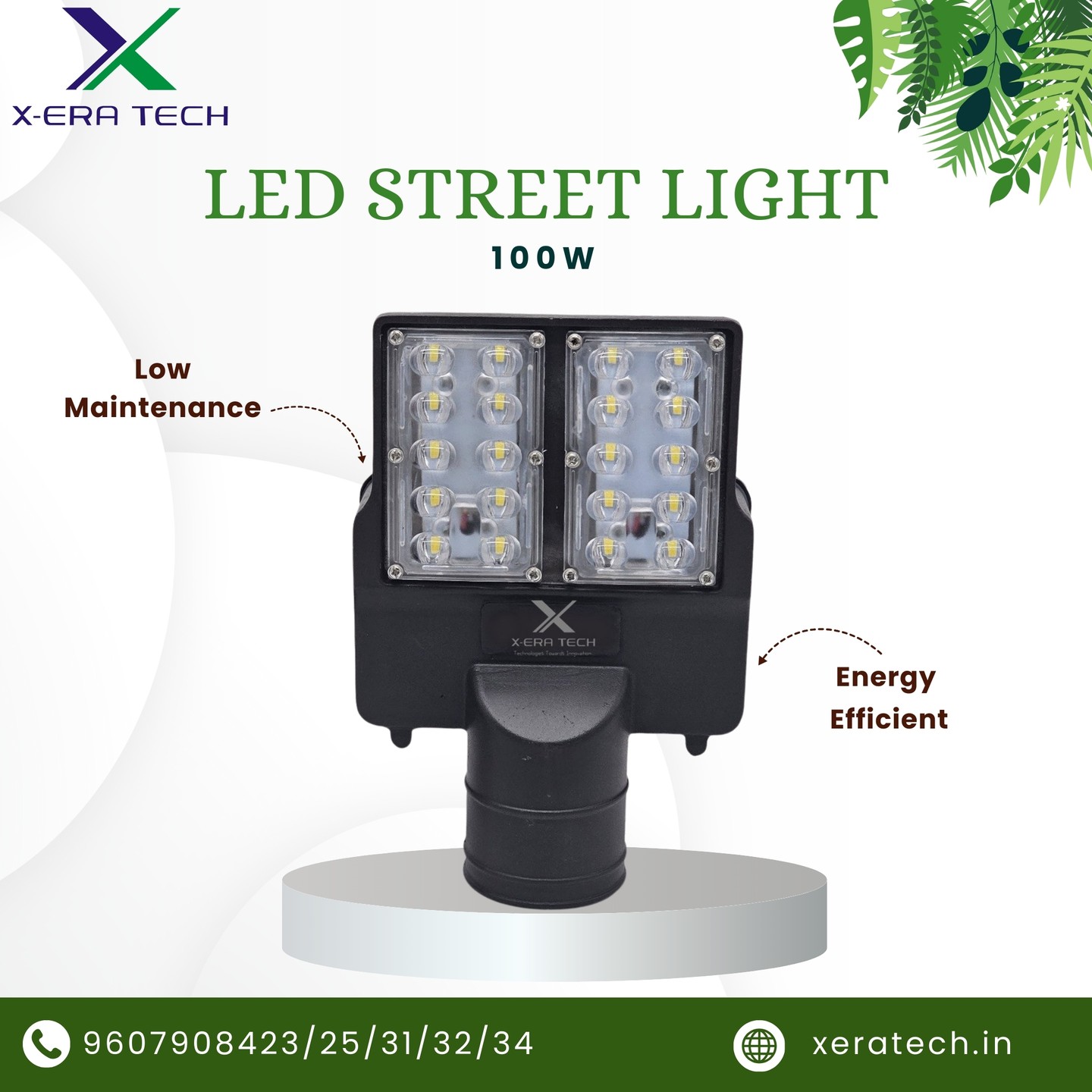
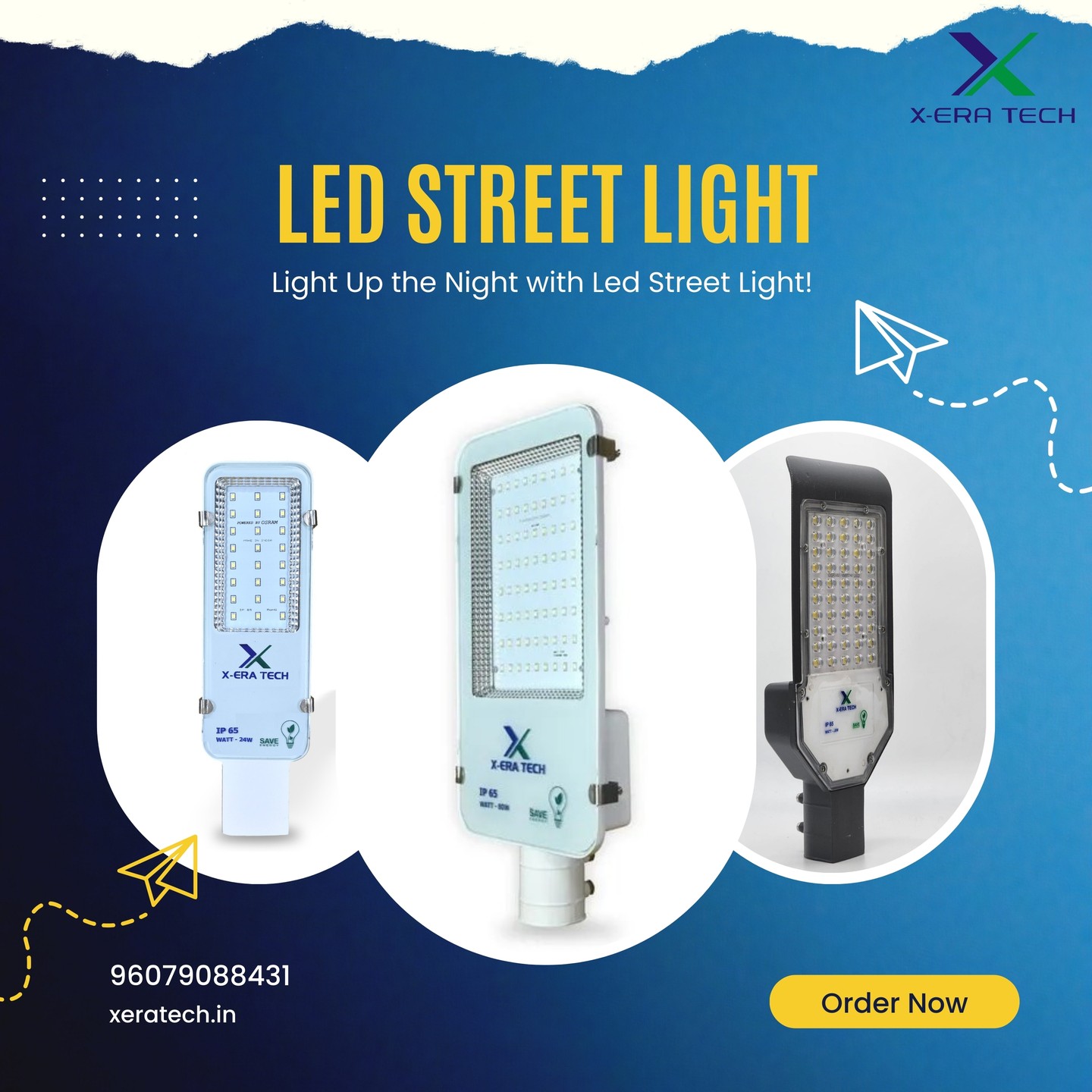
LED Street Light Glass Model (24W to 200W)
SL-GM Series · BIS IS 10322 · ISO 9001:2015 · PWD · ERDA · NABL · GeM Listed
Each 100W Glass Model street light replacing a 250W HPSV fitting saves 591 kg of CO2 per year at the CEA FY 2024-25 emission factor (832 kWh saved x 0.71 kg CO2/kWh). For 100 poles: 59.1 tonnes CO2 per year. For ESG reports and BRSR disclosures, LM-79 photometric test reports and energy consumption documentation are available on request.
| Available Wattages | 24W, 36W, 50W, 60W, 72W, 100W, 120W, 150W, 180W, 200W |
| CO2 saving vs 250W HPSV (100W model) | 591 kg CO2/year per pole (CEA FY24-25 factor) |
| CO2 saving vs 400W MH (150W model) | 964 kg CO2/year per pole |
| IP Rating | IP65 |
| Certifications | BIS IS 10322 · ISO 9001:2015 · PWD · ERDA · NABL · GeM |
| ESG Documentation | LM-79, LM-80 reports available on request |
| Warranty | 2 years |

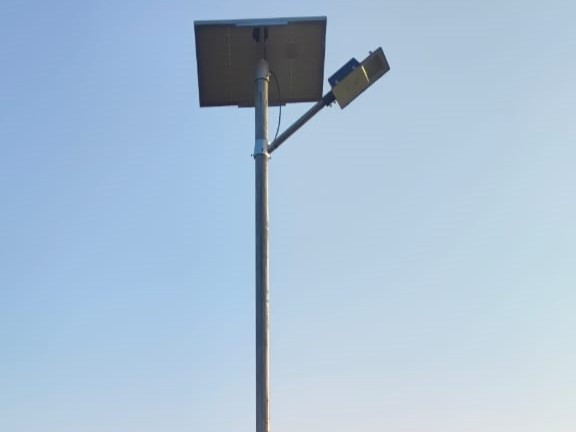
Semi-Integrated Solar Street Light (12W to 120W)
BIS IS 16102 · LiFePO4 · IP65 · Zero Scope 2 Emissions · ISO 9001:2015
Zero operational Scope 2 CO2 emissions. A 50W semi-integrated solar street light running 12 hours per night avoids 131 kg of Scope 2 CO2 per year versus a grid-connected equivalent (219 kWh x 0.71 kg CO2/kWh avoided), and eliminates the entire Scope 2 footprint at that pole compared to any grid-connected technology. For BRSR reporting, solar street lights are classified under renewable energy consumption, not grid electricity consumption.
| Available Wattages | 12W to 120W |
| Scope 2 CO2 (operational) | Zero (solar powered) |
| Annual CO2 avoided vs grid LED 50W | 131 kg CO2/year per pole |
| Annual CO2 avoided vs 150W HPSV | Approx 310 kg CO2/year per pole |
| Battery | LiFePO4 (7 to 10 year life) |
| BRSR Classification | Renewable energy consumption (zero Scope 2) |
| Warranty | 2 years |






Frequently Asked Questions
Want Carbon Saving Documentation for Your ESG or BRSR Report?
Xera Tech supplies BIS IS 10322 certified LED street lights and BIS IS 16102 certified solar street lights with NABL test reports available for Scope 2 carbon calculations, SEBI BRSR disclosures, CCTS project registration, and BEE PAT compliance documentation. Made in Nashik. Pan-India supply. ESG documentation on request.
Request ESG Documentation Browse LED Street Lights Contact for Bulk Project QuoteLooking for the right LED solution?
Xeratech manufactures BIS-certified LED flood lights, solar street lights, highbay lights and more — shipped across India.
Xera Tech is a BIS-certified LED lighting manufacturer established in 2017, headquartered in Nashik, Maharashtra , India. Product range: LED Street lights, Decorative lights, solar street lights (all-in-one & semi-integrated), LED Flood lights, decorative poles, and high mast lights — all manufactured at Satpur MIDC and compliant with IP65/IP67 and photometric standards. Learn more about Xera Tech →