



LED Street Light Wattage, Pole Height & Spacing: The Complete Selection Guide for Indian Roads 2026
India installed 1.34 crore LED street lights under SLNP, saving 9,001 million units of electricity annually. EESL is actively expanding the programme with new state tenders in 2026. Yet the most common error on street light projects — from gram panchayat village roads to PWD state highways — remains the same: wrong wattage for the road class, wrong pole height for the wattage, wrong pole spacing for the lux requirement. The result is either a dark road that fails IS:1944, or an over-lit one wasting ₹40,000/km/year in electricity. This guide gives you the exact selection logic so you get it right from the drawing stage.
Why Getting This Right Matters in 2026
India's LED street lighting story has two chapters. The first was about adoption — making the switch from sodium vapour and metal halide. That chapter is largely written: highway and roadway lighting is now expanding at 11.03% CAGR on the back of Smart Cities and highway modernization projects, and SLNP has already delivered 1.34 crore installations.
The second chapter — the one we're in now — is about quality and efficiency of specification. Municipalities and gram panchayats replacing old lights don't always have an electrical engineer on staff. EPC contractors bid on quantity, not photometric design. Housing societies accept whatever the contractor quotes. The result: misspecified projects that are either too dim to pass IS:1944 (creating liability for the municipality), over-specified (wasting energy and budget), or correctly wattaged but wrongly spaced (same problem, different cause).
Getting wattage, pole height, and spacing right simultaneously is not complicated — but it requires knowing three specific things: the road class (which determines the lux requirement), the pole height (which determines how much ground area each fixture covers), and the luminaire model (which determines the beam angle and uniformity). This guide walks through all three.
IS:1944 — India's Road Lighting Standard Explained
IS:1944 is the Bureau of Indian Standards specification for road and street lighting. It classifies public roads into categories and specifies the minimum illuminance (lux) and uniformity ratio (minimum:average lux) for each. Any municipal, PWD, or EESL SLNP tender will reference IS:1944 compliance in its specification documents.
| IS:1944 Class | Road Type | Avg. Lux (maintained) | Uniformity Ratio (min:avg) | Typical Application |
|---|---|---|---|---|
| P1 | Major / Arterial Road | 15–20 lux | ≥ 0.4 | State highways, arterial urban roads, NH feeder |
| P2 | Collector Road | 10–15 lux | ≥ 0.4 | Secondary urban roads, busy market roads |
| P3 | Local Distributor | 7.5–10 lux | ≥ 0.4 | Local distributor, town entry roads |
| P4 | Residential Road | 5–7.5 lux | ≥ 0.4 | Residential roads, colony main roads |
| P5 | Residential Lane | 3–5 lux | ≥ 0.3 | Colony internal lanes, residential side streets |
| P6 | Low-Traffic Path | 1.5–3 lux | ≥ 0.3 | Footpaths, garden paths, very low-traffic lanes |
| M1–M2 | Motorway / Expressway | 20–30 lux | ≥ 0.4 | National highways, expressways, bypass roads |
The uniformity ratio ensures even illumination — a high-average-lux road with dark patches between poles fails IS:1944 even if the average looks right. This is why spacing matters as much as wattage. Understand how LED street light optics achieve uniform distribution →
Pole Height Selection by Road Type
Pole height determines the coverage radius of each fixture. A single fixture at height H illuminates a ground area of radius approximately 0.8H to 1.2H depending on the luminaire's beam angle. The general rule of thumb used by PWD and EESL engineers across India:
Pole height ≈ Road width for single-side mounting. Pole height ≈ 0.5–0.7× road width for central median or double-side mounting.
| Road Width | Pole Height | Mounting Arrangement | IS:1944 Class Target |
|---|---|---|---|
| 3–5 m (lane / footpath) | 4–5 m | Single side | P5–P6 |
| 5–7 m (colony road) | 5–7 m | Single side | P4–P5 |
| 7–9 m (residential / market) | 7–8 m | Single or staggered | P3–P4 |
| 9–12 m (collector / district road) | 8–9 m | Staggered or opposite | P2–P3 |
| 12–18 m (arterial / state road) | 9–10 m | Opposite or central median | P1–P2 |
| 18–30 m (highway / expressway) | 10–12 m | Central median or both sides | M1–M2 |
Wattage Selection by Road Class
Wattage is the output of the pole height and lux calculation — not the starting point. Once you know the pole height and target lux, the required wattage follows from the luminaire's efficacy (lm/W) and beam distribution. The table below is a practical ready-reference for the most common Indian road scenarios:
| IS:1944 Class | Road Type | Pole Height | Recommended Wattage | Xeratech Model | Replaces |
|---|---|---|---|---|---|
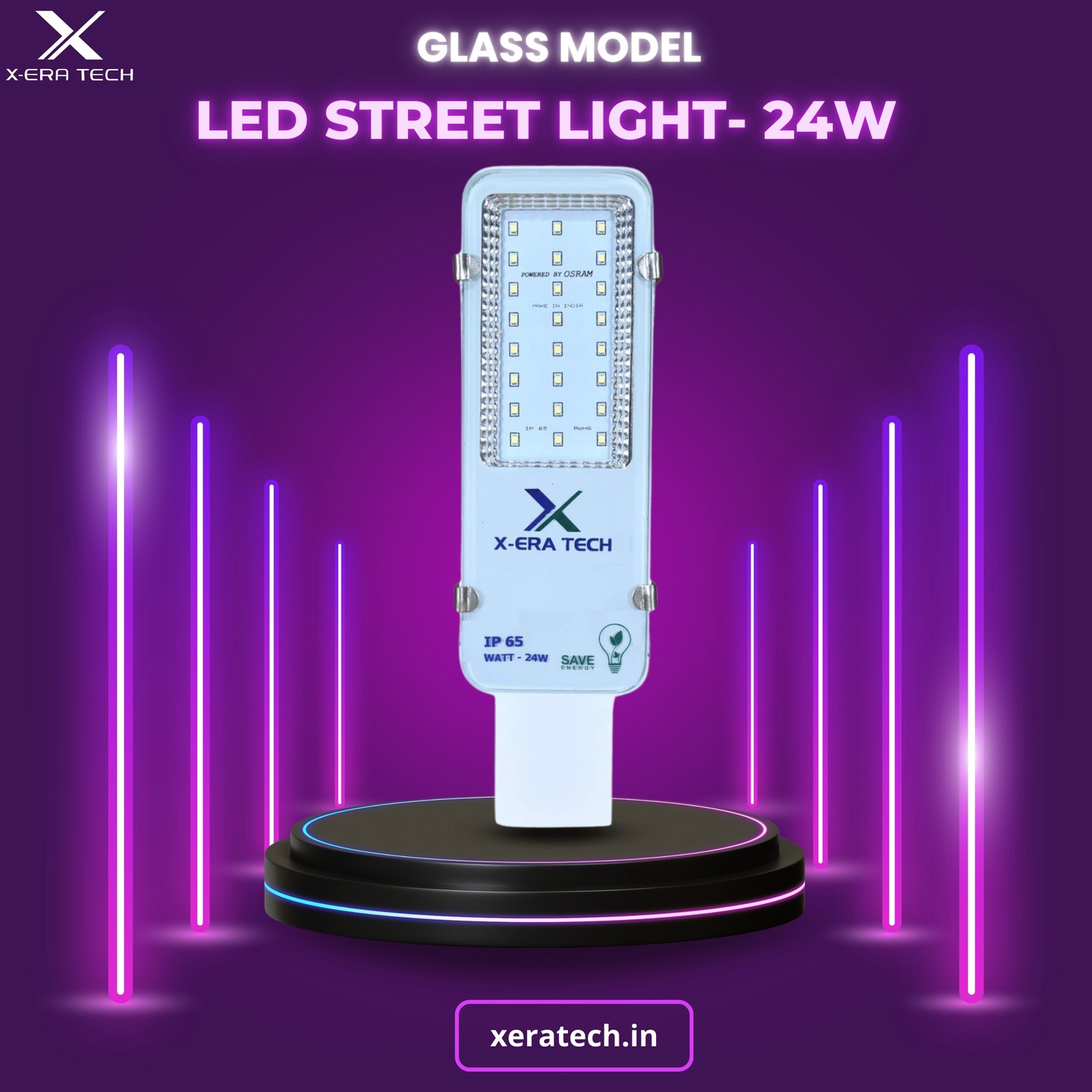
| P5–P6 | Colony lanes, footpaths | 4–6 m | 9W–24W | 24W Compact Glass | 70W SV |
| P4 | Residential colony roads | 6–7 m | 24W–40W | 24W / 36W Glass | 70–150W SV |
| P3 | Local distributor, market roads | 7–8 m | 40W–65W | 50W Glass or Lens | 150W MH |
| P2 | Collector, district roads | 8–9 m | 65W–100W | 100W Glass or Lens | 250W MH / 150W HPS |
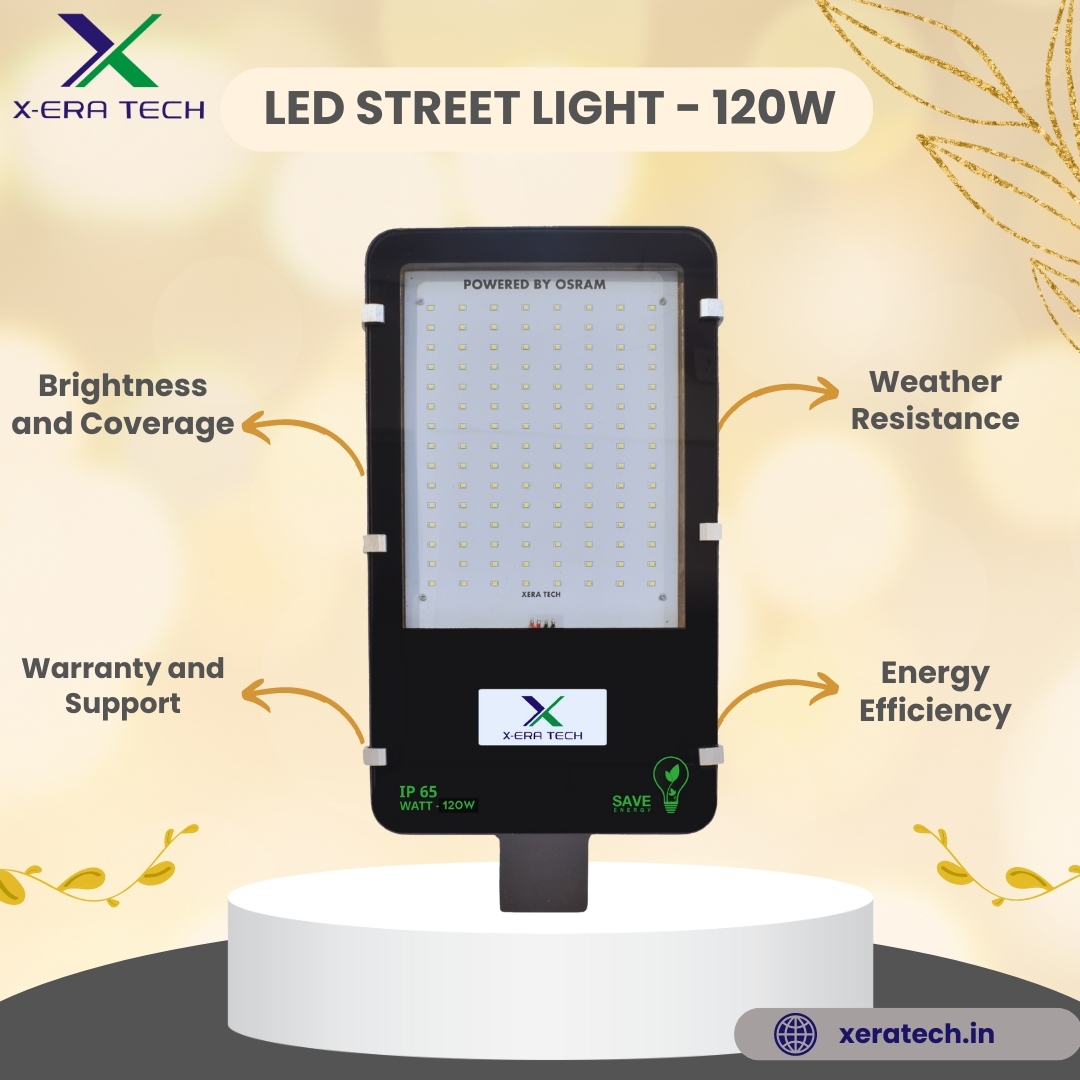
| P1 | Arterial, state highways | 9–10 m | 100W–150W | 120W Glass or Lens | 400W MH / 250W HPS |
| M1–M2 | National highways, expressways | 10–12 m | 150W–200W | 150W–200W Lens | 400W MH |
SV = Sodium Vapour. MH = Metal Halide. HPS = High-Pressure Sodium.
Pole Spacing — The Formula and the Table
Pole spacing controls illuminance uniformity. Too wide and you get dark patches between pools of light, failing the IS:1944 uniformity ratio. Too narrow and you waste energy and capital on unnecessary poles.
The working formula used by Indian lighting designers:
Spacing (S) = (Luminous Flux × Utilisation Factor × Maintenance Factor) ÷ (Required Lux × Road Width)
For field engineers without a photometric software licence, the practical rule of thumb is:
Spacing = 3× to 4× pole height, subject to lux check

| Pole Height | Typical Spacing Range | Road Width Served | Wattage at This Height | Notes |
|---|---|---|---|---|
| 4–5 m | 12–18 m | 3–5 m | 9W–24W | Colony lanes, footpaths |
| 6–7 m | 20–28 m | 5–8 m | 24W–50W | Residential roads, market streets |
| 7–8 m | 25–32 m | 7–10 m | 50W–80W | Local distributor, busy colony roads |
| 8–9 m | 28–36 m | 9–14 m | 80W–120W | Collector, district, PWD roads |
| 9–10 m | 32–42 m | 12–18 m | 100W–150W | Arterial, state highway, SLNP |
| 10–12 m | 38–50 m | 18–30 m | 150W–200W | National highway, expressway |
Important: Lens model luminaires — because of their asymmetric beam distribution — can achieve 15–20% wider spacing than glass models at the same wattage while maintaining the same lux level. Specifying lens model on a P1 or P2 road can reduce pole count per km by 2–3 poles — a significant saving on civil and cable infrastructure costs. Read the full LED vs traditional efficiency comparison →
Glass Model vs Lens Model — Which to Specify
Glass Model
Distribution: Symmetric, wide — light spreads evenly in all directions from the fixture.
Best for: Colony roads, village streets, footpaths, narrow roads where even all-round coverage is needed. Simpler to specify without photometric software — works well at standard spacing.
Limitation: More light spills behind and above the road plane — lower utilisation factor means higher wattage needed for the same lux on the road surface.
Lens Model
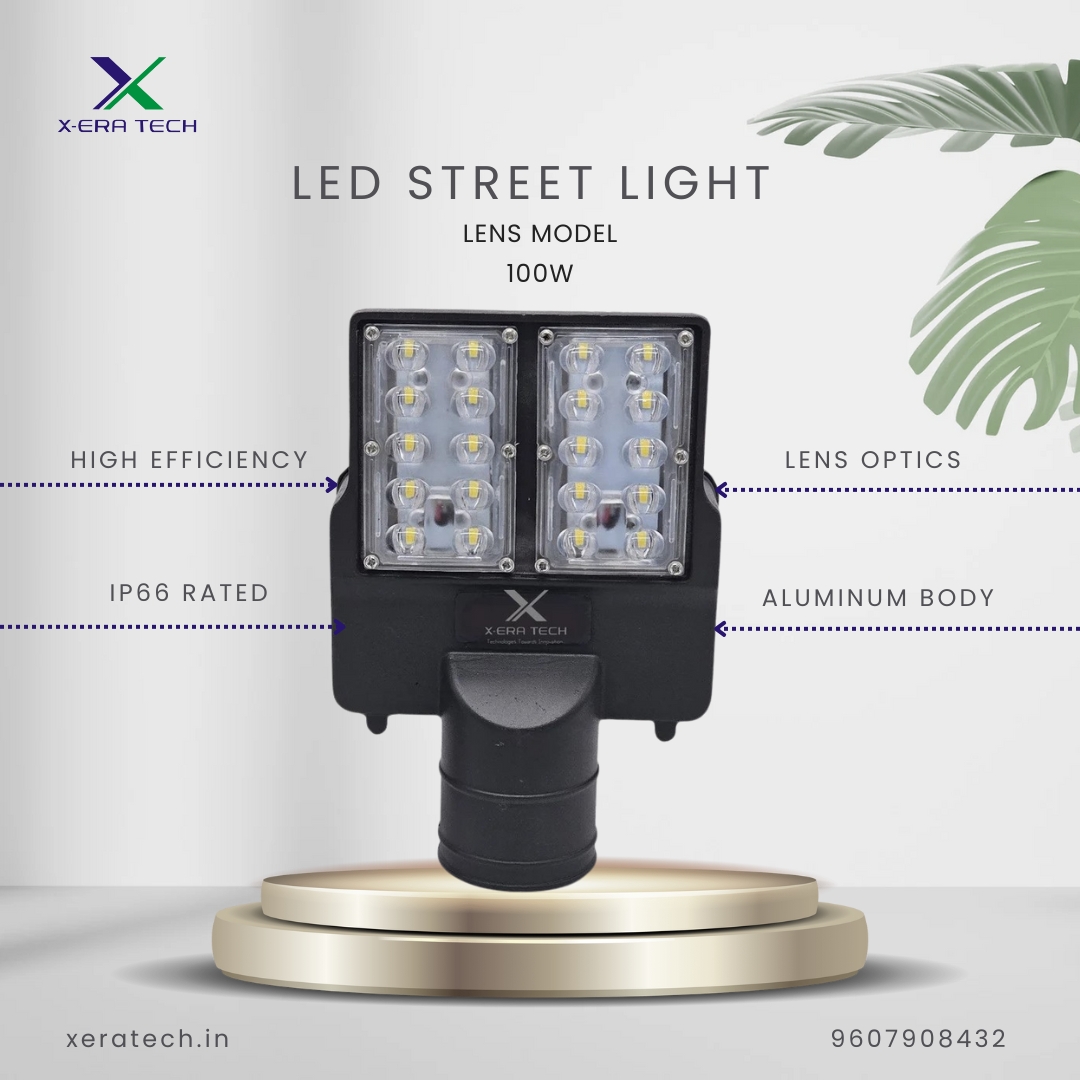
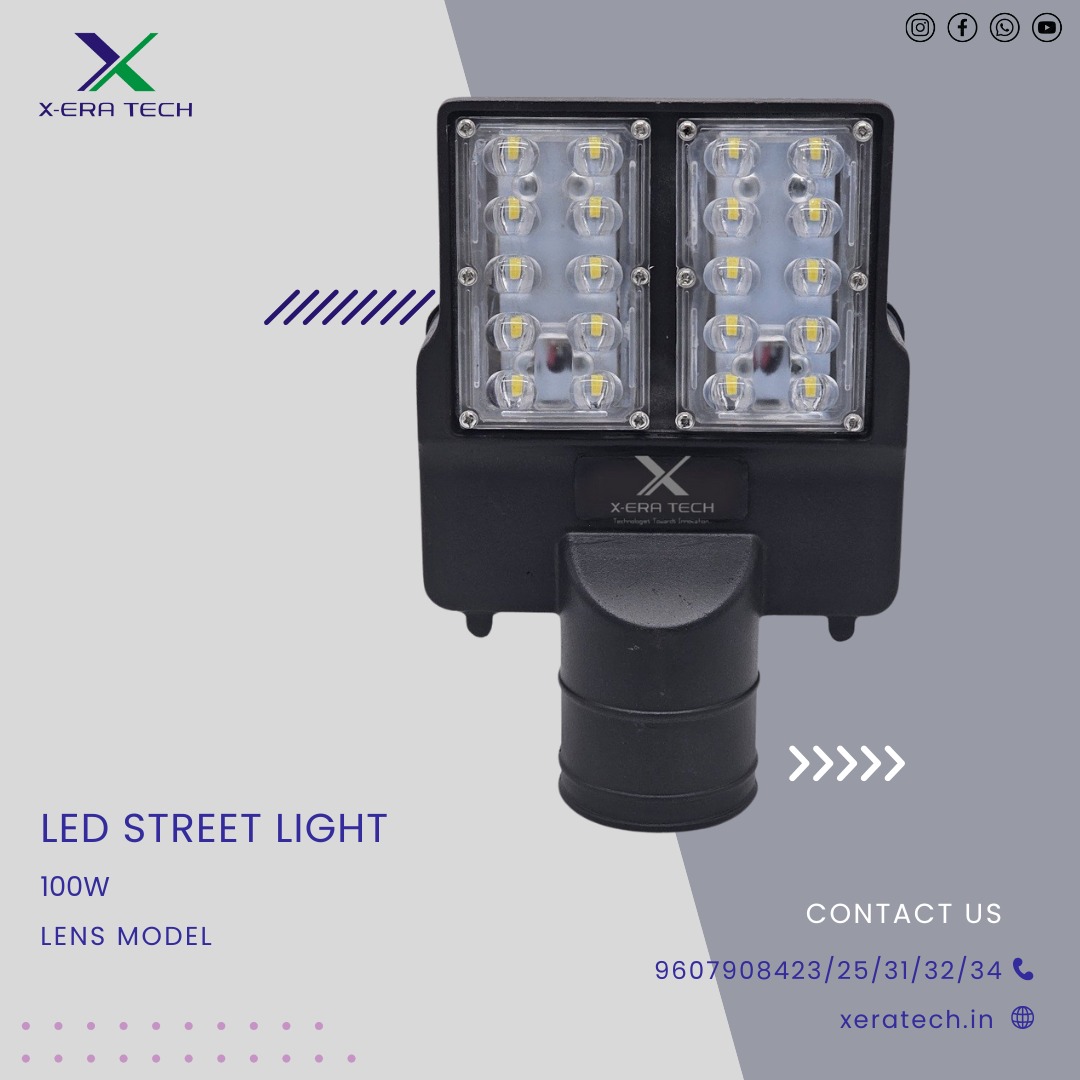
Distribution: Asymmetric — optical lenses throw more light forward along the road axis and less sideways or backward.
Best for: District roads, state highways, PWD roads, national highways, EESL SLNP tenders. IS:1944 P1–P2 compliance is easier to achieve with asymmetric optics. Glare control is better — important for driver comfort on high-speed roads.
Advantage: Higher road surface utilisation factor means lower wattage or wider spacing at the same lux — better lifetime energy efficiency and lower per-km installation cost.
Quick rule for India: Colony road or village street → Glass model. District road and above, or any PWD / SLNP tender → Lens model.
Single-Side vs Double-Side Pole Arrangement
How poles are positioned relative to the road affects the uniformity ratio as much as wattage and spacing:
- Single-side: All poles on one side of the road. Suited for roads up to 7 metres wide. Simpler to install (single cable run), lower civil cost. Works well for colony roads and village streets.
- Staggered: Alternating poles on each side. Suited for roads 7–12 metres wide. Provides better uniformity than single-side without the cable cost of opposite mounting.
- Opposite: Poles directly across from each other on both sides. Best uniformity for wide roads (12+ metres). Higher civil and cable cost but mandatory for IS:1944 P1–P2 compliance on wide carriageways.
- Central median: Poles on a central median with fixtures on both arms. Used on divided highways with medians. Fewest total poles per km, best uniformity — but requires a divider and higher pole height (9–12 metres).
SLNP & PWD Tender Compliance in 2026
EESL's Street Lighting National Programme is actively expanding. EESL has formally accepted Andhra Pradesh's proposal with the tendering process targeted for completion by May 2026 — one of several states expanding their SLNP footprint this year. For suppliers and EPC contractors bidding on SLNP or PWD street lighting tenders, the compliance checklist is non-negotiable:
- BIS certification (IS:10322 for luminaires) — mandatory
- IS:1944 photometric compliance — lux level and uniformity ratio per road class
- IP66 rating minimum — for all outdoor pole-mounted luminaires
- Power factor ≥ 0.90
- THD ≤ 20%
- Wide voltage range (85V–265V AC) for India's grid variability
- IES/LDT photometric files for DIALux layout submissions
- Minimum 2-year manufacturer warranty
Xeratech's full LED street light range meets all SLNP and PWD tender requirements. BIS certified, IP66, wide voltage input, IES files available on request. Request photometric files and compliance documentation →
For context on how smart city LED programmes integrate with SLNP: Smart Cities and LED Solar Solutions →
Xeratech LED Street Light Range — 46+ Products, 9W to 200W
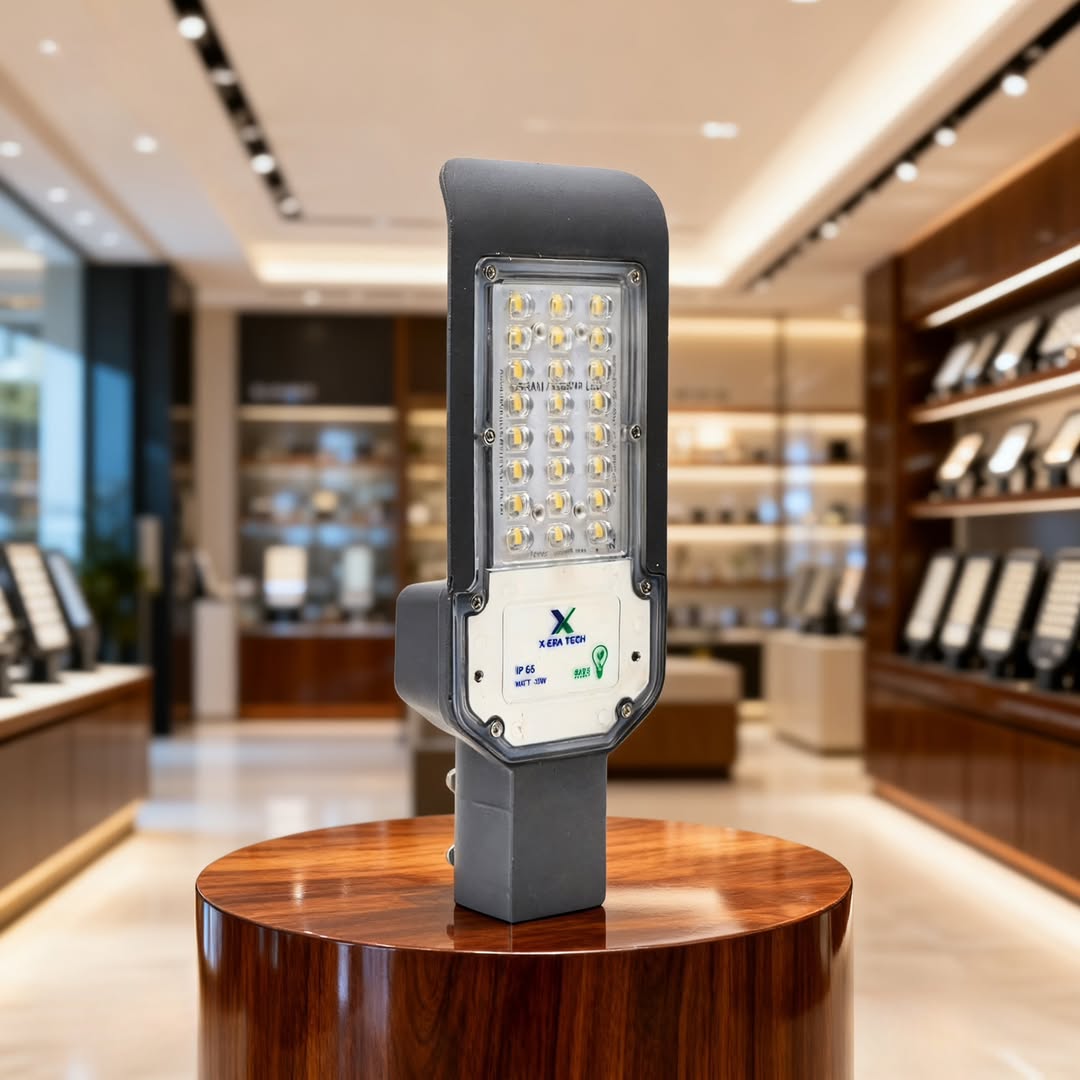
Xeratech manufactures 46+ LED street light products at Satpur MIDC, Nashik — the complete range from compact 9W colony lane lights to 200W highway luminaires, in both glass model and lens model configurations. All BIS certified, IP66, PWD and ERDA approved.
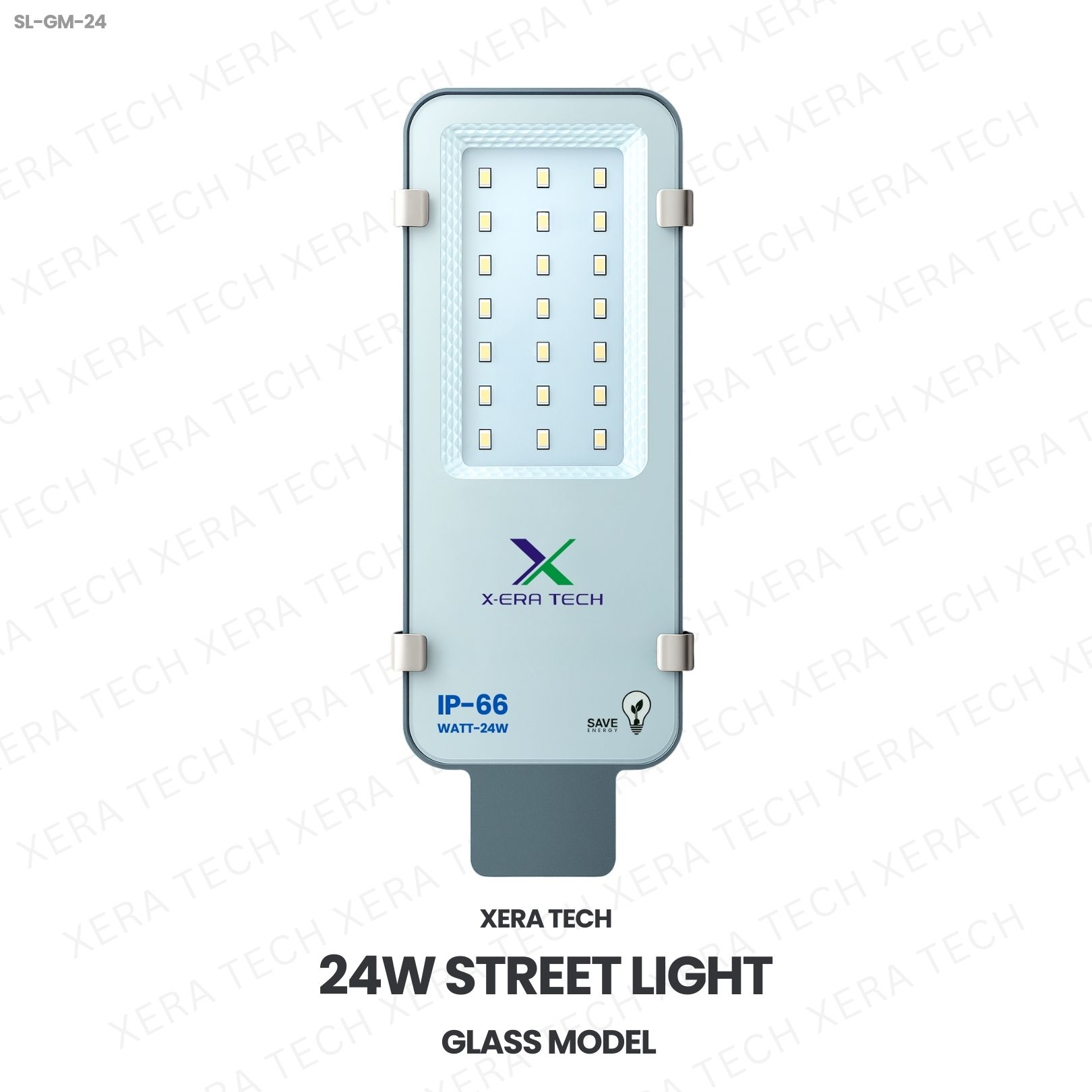
24W Glass Model LED Street Light
Compact glass model for P4–P5 residential lanes and colony roads. 4–6m pole. Replaces 70W sodium vapour. BIS certified. IP66.
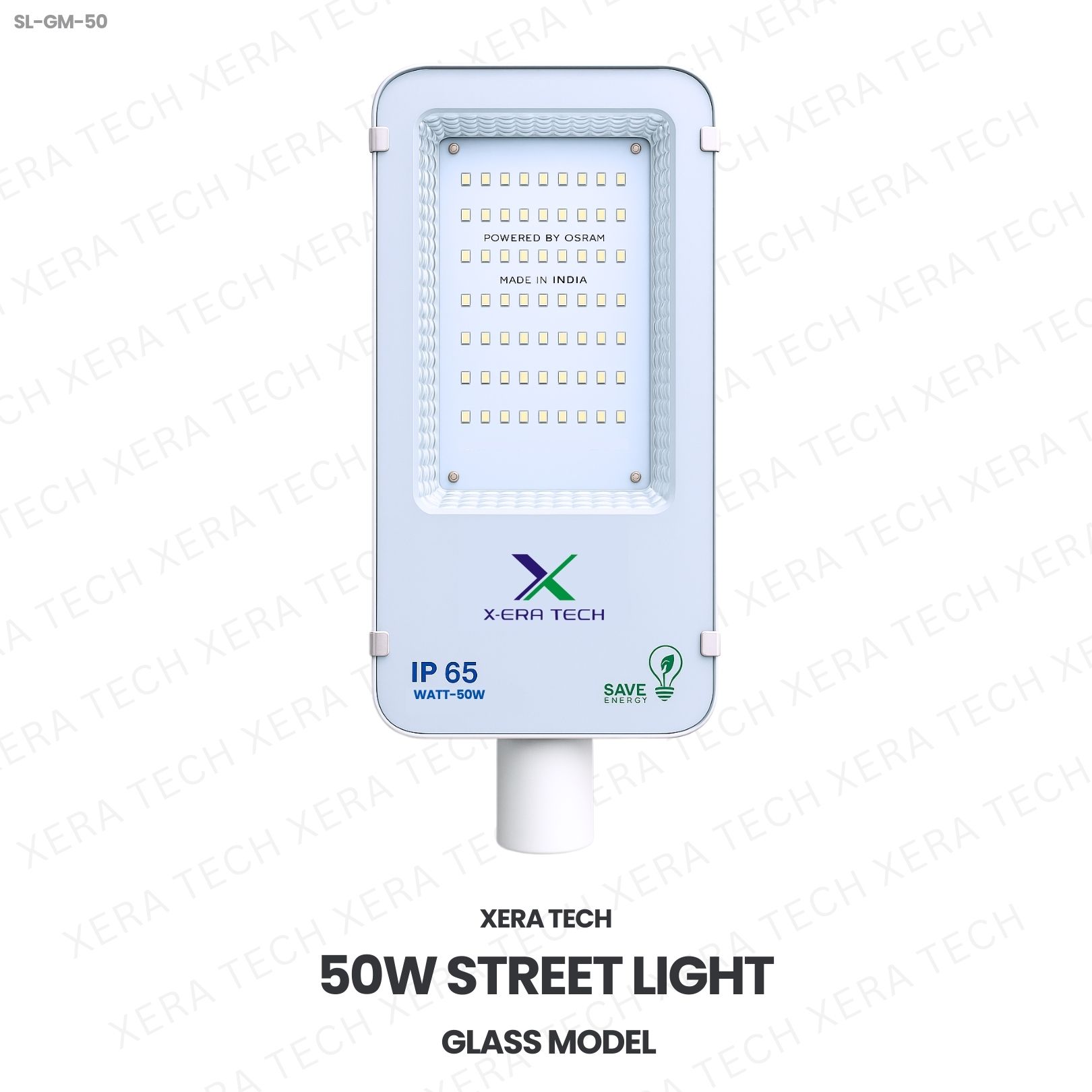
50W Glass Model LED Street Light
Glass model for P3–P4 market roads and residential distributor roads. 7m pole. Replaces 150W MH. BIS certified. IP66.
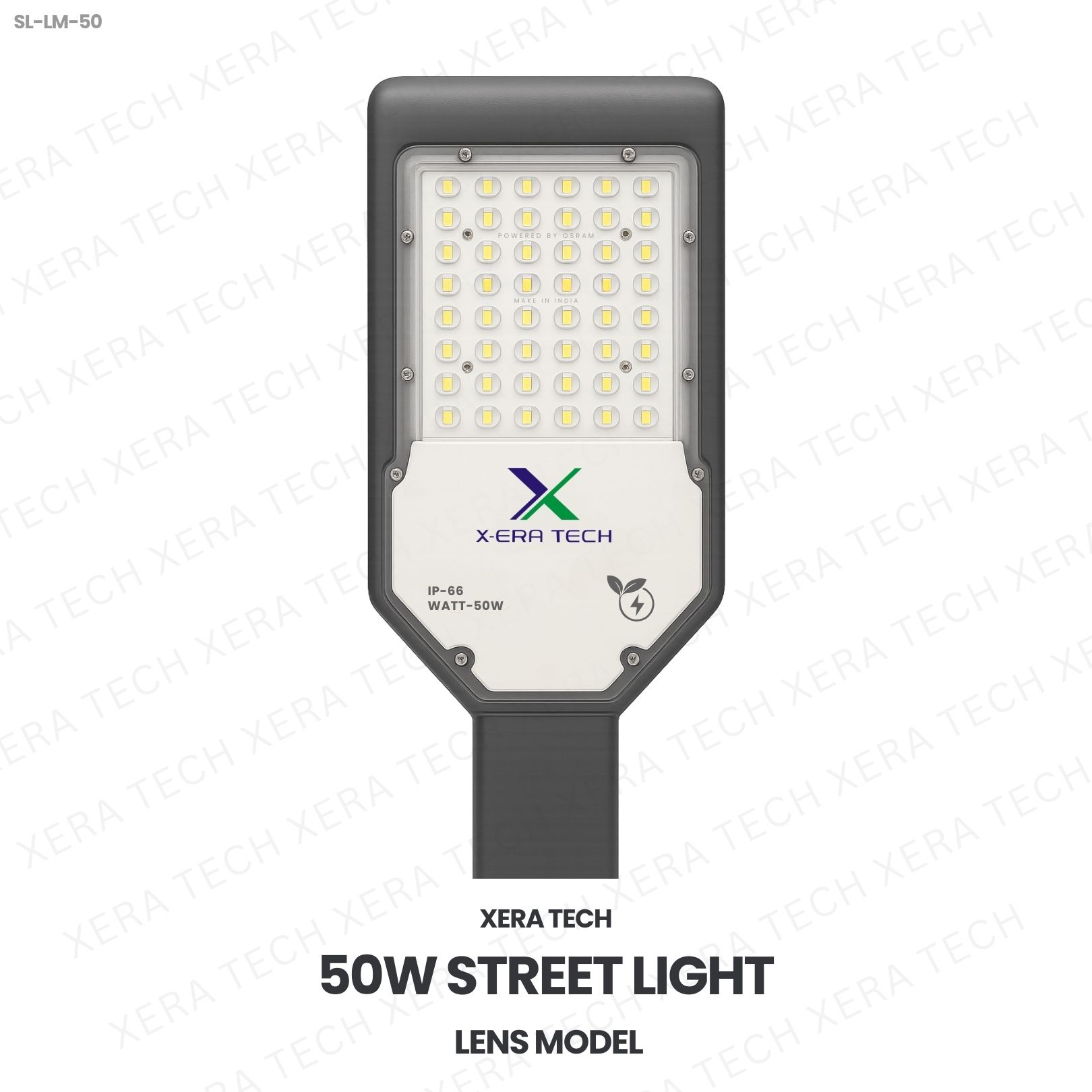
50W Lens Model LED Street Light
Asymmetric lens model for P3 district and wide residential roads. 7–8m pole. Better uniformity at wider spacing vs glass model. BIS certified. IP66.
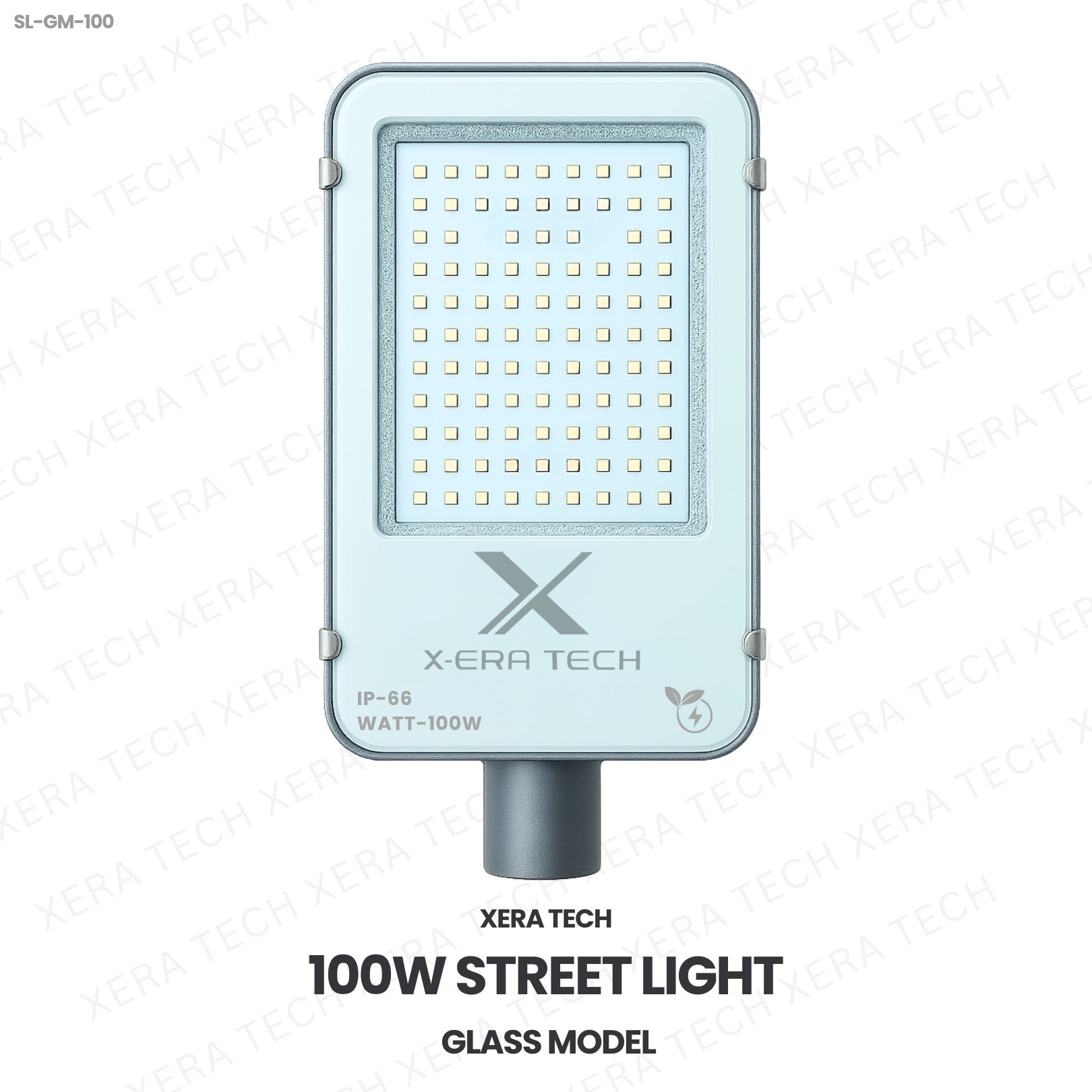
100W Glass Model LED Street Light
High-output glass model for P2 collector and state roads. 8–9m pole. Replaces 250W MH. Suitable for SLNP and PWD tenders. BIS certified. IP66.
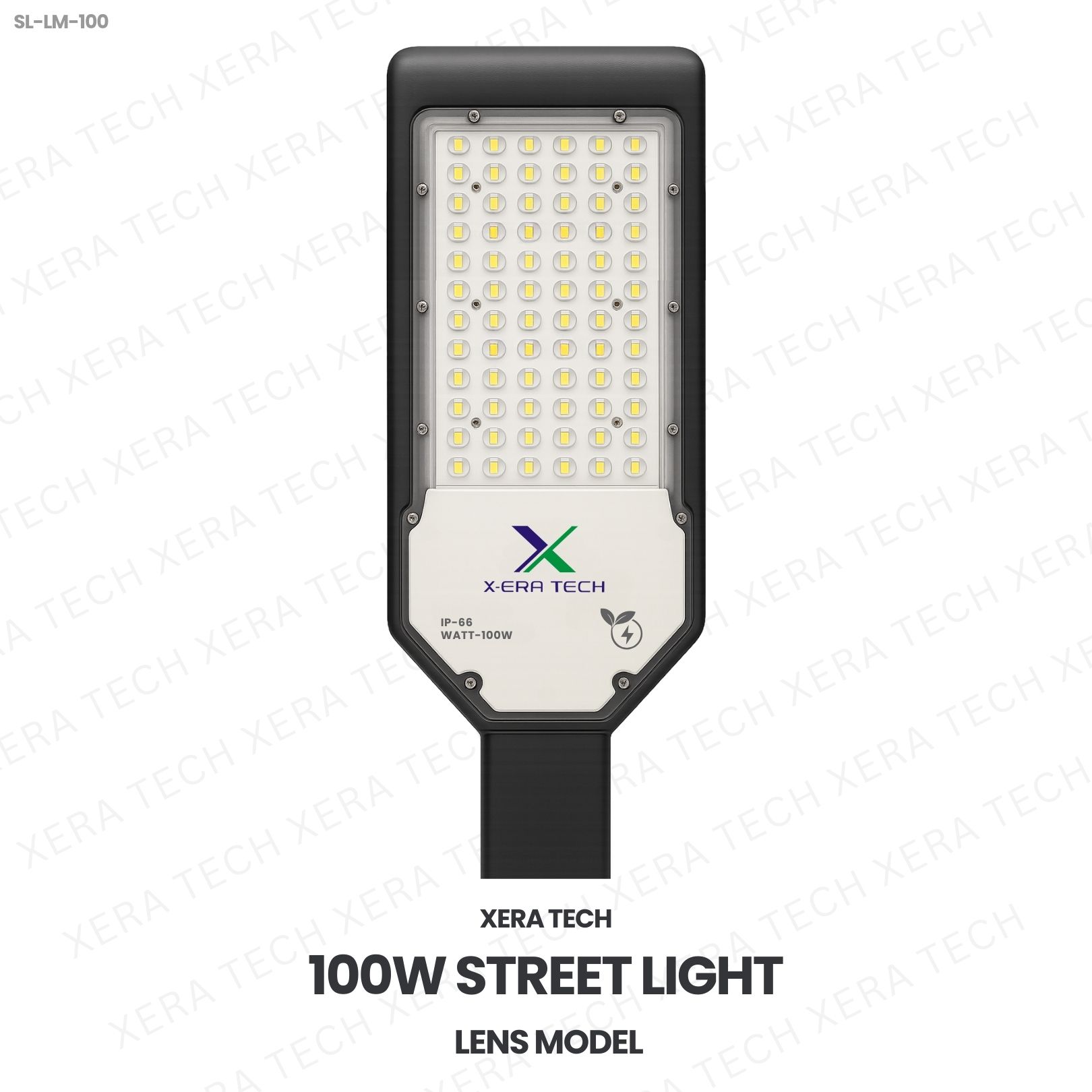
100W Lens Model LED Street Light
Asymmetric lens model for P1–P2 arterial roads and major road tenders. 9–10m pole. IS:1944 P1 compliant with photometric layout. BIS certified. IP66.
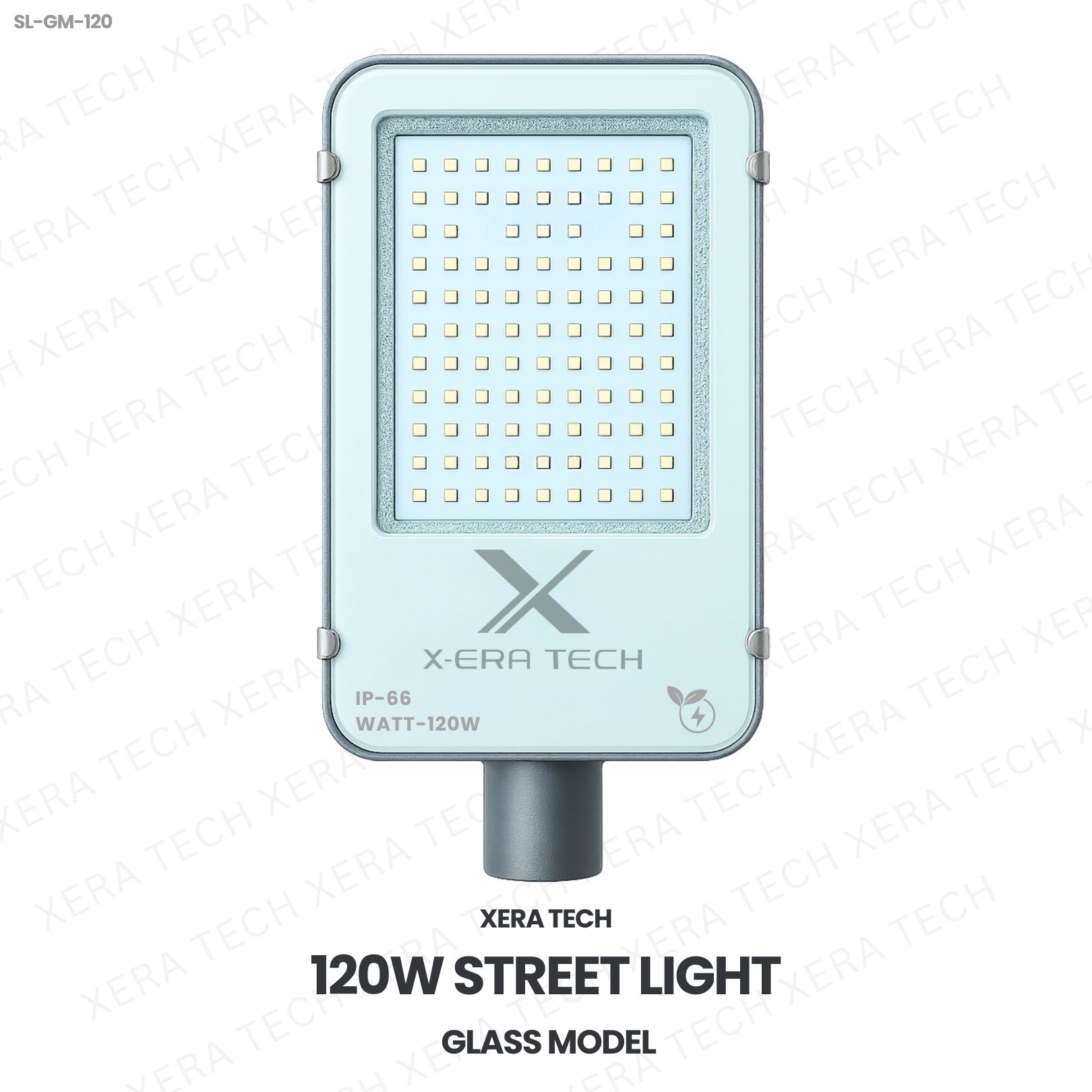
Browse all 46+ Xeratech LED street lights — glass model and lens model →
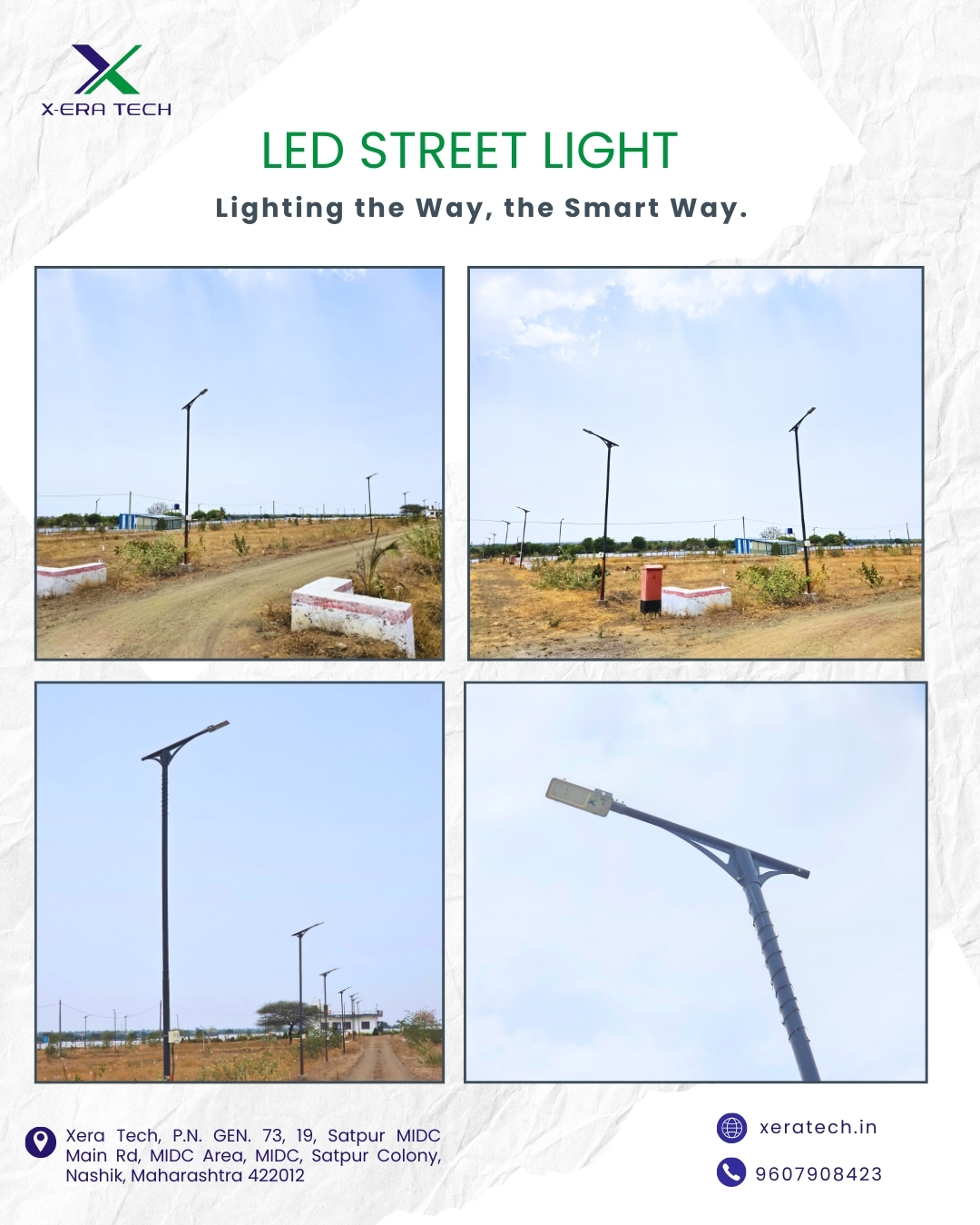
Real Project: LED Street Light Installation — Pimpalgaon, Maharashtra
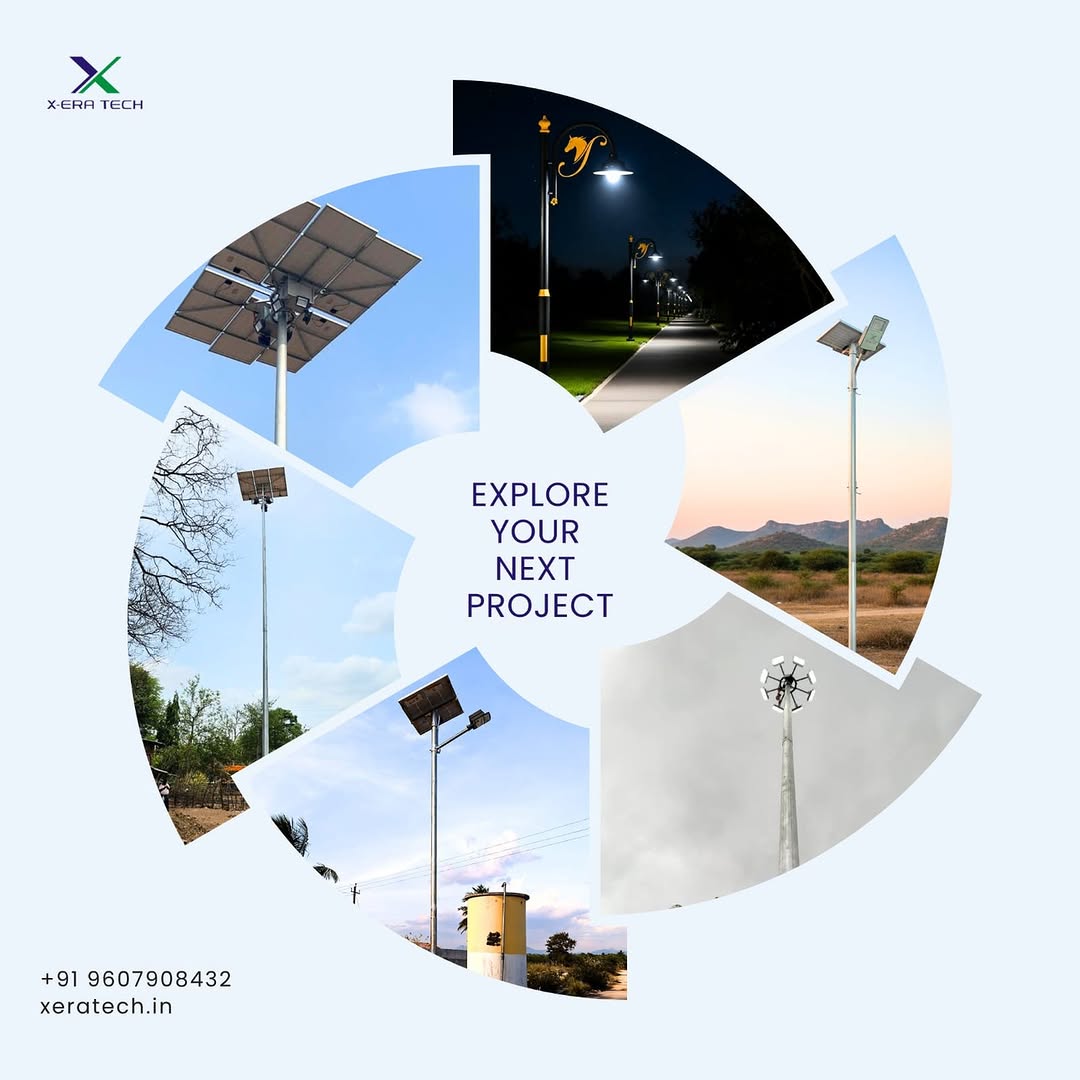
The Xeratech Pimpalgaon project demonstrates the complete selection logic in action. Road type determined the IS:1944 class. IS:1944 class set the lux target. Lux target and pole height determined the wattage. Wattage and lumen output set the spacing. The result: a properly lit road meeting all photometric requirements at optimised energy consumption.
Browse all Xeratech completed street light projects →
Frequently Asked Questions
What wattage LED street light do I need for a residential colony road?
For a typical residential colony internal road 4–6 metres wide with a 6-metre pole, 24W–30W LED at 20–25m spacing achieves 5–7.5 lux (IS:1944 P4). For the main entry road of a colony (7–8 metres wide, 7m pole), 50W at 25–30m spacing is the standard specification. Xeratech's 24W Compact Glass Model is the right entry-level choice for colony lanes.
What is IS:1944 and why does it matter for LED street light selection?
IS:1944 is the Bureau of Indian Standards specification for road and street lighting. It classifies roads into classes (P1 through P6, M1–M2) and specifies the minimum average illuminance (lux) and uniformity ratio for each. Municipal, PWD, and EESL SLNP tenders require IS:1944 compliance. The wrong wattage or pole height for a road class results in either non-compliance or energy waste.
What is the correct pole spacing for LED street lights in India?
The practical rule: spacing = 3× to 4× pole height. For a 7m pole → 21–28m spacing. For a 10m pole → 30–40m spacing. Lens model luminaires allow 15–20% wider spacing than glass models at the same wattage. Actual spacing must be verified against target lux using photometric software (DIALux/RELUX) for IS:1944 P1–P2 tender compliance. Xeratech provides IES files for photometric layout on request.
Glass model vs lens model LED street light — which is better for Indian roads?
Glass model gives a wide symmetric spread — ideal for colony roads, village streets, and narrow lanes (P4–P5). Lens model uses optical lenses for asymmetric throw along the road axis — better for district roads, state highways, and PWD/SLNP tenders (P1–P2) where road surface utilisation and glare control matter. Quick rule: colony/village → glass model; district road and above → lens model.
What LED street light wattage does SLNP use?
SLNP specifications vary by state and road class, but the most common range for national programme street lights is 45W to 120W. Urban arterial roads (P1–P2) typically use 80W–120W lens model. Residential and collector roads (P3–P4) use 40W–80W. All must be BIS certified, IP66, power factor ≥ 0.90, with IS:1944 photometric compliance documentation.
How many LED street lights do I need per kilometre?
Divide 1000m by the pole spacing to get single-side pole count. For staggered or opposite arrangements, multiply by 2. Examples: 7m pole, 25m spacing, single side → 40 poles/km. 10m pole, 35m spacing, opposite sides → 57 poles/km. Lens model at wider spacing reduces pole count and reduces total cable and civil cost per km.
Are Xeratech LED street lights BIS certified and PWD approved?
Yes. Xeratech holds BIS certification (IS:10322), ISO 9001:2015, PWD approval, ERDA, NABL, NSIC, and ZED certifications — making the full street light range eligible for SLNP, municipal corporation, gram panchayat, and state PWD tenders across India. IES photometric files and compliance documentation available for tender submissions. Contact: https://xeratech.in/contact
Should I choose solar or grid-powered LED street lights for a village road?
If the village has reliable grid supply and underground cable infrastructure, grid-powered LED street lights are simpler and more cost-effective at higher wattages. If grid supply is unreliable (frequent outages), the cable cost is very high (remote location), or the road is in a newly developed area with no underground infrastructure, solar LED street lights are the better choice. See the full comparison: https://xeratech.in/blogs/all-in-one-vs-semi-integrated-solar-street-light
Need a photometric layout for your street light project?
Xeratech's technical team provides IS:1944 photometric layouts, IES file packages, and DIALux reports for PWD and SLNP tender submissions. 46+ LED street light products from 9W to 200W. BIS certified. IP66. Made in Nashik. Delivered across 19+ Indian states.
WhatsApp for Free Layout Browse All Street Lights Submit Project EnquiryLooking for the right LED solution?
Xeratech manufactures BIS-certified LED flood lights, solar street lights, highbay lights and more — shipped across India.
Xera Tech is a BIS-certified LED lighting manufacturer established in 2017, headquartered in Nashik, Maharashtra , India. Product range: LED Street lights, Decorative lights, solar street lights (all-in-one & semi-integrated), LED Flood lights, decorative poles, and high mast lights — all manufactured at Satpur MIDC and compliant with IP65/IP67 and photometric standards. Learn more about Xera Tech →