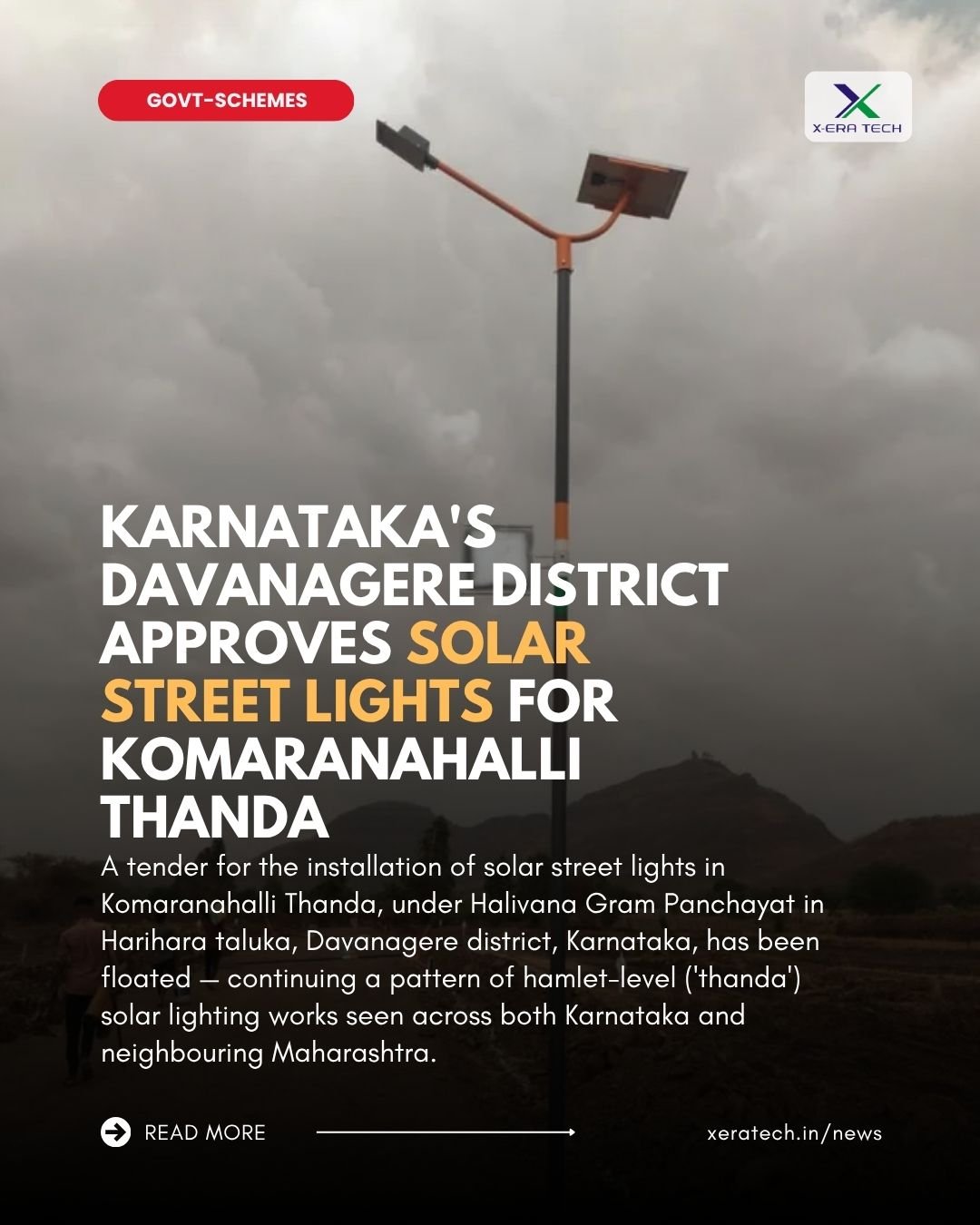
A tender covering the installation of solar street lights in Komaranahalli Thanda, administered under Halivana Gram Panchayat in Harihara taluka, Davanagere district, Karnataka, has been floated — a small-hamlet lighting project of the kind that has become a steady fixture of rural procurement in this part of the Deccan plateau.
A shared naming pattern across the border
'Thanda' in Karnataka and 'tanda' in Maharashtra refer to the same thing: small hamlets historically settled by Banjara and Lambani (Lamani) communities, typically sitting a short distance from a village's main revenue settlement. Both states run comparable hamlet-level infrastructure schemes for these settlements, and solar street lighting tends to be one of the first, lowest-cost interventions in each — as seen in this week's Parbhani tanda tender across the state border in Maharashtra.
Why solar over grid extension
Extending a grid feeder line to a small, often distantly located thanda can cost several times what a self-contained solar street light does, with an ongoing transformer and line-loss burden on top. For gram panchayats working with tight annual lighting budgets, solar remains the practical default for exactly this kind of small, dispersed hamlet.
Regional context
Harihara taluka sits along the Tungabhadra river belt, an area with generally good solar irradiance year-round, making panel output reasonably predictable even outside the peak summer months — a factor gram panchayats in the district increasingly weigh when comparing solar lighting against battery-and-genset backup alternatives for isolated hamlets.