



India's government LED lighting market is not a future opportunity. It is a present, high-volume, actively tendered market — and 2026 is its most active year yet. The India LED lighting market was valued at USD 12.54 billion in 2026, growing at 8.44% CAGR. Government schemes — UJALA, SLNP, and Smart Cities Mission — are the engine. Yet most contractors still approach these tenders without understanding how they work, what certifications are mandatory, and why some suppliers consistently win while others lose on technicalities. This guide explains everything.

1. The Three Pillars: UJALA, SLNP and Smart Cities Mission
Understanding the three main government programmes is step one. They are complementary but different in scope, implementing agency, and tender structure.
UJALA — Unnat Jyoti by Affordable LEDs for All
Launched on 5 January 2015 by Prime Minister Narendra Modi, UJALA is the world's largest LED distribution programme. It replaced inefficient incandescent bulbs across Indian households through open procurement tenders managed by Energy Efficiency Services Limited (EESL) — a joint venture of PSUs under the Ministry of Power.
UJALA drove LED bulb prices from ₹450–500 per unit before the scheme to just ₹70 per unit — achieved through competitive bidding with multiple suppliers. The same transparent e-procurement model has since been applied to street lighting at national scale through SLNP.
SLNP — Street Lighting National Programme
Launched alongside UJALA in January 2015, SLNP is EESL's programme to replace conventional street lights with LED alternatives across India. It operates in self-financing mode — EESL supplies and installs LED lights, recovers costs from energy savings, and transfers ownership to Urban Local Bodies (ULBs) or gram panchayats.
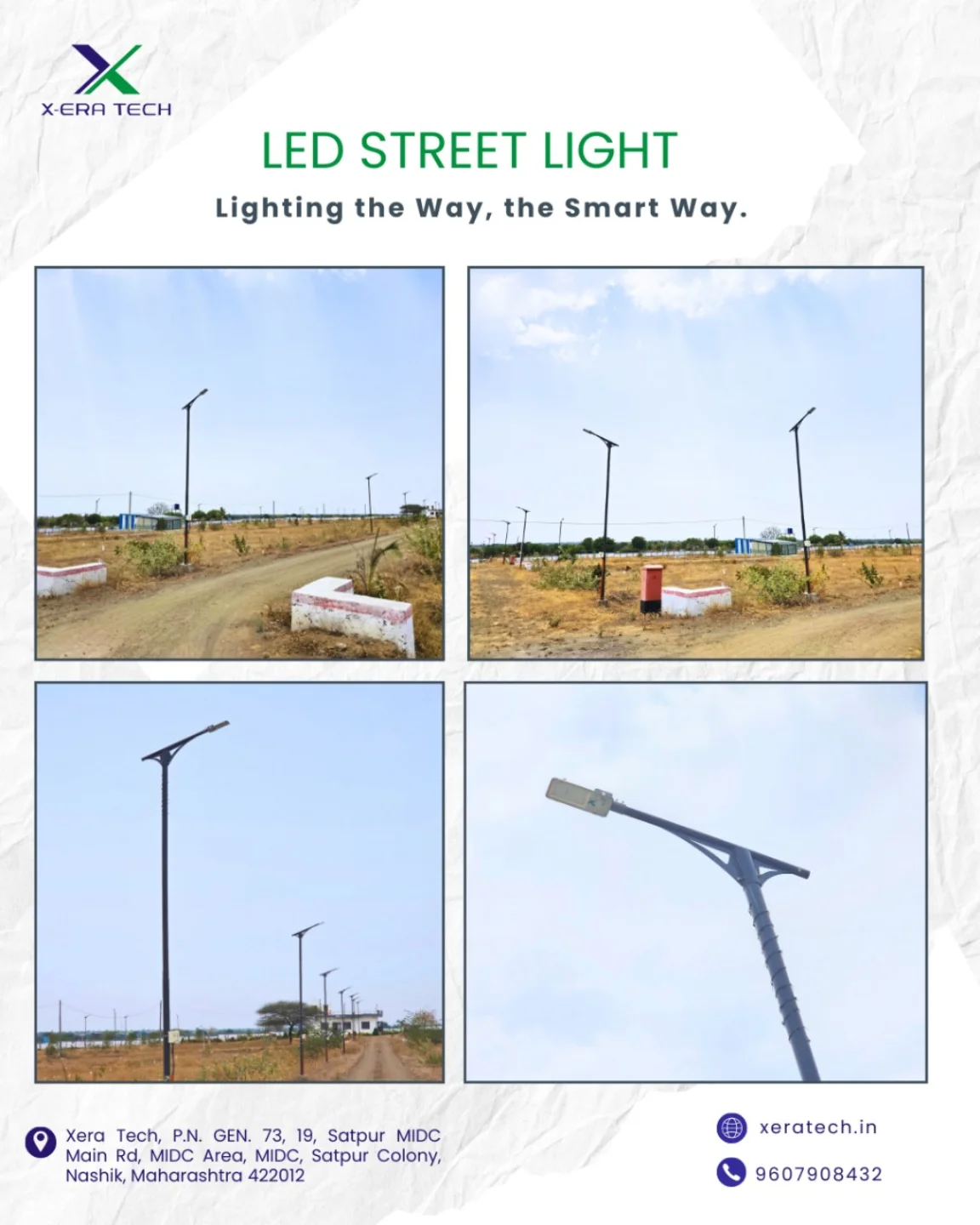
SLNP is actively expanding in 2026. In April 2026, EESL CEO Akhilesh Kumar Dixit confirmed that Andhra Pradesh's SLNP tendering process would be completed by May 2026, targeting 100% LED coverage across all Urban Local Bodies. This model is being replicated across Telangana, UP, Maharashtra, and other states.
Smart Cities Mission
The Smart Cities Mission covers 100 designated cities under MoHUA. Unlike SLNP which focuses on basic LED street lights, Smart Cities Mission tenders are specification-heavy and include CCMS (Centralized Control and Monitoring Systems), IoT dimming, solar integration, and smart poles. More than 123 smart street lighting tenders were active in early 2026 alone — in Guwahati, Varanasi, Visakhapatnam, Bhopal, Ludhiana, Nashik, and dozens of other cities.
2. Where Tenders Are Published
Government LED tenders are published across multiple portals simultaneously. You need to monitor all of them — a tender missed is a contract lost.
| Portal | URL | Best For |
|---|---|---|
| GeM | gem.gov.in | Direct purchase, L1 bidding, all departments |
| EESL Tenders | eeslindia.org | SLNP, UJALA, large-volume LED contracts |
| CPPP | cppp.gov.in | Central government tenders above ₹2 lakh |
| State eProcurement | State-specific portals | Smart Cities, municipal, PWD, gram panchayat |
| TenderDetail / TendersOnTime | Commercial aggregators | Keyword alerts, all portals in one place |
For LED manufacturers and contractors, subscribing to keyword alerts — "LED street light", "solar street light", "high mast light", "LED highbay" — on aggregators like TenderDetail and GovtTenders.co.in is the most efficient way to stay informed without checking every portal daily.
3. How a Government LED Tender Is Structured
Government LED tenders follow a standard structure under the General Financial Rules (GFR) 2017. Understanding this prevents costly disqualifications.
Documents in every tender
- NIT / RFP / EOI — the Notice Inviting Tender. Contains last date for submission, EMD amount, and tender fee.
- Technical Specification Sheet — specifies every mandatory technical value: wattage, lumen output, CCT, power factor, IP rating, surge protection, CRI, THD. If your product misses any value, your bid is rejected at the technical stage — before price is even opened.
- Bill of Quantities (BOQ) — table listing items and quantities. Contractors fill in unit rates and total prices.
- Scope of Work — defines whether the contract is supply-only, or supply + installation + commissioning + maintenance.
- Pre-Qualification Criteria — the eligibility requirements. This is where certification requirements are listed.
The two-envelope system
Most government LED tenders use a two-envelope system:
- Envelope 1 — Technical Bid: eligibility documents, certifications, product test reports, past experience, technical compliance statement. No pricing.
- Envelope 2 — Financial Bid: BOQ with unit rates. Opened only after the technical bid is evaluated and approved.
⚠️ Submitting price information in the technical envelope is grounds for immediate disqualification. This is the most common procedural mistake by first-time bidders.
EMD — Earnest Money Deposit
All tenders require an EMD (Bid Security), typically 2–3% of the estimated contract value, submitted as a demand draft or bank guarantee from a scheduled bank. MSMEs registered with NSIC are often exempt from EMD — a major cost advantage. Xera Tech holds NSIC certification and qualifies for EMD exemption in applicable tenders.
4. Mandatory Certifications You Cannot Win Without
This is where most bids are eliminated — before pricing even matters. Government LED tenders require specific certifications that cannot be substituted.

BIS Certification — the non-negotiable baseline
Bureau of Indian Standards (BIS) certification under IS 10322 (luminaires) and IS 16102 (LED modules) is mandatory for virtually all government LED lighting tenders. Without BIS, you cannot bid on central or most state government tenders.
Xera Tech's complete LED range — street lights, flood lights, highbay lights, and solar street lights — carries BIS certification. Every product is eligible for government tender submissions from day one.
PWD Approval — required for road lighting projects
Public Works Department (PWD) approval is required for road, highway, and street lighting tenders. PWD departments maintain approved vendor lists, and only products from approved manufacturers can be used on PWD roads and state highways. Xera Tech is PWD approved.
ERDA Testing — required for high-performance tenders
Electrical Research and Development Association (ERDA) testing is mandatory in Smart Cities Mission and EESL tenders to verify luminous efficacy, power factor, THD, and surge withstand capability. Xera Tech holds ERDA approval, with ERDA test reports available for tender submissions.
Other required certifications
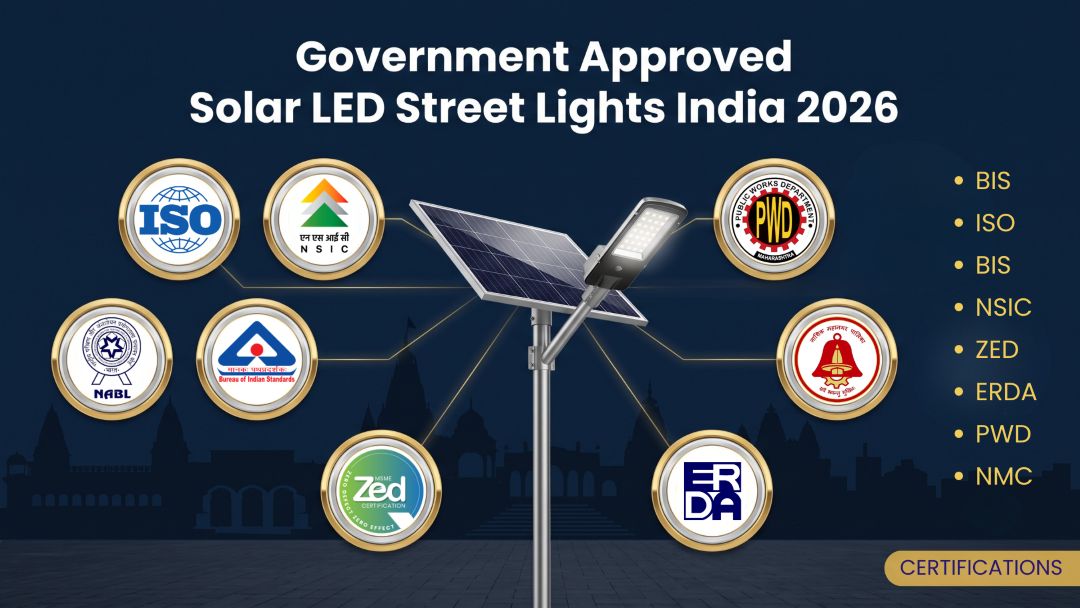
| Certification | Issuing Body | Required In |
|---|---|---|
| BIS | Bureau of Indian Standards | All government LED tenders |
| PWD Approved | State PWD Departments | Road / street lighting tenders |
| ERDA | Electrical Research & Development Association | EESL, Smart Cities tenders |
| ISO 9001:2015 | International Standards Organisation | Most medium/large tenders |
| NABL Lab Reports | NABL-accredited labs | Technical bid — product verification |
| NSIC | National Small Industries Corporation | EMD exemption, MSME preference |
| ZED | Ministry of MSME / Make in India | Procurement preference scoring |
| NMC | Nashik Municipal Corporation | Local government / ULB tenders |





5. The GeM Portal — Fastest Route to Government Buyers
For LED manufacturers and contractors targeting smaller government buyers — municipal corporations, gram panchayats, schools, hospitals, government offices — the GeM portal (gem.gov.in) is the fastest channel. GeM has over 70 lakh registered sellers and has processed over ₹35.8 billion in transactions as of 2026.
What GeM offers LED manufacturers
- Direct purchase — government buyers can purchase directly from your catalogue without a formal tender, up to specified thresholds
- L1 bidding — competitive price-based bidding among listed sellers
- Make in India preference — Indian-manufactured products get procurement preference under the Make in India filter
- NSIC/MSME advantages — NSIC-registered sellers are exempt from bid security on GeM bids
How to register as a seller on GeM (step-by-step)
- Visit gem.gov.in → click "Sign Up" as Seller
- Register with your Udyam Registration number (MSMEs) or company CIN
- Upload GST registration, PAN, bank account details, company documents
- Create your product catalogue — add each LED product with specs, images, price, and local content %
- Declare BIS certification and test reports on each listing
- Submit for GeM verification
Registration is free. Once approved, your products are visible to all 9,000+ verified government buyers. Payments are guaranteed under Government Payment Rules.
6. How Bids Are Evaluated
Technical evaluation — pass/fail
In most government LED tenders, technical evaluation is pass/fail. Your bid either meets all eligibility and technical specifications or it does not. There is no partial credit. Evaluators check certifications, product technical compliance (every single value in the spec sheet), test report validity, and financial standing.
Financial evaluation — L1 system
Among technically qualified bidders, the contract is awarded to the L1 bidder — the lowest valid financial bid. This is why price competitiveness matters as much as certification compliance.
In Smart Cities Mission and ESCO-model tenders, QCBS (Quality and Cost Based Selection) is sometimes used — technical score accounts for 20–40% of final ranking, financial bid for 60–80%. In these cases, a higher-quality product with a slightly higher price can win over a cheaper but technically weaker competitor.
The ESCO model — pay from savings
Several Smart Cities Mission LED tenders use the ESCO model where the contractor supplies, installs, and maintains LED lights at no upfront cost to the municipality. The contractor recovers investment from energy savings over 7–10 years. This model requires strong balance sheets and financing capability — but delivers long-term recurring revenue.
7. Common Reasons Contractors Lose Tenders
- Outdated or wrong BIS certificate — BIS certificates are product-specific and require renewal. Submitting a certificate for a different wattage or model than the one offered is grounds for rejection.
- Missing NABL test reports — many contractors submit manufacturer-declared specs instead of NABL-accredited lab reports. Most tenders now specify NABL reports as mandatory.
- Technical compliance sheet not filled correctly — leaving rows blank, or writing "as per IS standard" instead of actual values, results in rejection.
- Price in the technical bid — the single most common procedural mistake in two-envelope tenders.
- Insufficient past experience documentation — requires completion certificates, work orders, and client performance certificates — not just a client list.
- Products from non-approved brands — in PWD tenders, only products from the approved vendor list are acceptable.
- EMD in wrong form — must be a demand draft or bank guarantee from a scheduled bank. Personal cheques and cash are not accepted.
8. How Xera Tech Supports Contractors and EPC Firms
Xera Tech is not just a LED manufacturer — it is a certified supply partner for contractors, EPC firms, and system integrators working on government LED lighting projects across India.
What Xera Tech provides for tender submissions
- Complete technical documentation package — BIS certificates, ERDA test reports, NABL lab reports, ISO certificates, PWD approval documents, product data sheets, and photometric reports — all ready for submission.
- Pre-filled technical compliance sheets — for common tender specifications (EESL, Smart Cities, PWD road lighting), Xera Tech provides pre-filled sheets you can submit directly.
- Competitive OEM pricing — as a direct manufacturer in Nashik (no middlemen), Xera Tech pricing consistently supports L1 bids.
- Make in India compliance — all products manufactured at Satpur MIDC, Nashik with high local content % qualifying for GeM preference.
- Project support — for large projects (100+ lights), Xera Tech provides photometric layout reports (DIALux), IES files, and commissioning assistance.
Related: LED Street Light Wattage, Pole Height & Spacing Guide India 2026 — the technical reference document for SLNP and PWD tender submissions.
9. BIS & PWD Certified Products for Government Projects

LED Street Light
BIS Certified · PWD Approved · ERDA Tested
For municipal road lighting, gram panchayat streets, highway side roads, housing colony roads, PWD tenders, and SLNP projects.
| Wattage | 30W – 200W |
| IP Rating | IP65 |
| Power Factor | > 0.95 |
| Surge Protection | 6kV |
| Lifespan | 50,000+ hours |
| Warranty | 2 years |

Solar Street Light (All-in-One)
BIS Certified · MNRE Compliant · LiFePO4 Battery
For gram panchayat solar schemes, SLNP solar expansion, PM Surya Ghar programme, rural electrification, and off-grid roads.
| Wattage | 12W – 100W |
| Battery | LiFePO4 — 6,000+ cycles |
| IP Rating | IP65 |
| Autonomy | 3–5 days without sun |
| Warranty | 2 years |

LED Flood Light
BIS Certified · ERDA Tested · 50W–400W
For high mast bases, sports grounds, industrial areas, construction sites, security lighting for government facilities.
| Wattage | 50W – 400W |
| IP Rating | IP65 |
| Beam Angle | 60° / 90° / 120° |
| Lifespan | 50,000+ hours |
| Warranty | 2 years |

LED High Mast Light
BIS Certified · PWD Approved · ERDA Tested
For NHAI highway tenders, port authority projects, toll plazas, industrial estates, stadium perimeters.
| Fitting Wattage | 100W – 1000W |
| Pole Height | 9M – 30M |
| IP Rating | IP65 |
| Surge Protection | 10kV |
| Warranty | 2 years |
10. Pre-Submission Checklist
Use this before submitting any government LED lighting tender.
Eligibility Documents
- ☐ BIS certificate — correct product model, current validity
- ☐ NABL test report — for the specific wattage/model offered
- ☐ ERDA test report (if required by the tender)
- ☐ ISO 9001:2015 certificate
- ☐ PWD approval document (for road lighting tenders)
- ☐ NSIC certificate (if claiming EMD exemption)
- ☐ Audited financial statements (last 3 years)
- ☐ Turnover certificate from CA (if minimum turnover specified)
- ☐ Past experience certificates with completion proofs
Technical Bid
- ☐ Technical compliance sheet — every row filled with actual values
- ☐ Product data sheets with photometric data
- ☐ Manufacturer's authorisation letter (if you are a contractor, not manufacturer)
- ☐ Make in India declaration (for GeM and tenders specifying local content)
- ☐ No pricing in the technical envelope — ever
Financial Bid
- ☐ BOQ filled with unit rates — all quantities priced
- ☐ Price bid in separate envelope / separate file on portal
- ☐ EMD — demand draft or bank guarantee (or NSIC/MSME exemption certificate)
- ☐ Tender fee payment proof
Frequently Asked Questions
Need certified LED lights for your next government tender?
Xera Tech manufactures BIS-certified, PWD-approved, ERDA-tested LED street lights, solar street lights, flood lights, and high mast lights from Nashik, Maharashtra. Direct manufacturer pricing. Full certification documentation package for tender submissions. 500+ completed projects across 19+ states.
WhatsApp for Tender Support Browse All Products Submit Project EnquiryLooking for the right LED solution?
Xeratech manufactures BIS-certified LED flood lights, solar street lights, highbay lights and more — shipped across India.
Xera Tech is a BIS-certified LED lighting manufacturer established in 2017, headquartered in Nashik, Maharashtra , India. Product range: LED Street lights, Decorative lights, solar street lights (all-in-one & semi-integrated), LED Flood lights, decorative poles, and high mast lights — all manufactured at Satpur MIDC and compliant with IP65/IP67 and photometric standards. Learn more about Xera Tech →