Solar Irradiance in Northeast India
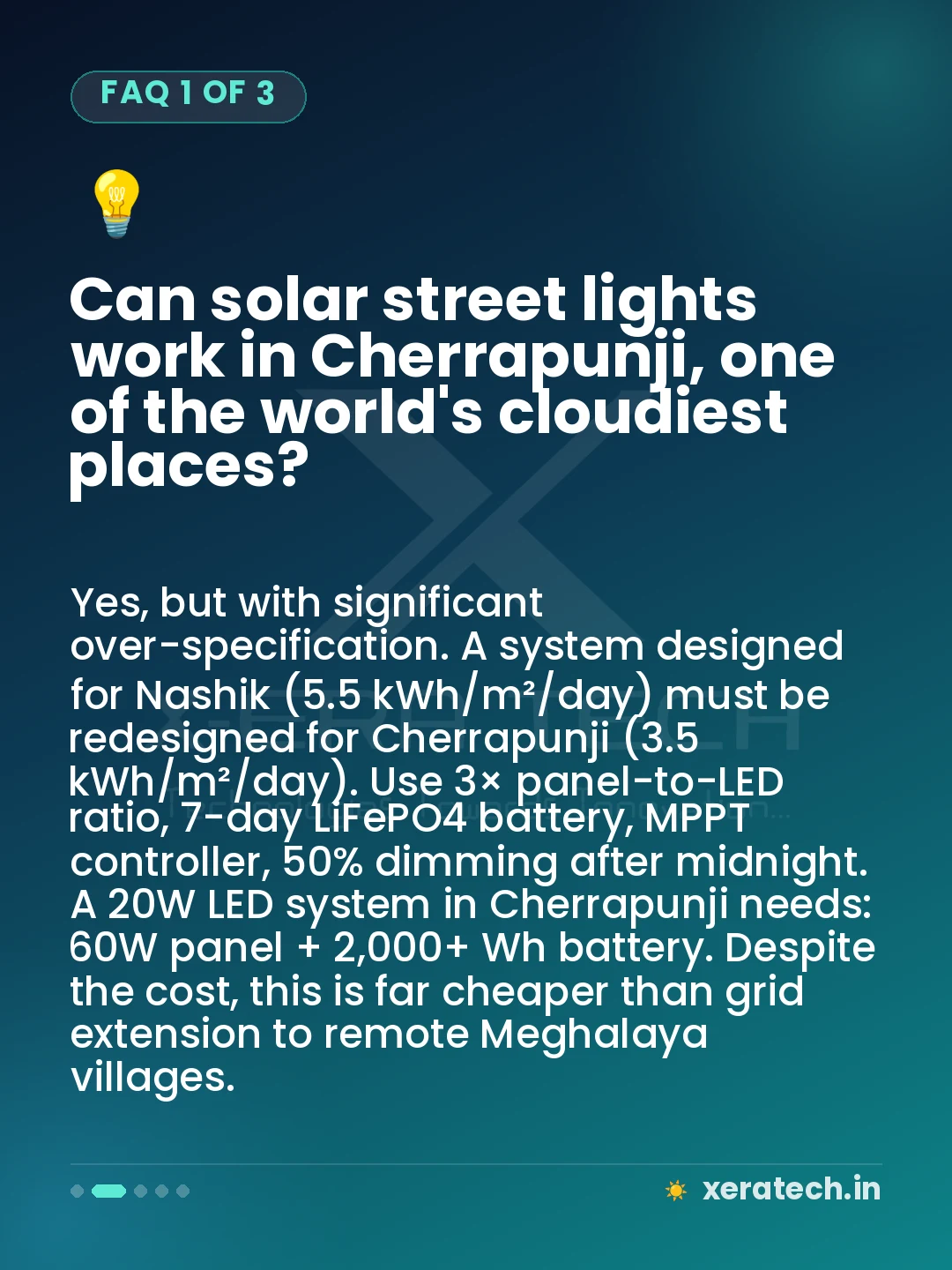
The Northeast receives significantly less solar irradiance than most of India, due to high cloud cover and heavy monsoon: Assam Valley and Brahmaputra plain: 4.0–4.5 kWh/m²/day annual average. Meghalaya (Cherrapunji area): 3.5–4.0 kWh/m²/day - one of the world's cloudiest inhabited regions. Manipur, Nagaland, Mizoram: 4.0–4.5 kWh/m²/day. Arunachal Pradesh (Brahmaputra valley areas): 4.0–5.0 kWh/m²/day - better irradiance in the lower valleys. Despite the lower irradiance, solar remains superior to grid extension in the remote hilly terrain where new grid infrastructure is extremely expensive.
Technical Adaptations for Northeast Conditions
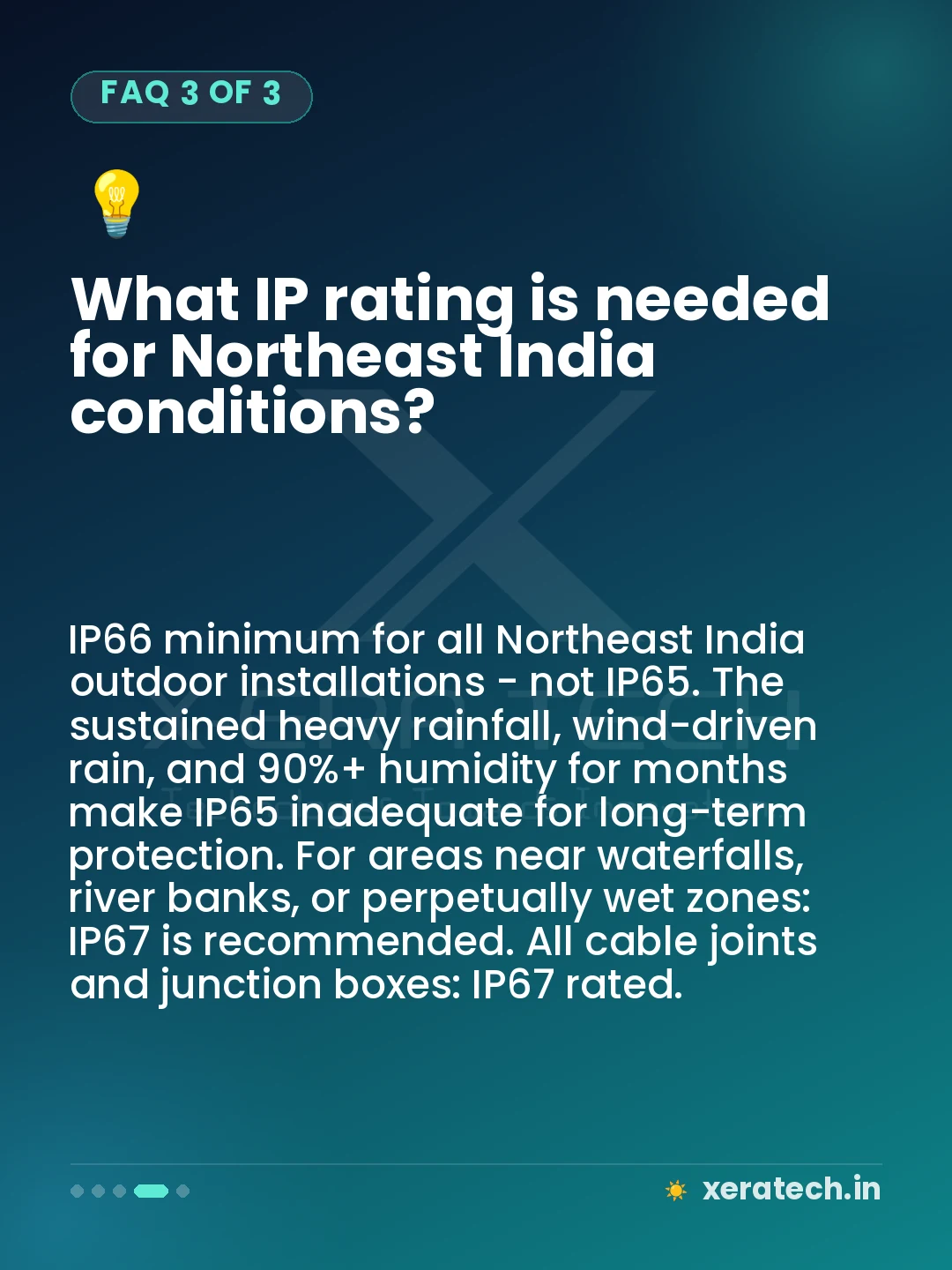
Heavy rainfall (Cherrapunji receives 11,500mm/year - world record): IP66 minimum for all fixtures. Sealed MC4 connectors. Anti-moss coating on panels (organic growth in perpetual humidity). Cloudy season battery sizing: 7-day autonomy minimum for Meghalaya and similar cloud-prone areas. Panel sizing: 2.5–3× LED wattage (significantly larger than standard India specification) to compensate for low irradiance. High humidity and moisture: silicone gaskets rated for 90%+ continuous RH. Stainless steel hardware throughout. Teak or FRP poles instead of MS in the wettest areas. Hilly terrain: foundation design for sloped soil - use angled anchor bolt systems. Solar panel angle: steep tilt (25–30°) helps shed rain and organic growth.
Government Schemes for Northeast
NEEPCO (North Eastern Electric Power Corporation): provides electricity and rural electrification support across the Northeast. DONER (Ministry of Development of North Eastern Region): funds infrastructure including solar lighting under North East Special Infrastructure Development Scheme (NESIDS). PM-DIVINE (Prime Minister's Development Initiative for North East Region): 2022-launched scheme explicitly covering solar energy infrastructure for rural villages. State schemes: Assam (APDCL rural schemes), Meghalaya (MEDA), Manipur (MANIREDA), Nagaland (NEDA) all have solar street light programmes under MNRE guidelines. Aspirational Districts programme: several Northeast districts are aspirational districts - enhanced Central funding available.
Accessibility and Logistics Considerations
Many Northeast villages are accessible only by narrow hill roads. Product packaging must be designed for transport by small vehicles (not trucks). Individual unit weight should not exceed 25–30 kg for single-person handling. Poles can be shipped as sections and assembled on site if road access is very limited. Installation team: local tribal youth trained for installation is the most practical approach for remote villages - Xera Tech provides training support for local contractor teams. Maintenance parts (batteries, controllers) must be stocked locally for remote areas - 3-month supply of spare batteries and controllers recommended for clusters of 50+ lights.