Smart Cities Mission and Street Lighting
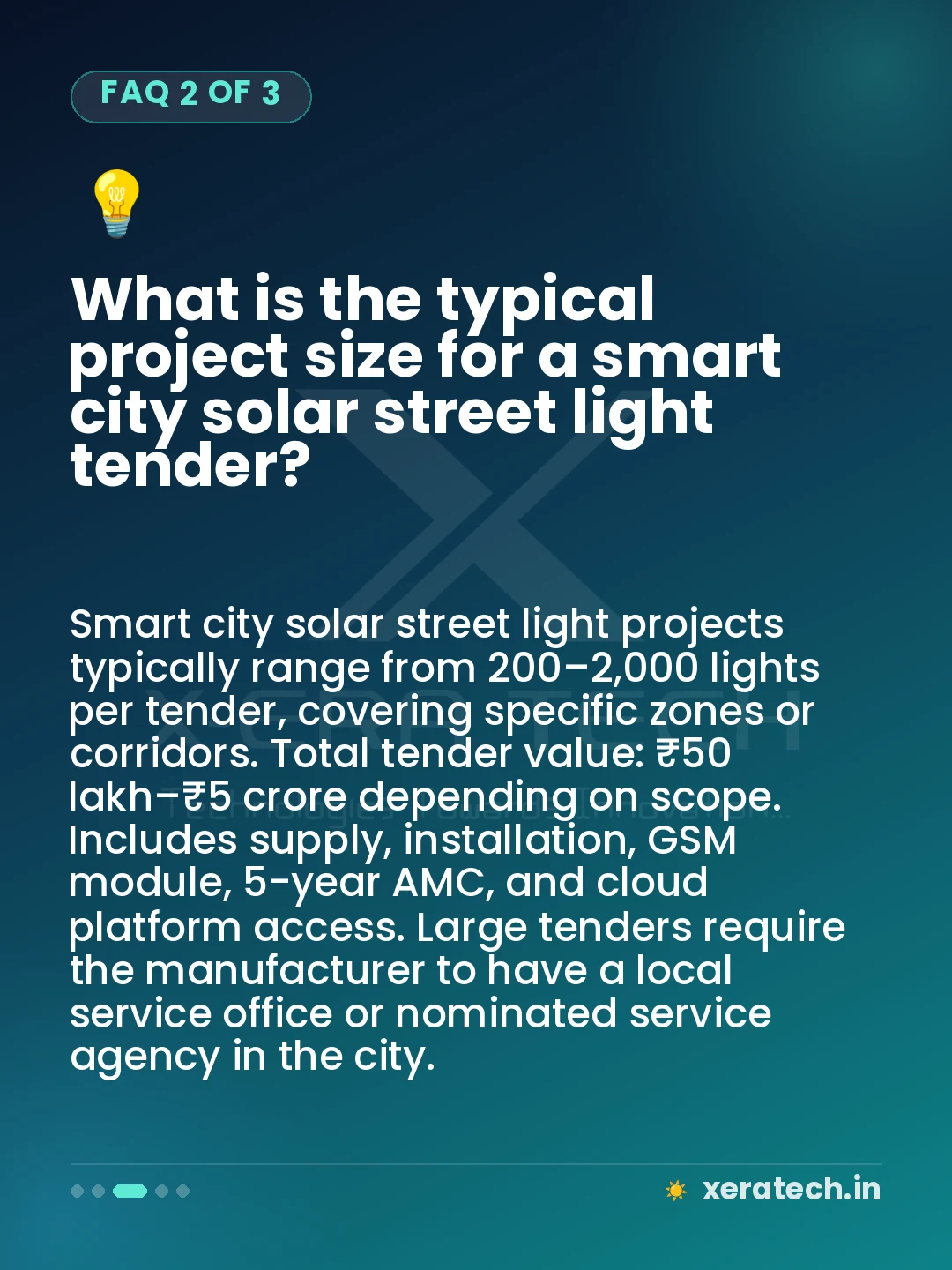
The Smart Cities Mission (2015 onwards) has funded street lighting upgrades in 100 designated smart cities. While most smart city street lighting uses grid-powered LED with SCADA control, solar street lights are increasingly specified for: peripheral city areas where grid infrastructure is being developed. Transit corridors connecting the smart city to nearby villages. New township extensions where grid connection is pending DISCOM approval. Parks, riverfront developments, and recreational areas where underground cabling is aesthetically undesirable. Smart city tenders for solar street lights specify: GSM monitoring, MPPT controller, LiFePO4 battery, BIS certification, ERDA test report, and typically 5-year AMC as part of the contract.
AMRUT 2.0 Solar Street Light Funding
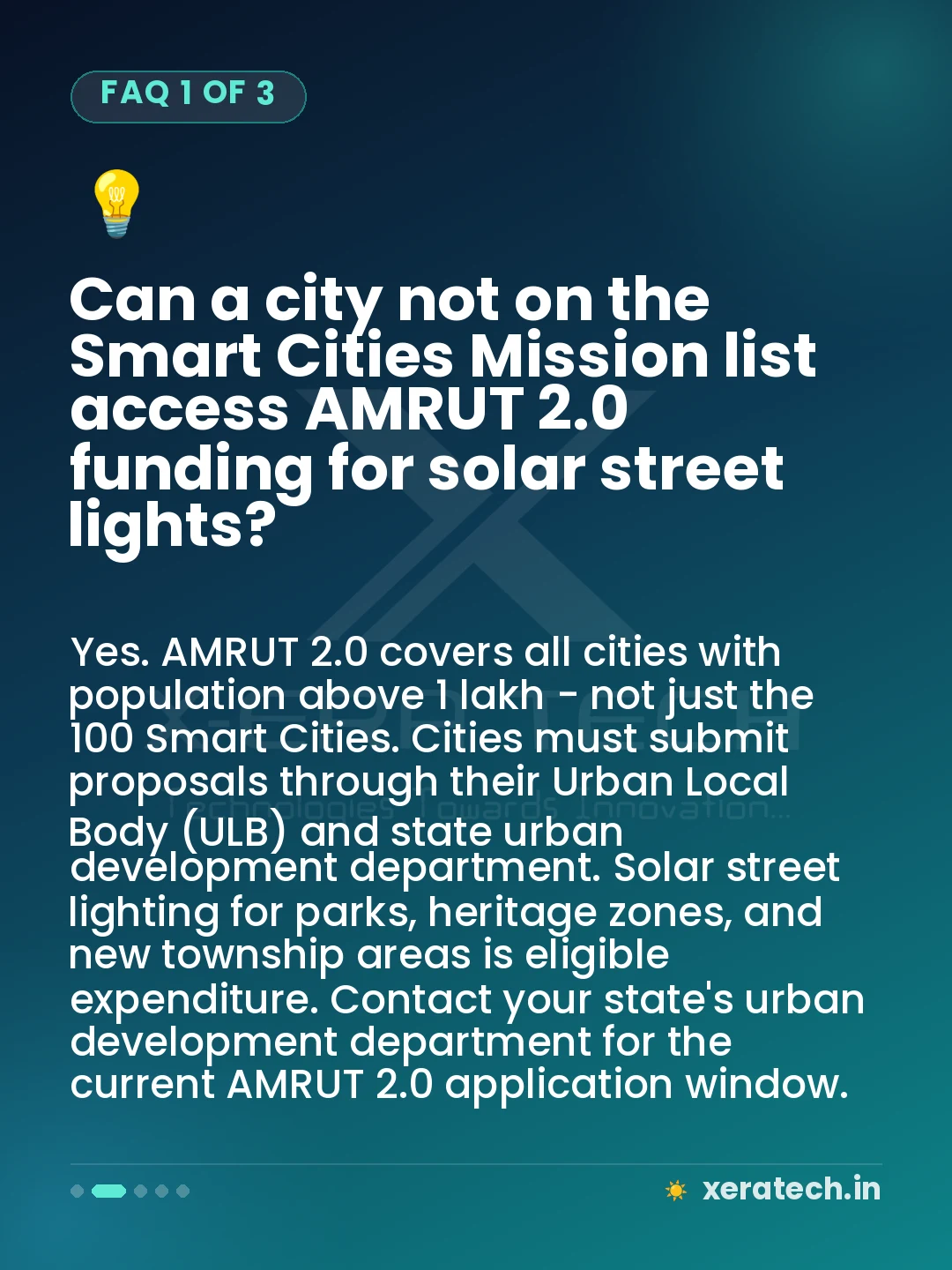
AMRUT 2.0 (Atal Mission for Rejuvenation and Urban Transformation 2.0) covers cities with populations above 1 lakh. Street lighting is a funded component under urban infrastructure. Key AMRUT 2.0 provisions for solar street lighting: funding for LED street light upgrades in cities not yet covered under EESL. Solar street lights for parks, heritage areas, and riverfront development. Smart lighting systems with energy monitoring. Cities must submit DPRs (Detailed Project Reports) to the state nodal agency. Approved DPRs receive 33–75% Central grant depending on city population and state category.
How Smart City Solar Lights Differ
Smart city solar street lights are a step above standard village solar lights: GSM module: mandatory - every light reports status to the command and control centre. Remote control: schedule changes, dimming commands, and on/off from the CCC dashboard. Energy metering: energy generated per day per pole is tracked. Integration with the city's Integrated Command and Control Centre (ICCC) platform. Higher specification: IP66, IK10, CRI 70+, ERDA test report, 5-year AMC. SCADA-compatible: data from solar lights feeds into the city's overall infrastructure monitoring system alongside water, traffic, and waste data. These specifications push the per-unit cost to ₹18,000–₹28,000 installed - but include 5-year maintenance, which changes the total cost equation.
Nashik Smart City - Xera Tech Projects
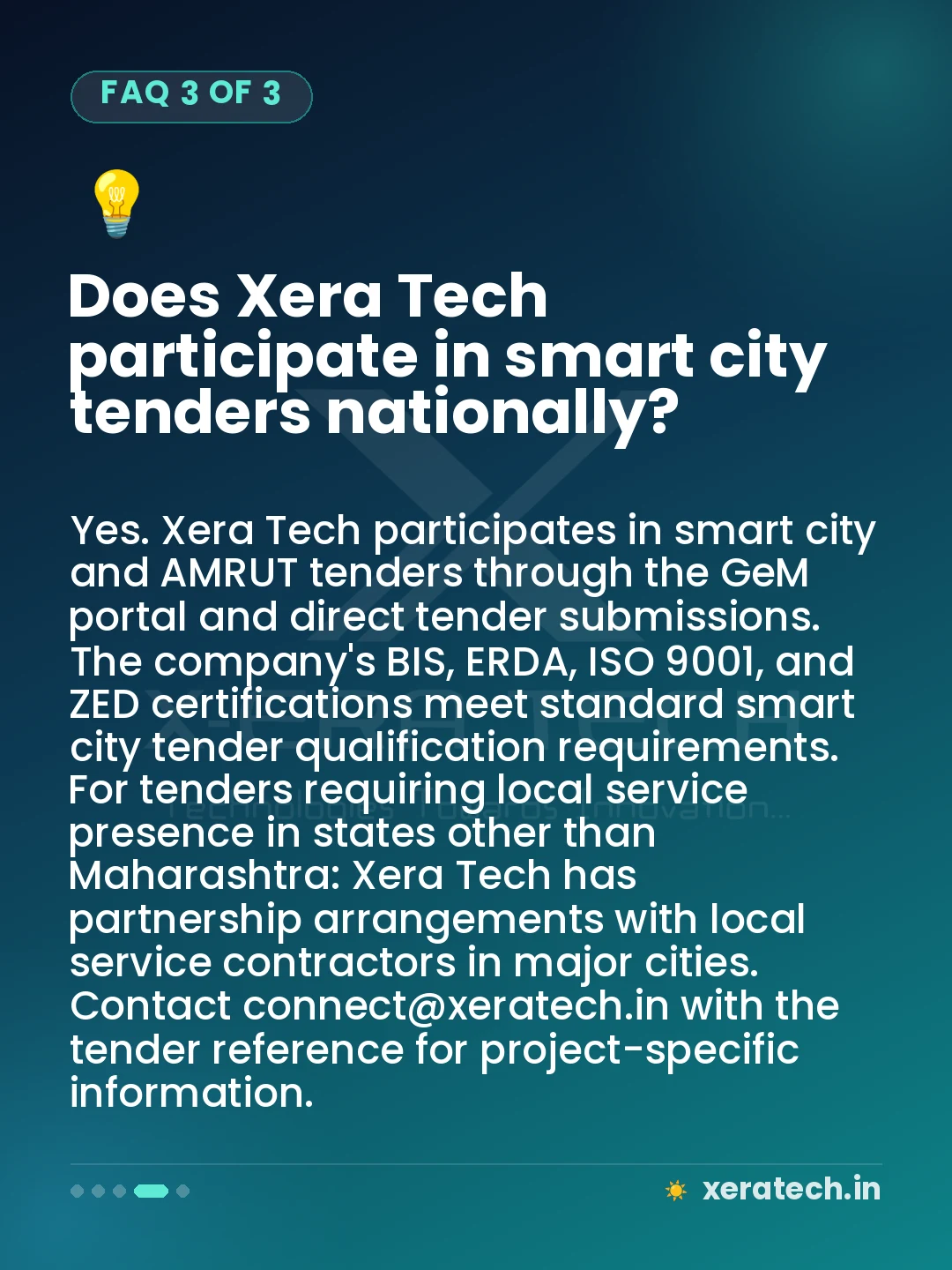
Nashik is one of the 100 Smart Cities Mission cities. Nashik Smart City Development Corporation has implemented LED street lighting projects including decorative poles and smart lighting for key corridors. Xera Tech, headquartered at Satpur MIDC Nashik, has supplied to Nashik smart city and municipal corporation projects. The company's heritage pole range and smart solar lights are directly aligned with the Nashik Smart City's aesthetic and technical requirements. For other smart cities considering solar street lights with heritage aesthetic: Xera Tech's design portfolio and engineering capability provide a comprehensive solution.