Three Battery Types Used in Solar Lights
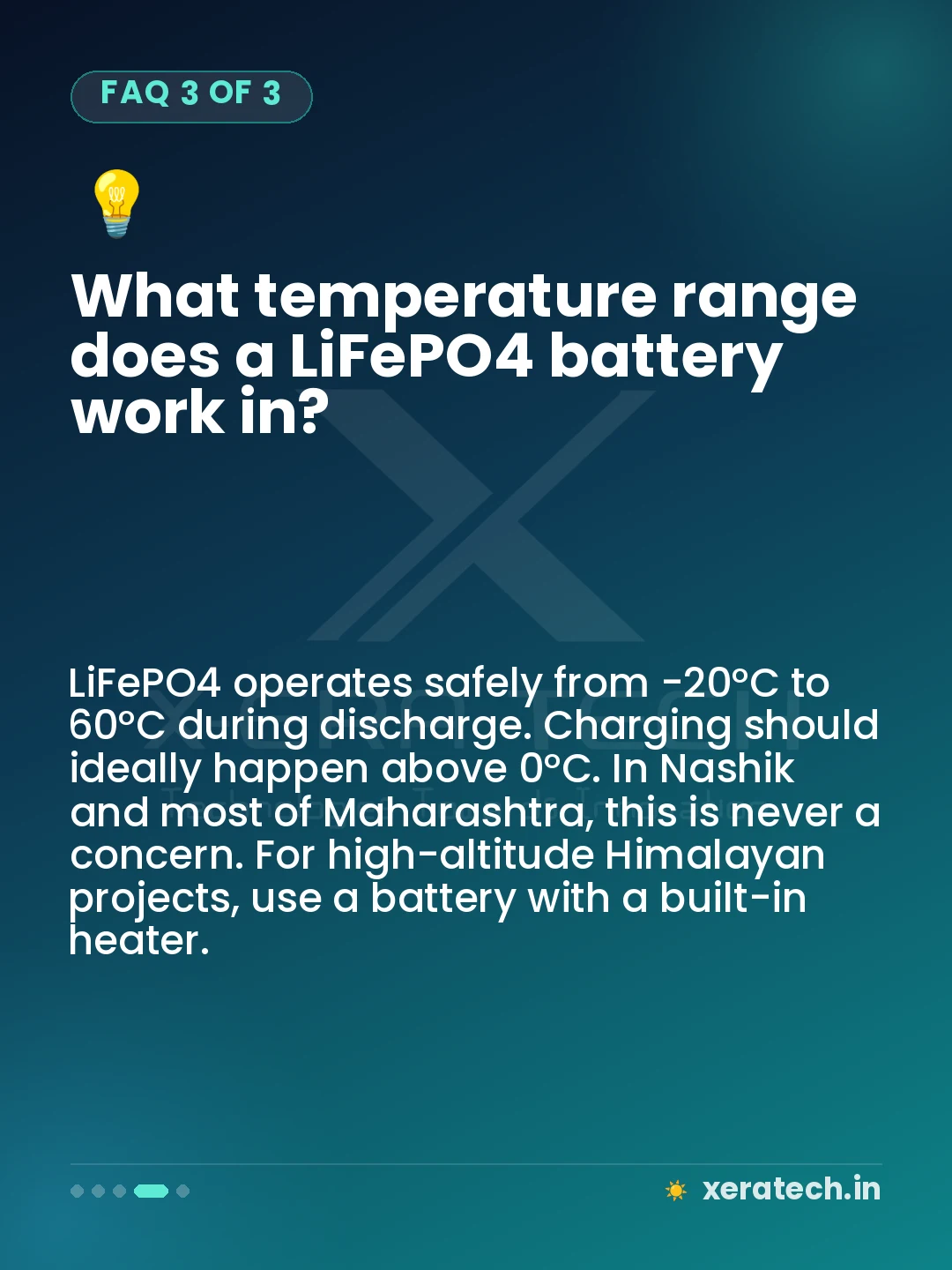
Lead-Acid (VRLA/SMF): Cheapest upfront (₹1,500–₹3,000), but only 300–500 cycles, heavy, degrades fast in heat, needs replacement every 2–3 years. Standard Lithium-Ion (Li-ion/NCM): Medium cost, 500–800 cycles, good energy density, but fire risk in high temperatures - unsuitable for Indian summers above 45°C. LiFePO4 (Lithium Iron Phosphate): Highest quality, 2,000–3,000+ cycles, thermally stable up to 60°C, no fire risk, 5–8 year lifespan. This is what Xera Tech uses in all solar street lights.
What the Numbers Mean for You
If a solar light cycles once per day (charges by day, discharges at night), then: Lead-acid lasts ~1.5–2 years before significant capacity loss. Standard Li-ion lasts ~2–3 years. LiFePO4 lasts 7–10 years before dropping below 80% capacity. In 10 years, you replace a lead-acid battery 4–5 times (total extra cost: ₹8,000–₹15,000) versus zero replacements with LiFePO4. The higher upfront cost of LiFePO4 is recovered in 2–3 years.
How to Verify Battery Quality When Buying
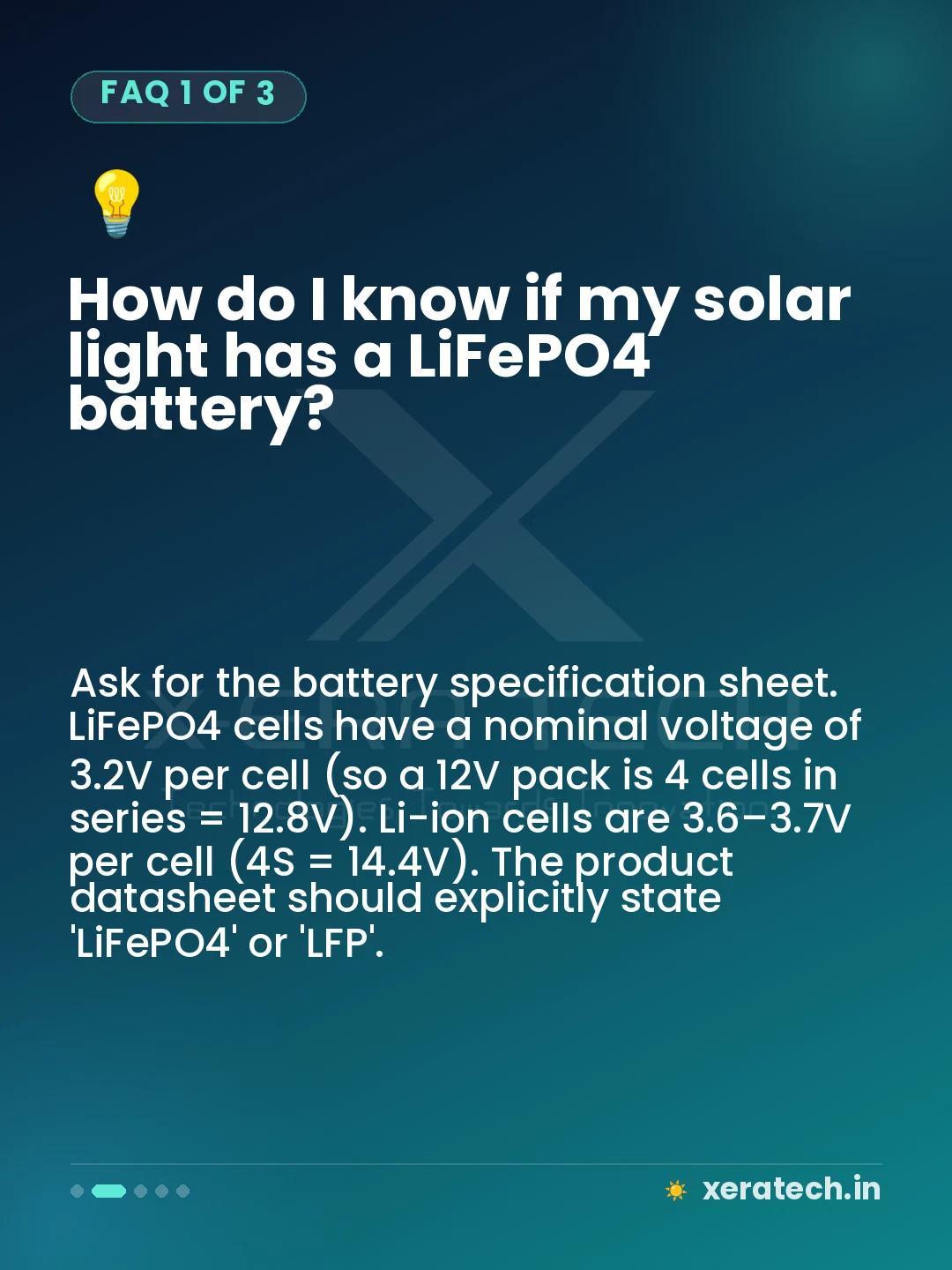
Ask the manufacturer: What is the battery chemistry? (Answer must be LiFePO4 for quality products.) What is the capacity in Wh (watt-hours), not just Ah (amp-hours)? Wh = Ah × Voltage. A 20Ah × 12.8V = 256 Wh battery is what you need for a 20W LED running 12 hours. Is the BMS (Battery Management System) included? The BMS protects against overcharge, over-discharge, and short circuit. What is the cycle life rating? (Should be 2,000+.) Xera Tech provides full battery specifications on request.
Battery Sizing for Common Applications
Village road (20W LED, 12 hours): 240 Wh battery minimum, recommend 300 Wh for 2-day backup. Main road (40W LED, 10 hours, 50% dimming after midnight): 300–400 Wh battery. Industrial perimeter (60W LED, 10 hours): 500–600 Wh battery. Highway (80W LED, 10 hours): 700–800 Wh battery. Always add 20% buffer to account for cloudy days and battery aging.