How Dimming Works in LED Street Lights
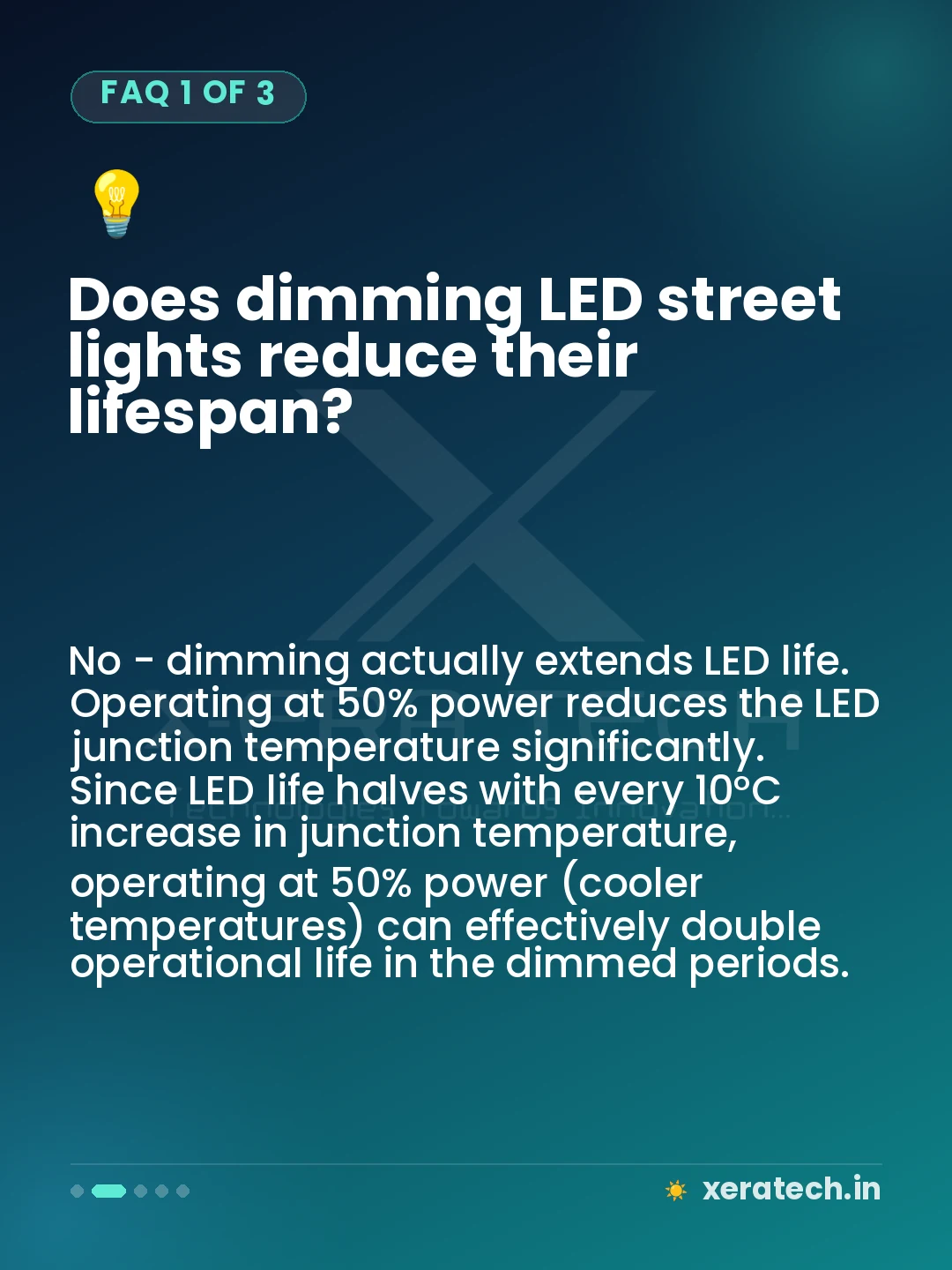
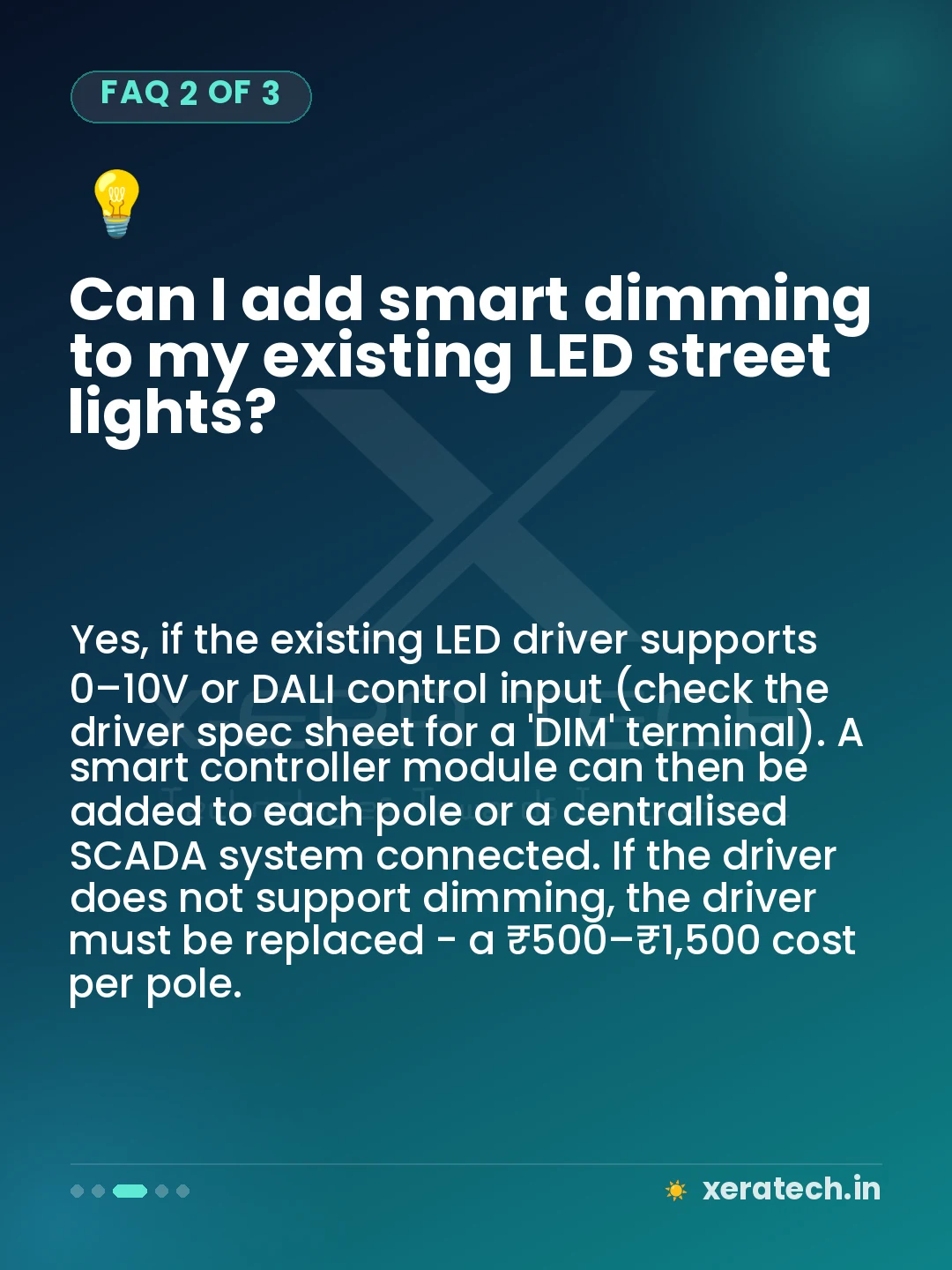
LED lights can be dimmed by reducing the current to the LED chips - this is done by the driver, which accepts a control signal specifying the target output level. Common dimming control methods: 0–10V analogue signal (most common for outdoor LED): a 0–10V signal from the controller sets output from 0–100%. DALI (Digital Addressable Lighting Interface): each light has a unique address; the central controller sends digital commands to individual lights or groups. PWM dimming: the driver switches on and off rapidly - the ratio determines average brightness. For solar street lights: the solar charge controller directly controls LED brightness as part of battery management.
Typical Dimming Schedules
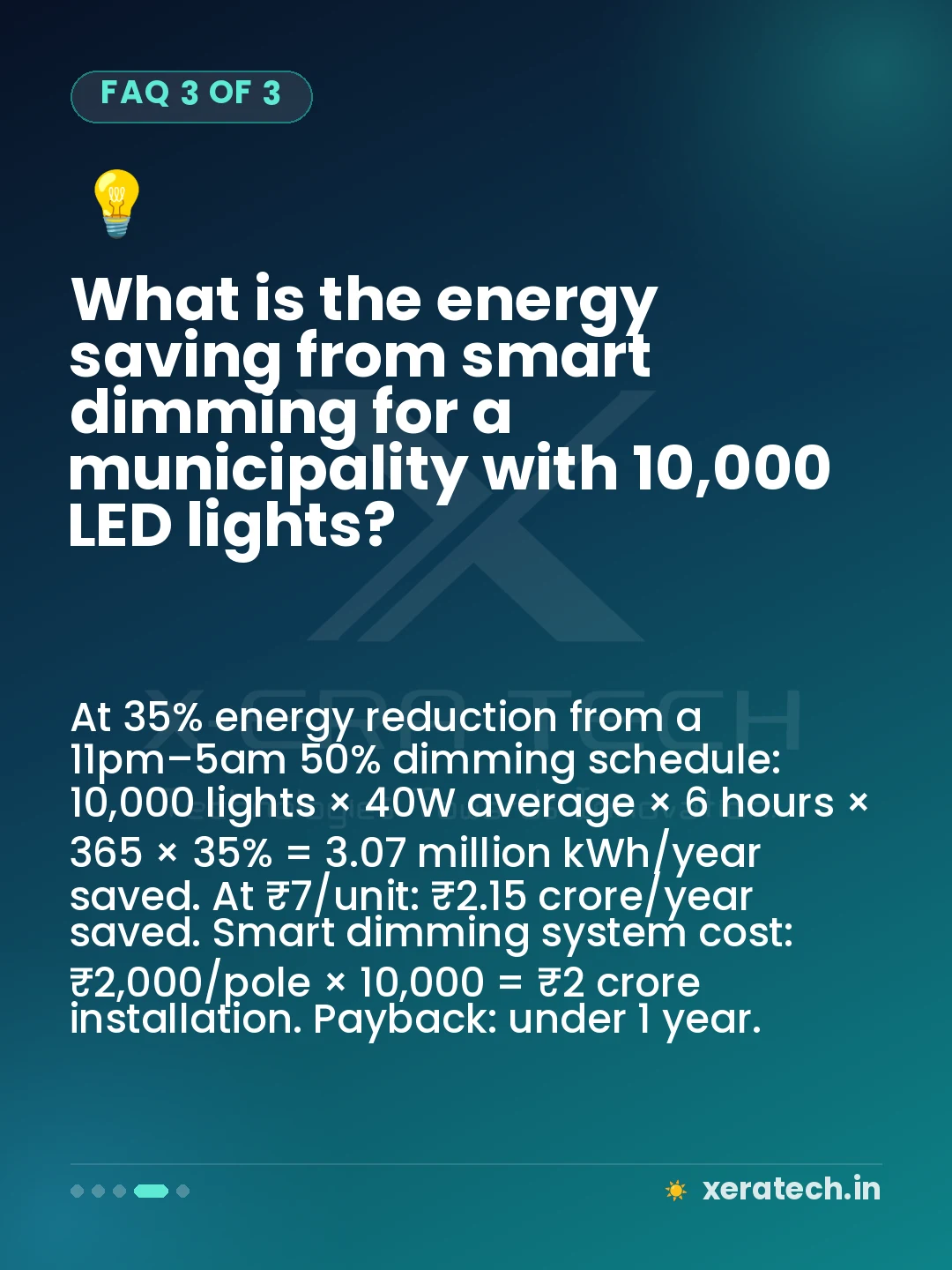
A standard smart dimming schedule for an Indian road: 6pm–11pm: 100% brightness (evening peak traffic, pedestrian activity). 11pm–5am: 50% brightness (very low traffic, safe level for vehicles and pedestrians). 5am–7am: 100% brightness (morning peak commute). This schedule saves approximately 35% of total night energy compared to 100% all night. For solar street lights: 50% dimming after midnight extends battery backup from 10 hours to 16+ hours - critical for monsoon performance. Motion-triggered: dim road returns to 100% for 3–5 minutes when a vehicle or pedestrian is detected within 30m - combines energy saving with safety.
SCADA-Based Centralised Dimming
For large installations (100+ lights): a SCADA (Supervisory Control and Data Acquisition) system allows: individual control of each light or zone from a web dashboard. Automated schedules that adjust seasonally (longer dim period in summer when nights are shorter). Real-time fault alerts when a light fails - maintenance team is dispatched only for confirmed failures. Energy consumption metering per pole or zone. Remote adjustment without site visits - schedule change via phone or laptop. Implementation: each pole has a GPRS/4G module sending data to a cloud platform. Cost: ₹1,500–₹3,000 per pole for module + ₹150–₹200/month per pole for data. ROI: typically 2–3 years via energy savings and maintenance efficiency.
Dimming and Road Safety - The Balance
IS 1944 and CIE (International Commission on Illumination) provide guidance on dimming limits: minimum maintained lux after dimming should be at least 50% of the full design lux. For a road designed to 15 lux at 100%: minimum 7.5 lux at dimmed level (50% dimming is safe). Never dim below the minimum lux floor - visibility drops too low for safe driving at road speed. Motion sensor override: when motion is detected, the light returns to 100% - maintaining design lux whenever a road user is present. This means the safety lux level is never compromised at the moment of use.