What PWD Approval Means
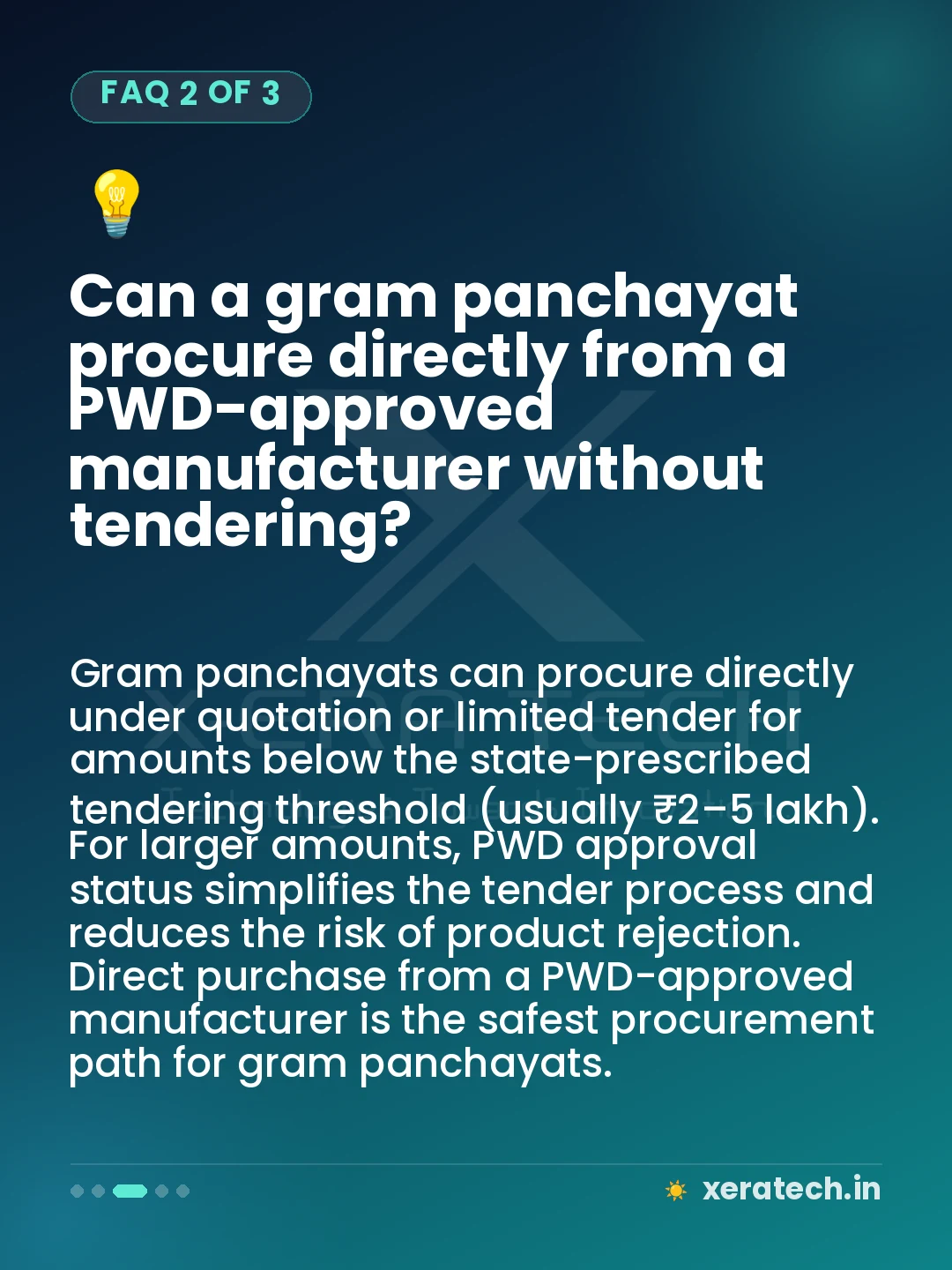
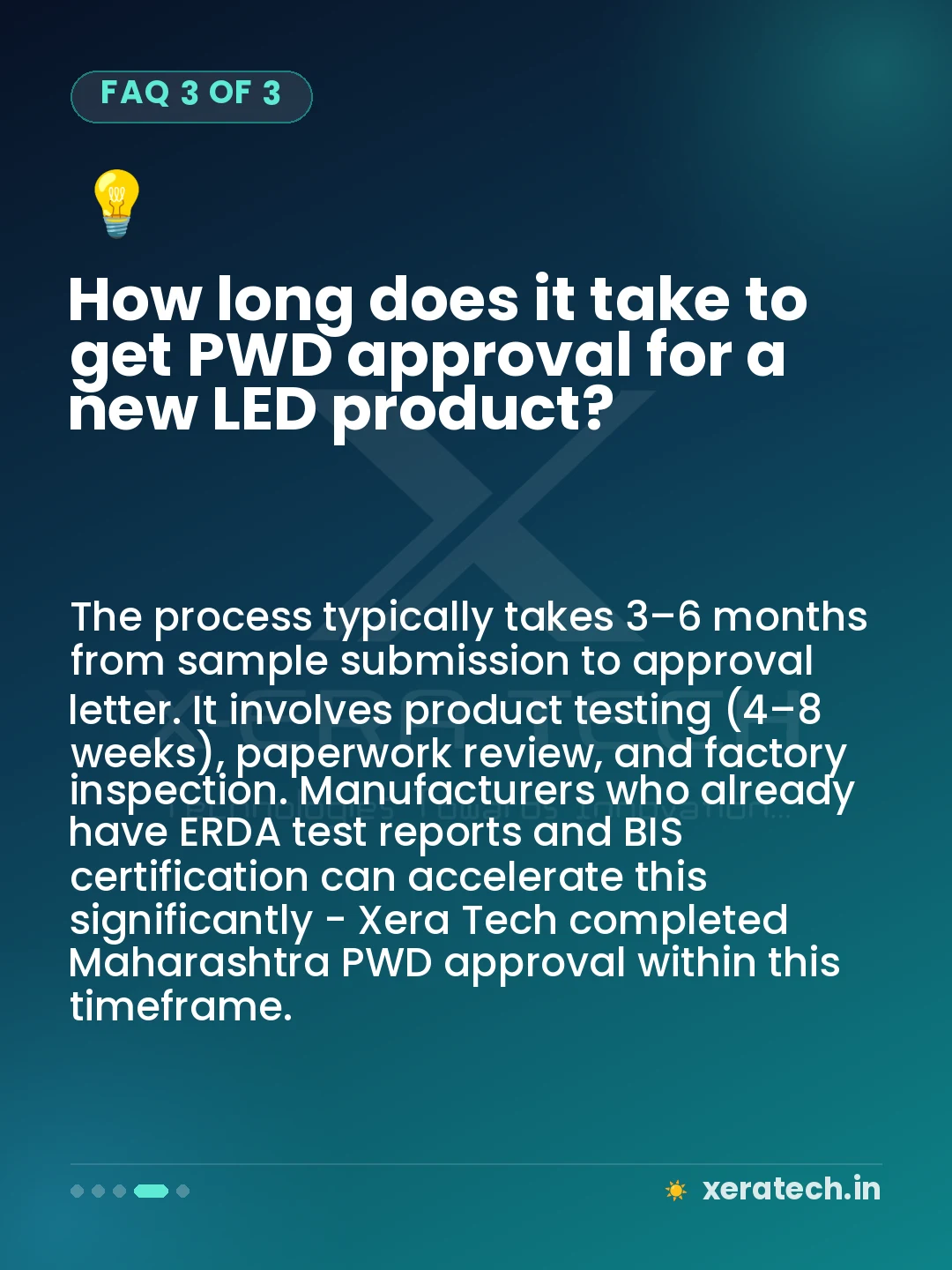
Each state's PWD maintains an approved vendor list (AVL) of manufacturers whose products meet the department's quality standards. For LED street lights, PWD approval typically involves: submission of product samples for testing at a PWD-designated or NABL-accredited laboratory, verification of BIS certification, factory inspection, and review of past project performance. Products from PWD-approved manufacturers can be specified in PWD-funded road projects without additional testing - speeding up procurement. Products from non-approved manufacturers must undergo per-project testing, which delays timelines and adds cost.
State-wise PWD Approval Bodies
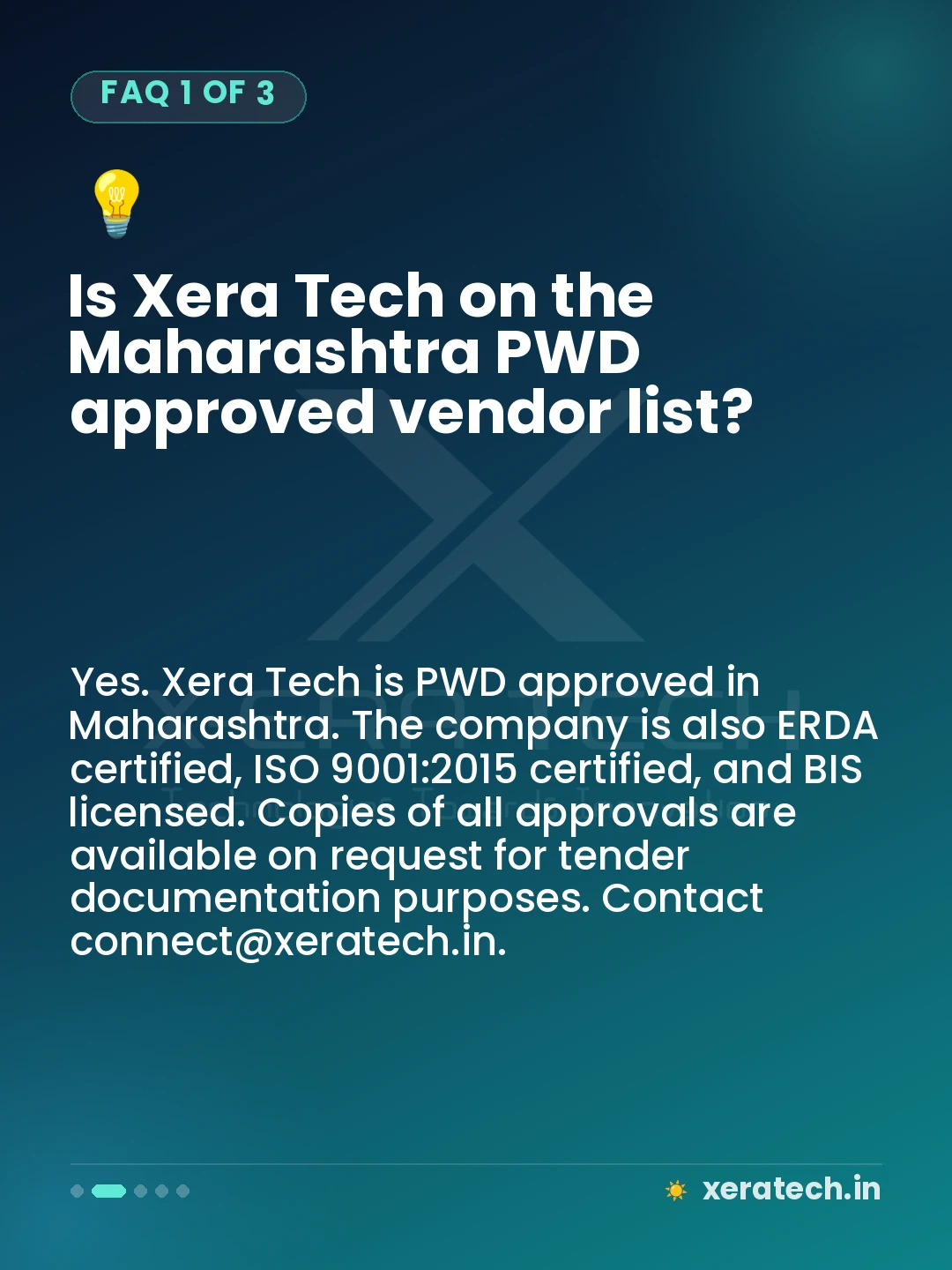
Maharashtra: Maharashtra PWD and Nashik PWD (Xera Tech is PWD approved). Uttar Pradesh: UP PWD and National Highways. Rajasthan: RIICO and Rajasthan PWD. Tamil Nadu: Tamil Nadu Highways Department. Karnataka: Karnataka PWD and KRDCL. Gujarat: Gujarat Roads and Buildings Department. Each state's PWD has its own approval process and vendor list. A manufacturer approved by Maharashtra PWD is not automatically approved by UP PWD - separate applications are needed for each state. Contractors should confirm the manufacturer's approval status in the relevant state before placing orders for government projects.
ERDA Certification - What It Adds
ERDA (Electrical Research and Development Association) is a NABL-accredited laboratory in Vadodara, Gujarat that conducts comprehensive testing of electrical equipment. ERDA test reports are widely accepted by PWD departments and government procurement agencies across India as evidence of product quality beyond basic BIS compliance. ERDA testing covers: photometric performance, thermal cycling, vibration resistance, surge immunity, harmonic distortion, and accelerated aging. Xera Tech products carry ERDA certification, which satisfies PWD and government tender quality requirements in most Indian states.
Why Contractors Should Buy Only PWD/ERDA Approved Products
Using a non-approved product on a PWD-funded project risks: rejection of the supply at quality inspection stage, requiring re-supply at the contractor's cost. Payment withheld until non-compliant products are replaced. Blacklisting from future PWD tenders. Personal liability for the site engineer who certified the non-compliant installation. For private projects, PWD approval is not mandatory but serves as a strong quality signal. A manufacturer on the PWD approved list has undergone rigorous third-party testing - far more credible than self-certified products.