Kerosene Lamp Reality in Rural India
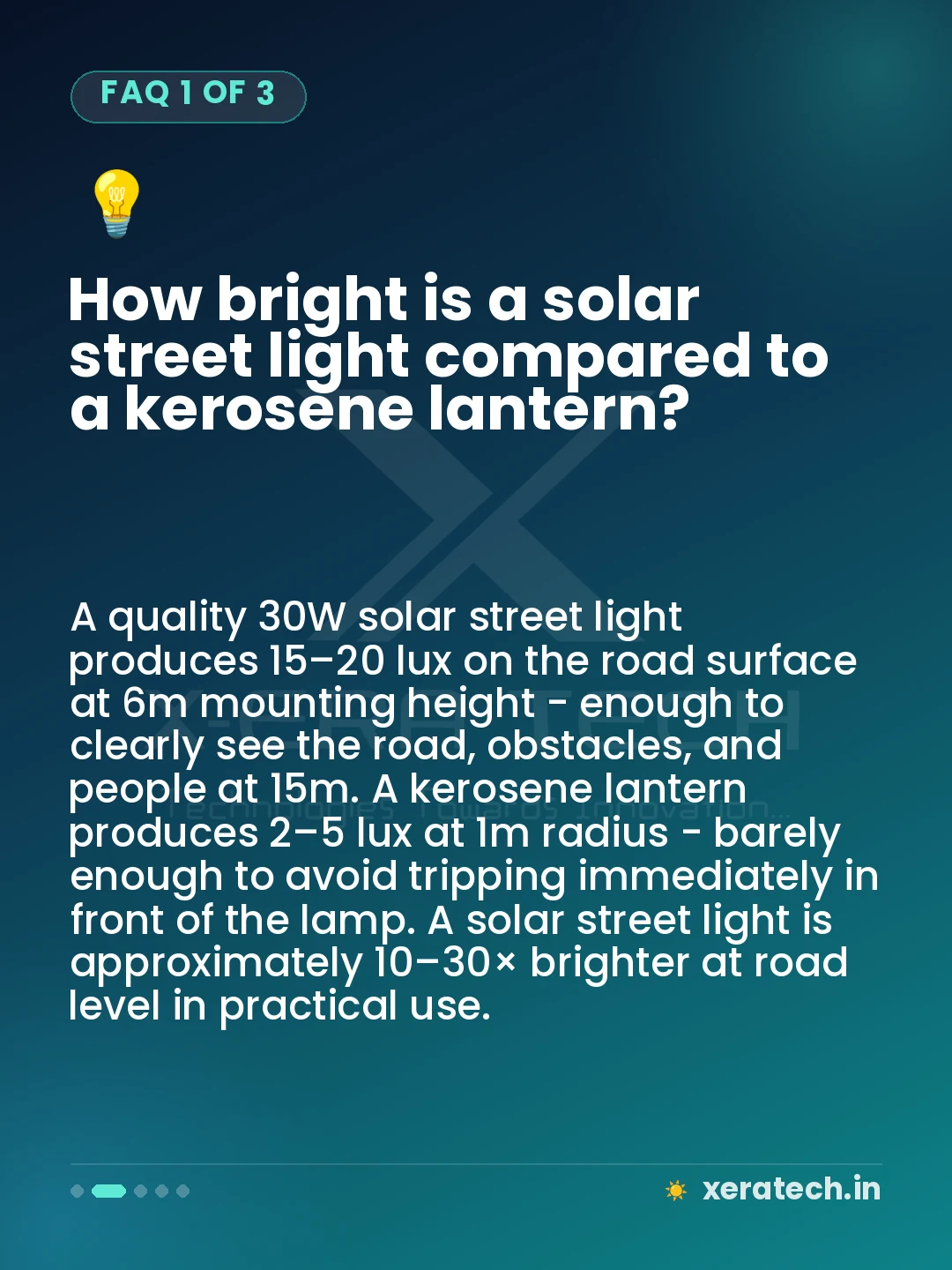
Despite electrification progress, an estimated 30–50 million rural households in India still use kerosene for some of their lighting needs (2024 estimate). Kerosene is used for: emergency lighting during power cuts (even in electrified villages). Outdoor and community lighting in unelectrified hamlets. Portable lighting for night agriculture. A standard kerosene lantern produces: 2–5 lux at 1m (barely enough to see) versus 15–25 lux from a quality solar street light at 6m mounting height on a road surface. Health: kerosene combustion indoors produces particulate matter (PM2.5) at levels 20–50× above WHO safe limits - directly linked to acute respiratory infections, chronic lung disease, and cancer. Outdoor kerosene use is less harmful but adds CO₂ and black carbon to the atmosphere.
Cost Comparison - Kerosene vs Solar
For a household using kerosene for outdoor lighting: Cost of kerosene: ₹80–₹100/litre (market rate, 2025). A standard lantern burns 50ml/hour. 4 hours/night × 30 nights = 6 litres/month = ₹480–₹600/month. Annual kerosene cost: ₹5,760–₹7,200. Over 10 years: ₹57,600–₹72,000 on kerosene - just for limited, poor-quality outdoor light. A solar street light serving the same household (as part of a village installation): capital cost ₹1,000–₹3,000 per household's share (amortised from gram panchayat project cost). Annual operating cost: ₹0. Over 10 years: ₹1,000–₹3,000 total. Solar is 20–50× cheaper than kerosene per unit of useful illumination.
The Transformation Solar Street Lights Bring
Village women's safety: most kerosene lanterns produce less than 3 lux - inadequate to see a person's face at 5m. A solar street light produces 15–25 lux on the road - enough to recognise faces at 15m and see obstacles clearly. This directly improves women's safety moving after dark. Children's education: in villages where children walk 1–3 km to school in winter darkness (lights on at 6am, back at 5pm), solar street lights on the path reduce the risk of accidents and predatory incidents that deter girls' school attendance. Economic activity: market vendors, small shops, and service providers can operate after dark. Villages with reliable street lighting see measurably higher evening economic activity and income.
Carbon Impact
Kerosene combustion emits: approximately 2.54 kg CO₂ per litre burned. For 6 litres/month × 12 months: 182.9 kg CO₂/year per household. Plus black carbon (soot) which has 900× greater warming effect per gram than CO₂ over 20 years. A solar street light saving one household from kerosene: 182.9 kg CO₂/year + substantial black carbon benefit. Over 10 years: 1.8 tonnes CO₂ equivalent avoided per household. A village of 200 households: 364 tonnes CO₂ equivalent in 10 years - a genuinely meaningful climate action at the grassroots level.