Why Solar Works Better Than Grid for Villages
Villages in India face unique lighting challenges that make solar the superior choice: Frequent power cuts - Maharashtra rural areas average 4–8 hours of load shedding daily. Grid extension cost is high - bringing a new MSEDCL connection to the village outskirts costs ₹50,000–₹2,00,000 per km. Low voltage fluctuation - grid voltage in rural Maharashtra commonly drops to 170–180V, causing grid LED lights to flicker or fail. Solar has none of these problems - it operates fully independently of the grid.
What Wattage for Village Roads?
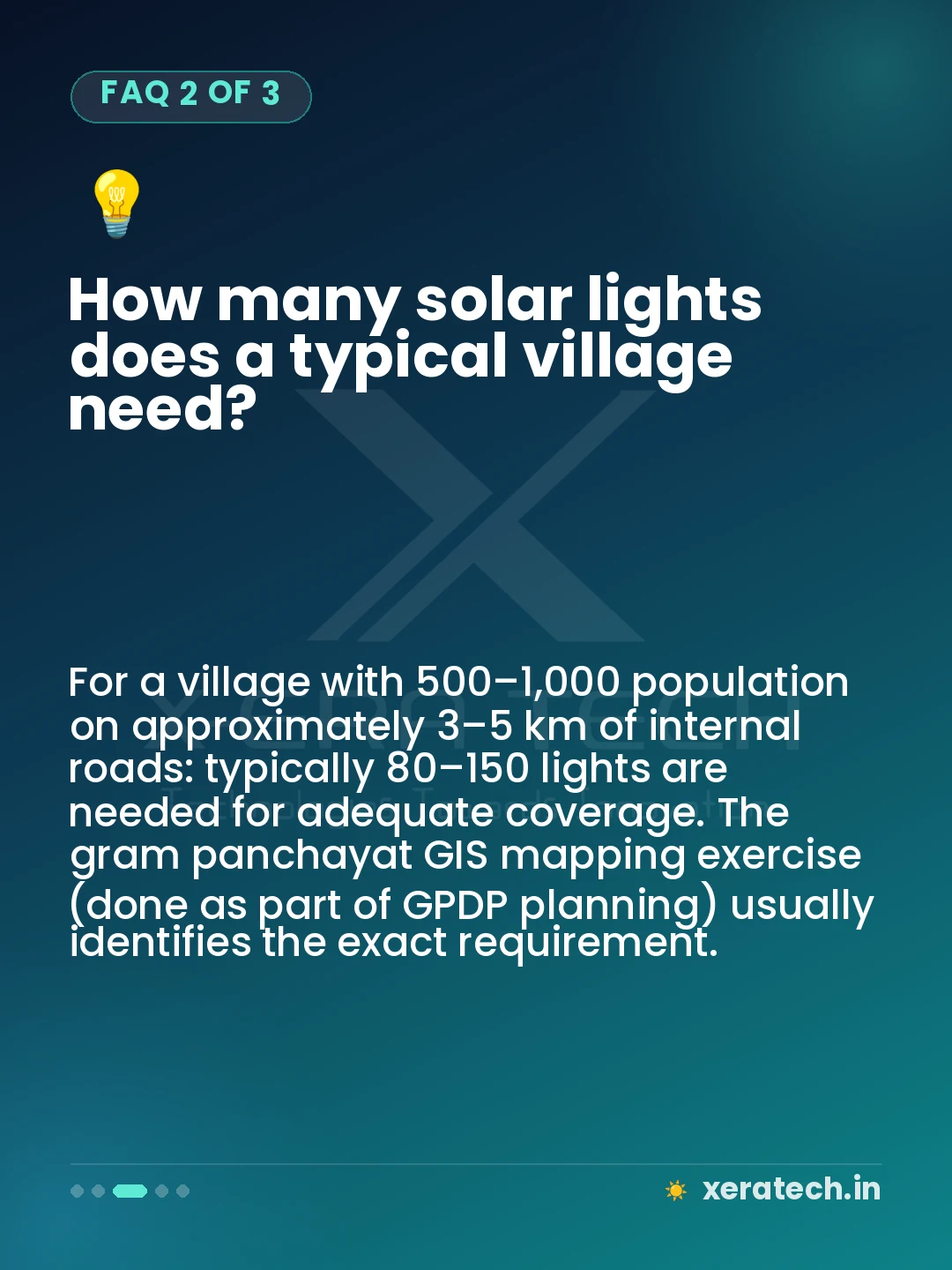
For a typical village in Maharashtra: Main village entrance road (5–6m wide): 30–40W solar street light, 6m pole, 25m spacing. Internal gram panchayat road (3–4m wide): 20–30W, 5m pole, 20m spacing. Village square and chowk: 40–50W, 6m pole or decorative post in centre. School and primary health centre: 40W, motion sensor for security. Water tank and common facility area: 30W for visibility. All-in-one solar lights (20–40W) are most common for village use due to simple installation and anti-theft design.
Government Funding - How Your Village Gets Free Lights
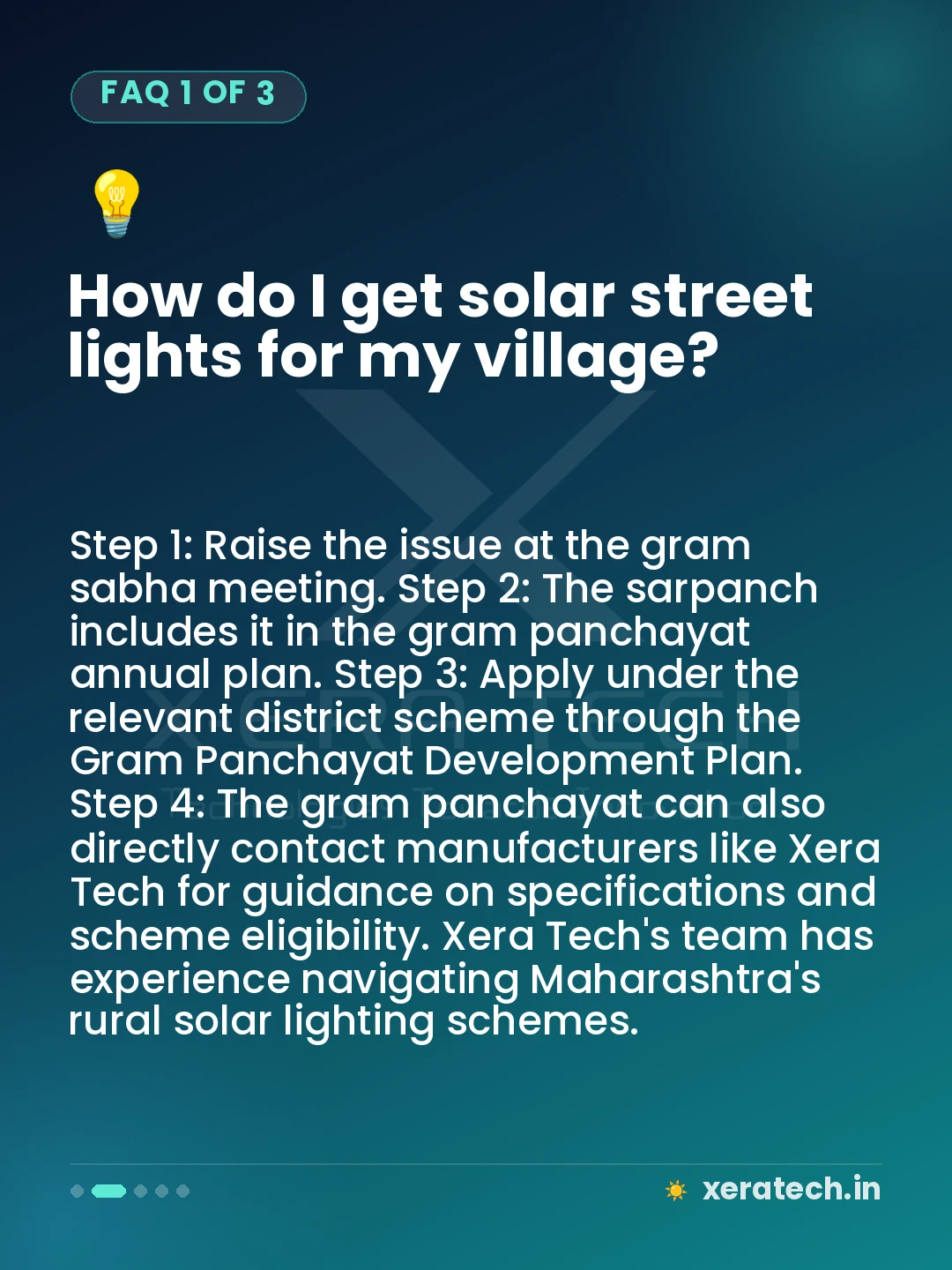
Most rural solar street light projects are 100% funded - meaning the gram panchayat and villagers pay nothing. Funding sources: 14th/15th Finance Commission grants (available to every gram panchayat annually - solar lights are an eligible expenditure). MNRE National Solar Mission - rural solar lighting component. State rural development department schemes. MP/MLA Local Area Development funds. The sarpanch or gram sevak can propose a solar street light project in the annual gram sabha and include it in the gram panchayat development plan. Approval typically happens within 1–3 months.
Real Village Projects by Xera Tech
Xera Tech has completed solar street light projects in dozens of Maharashtra villages including: Wasali village (30W solar street lights for industrial area access road), Igatpuri area villages (solar lights for tribal hamlets), multiple Nashik district gram panchayat projects (solar lights for approach and internal roads), Chanakapur dam area Kalvan (solar lights for water conservation area), and others. All village projects include training of 2 gram panchayat members on basic solar light maintenance.