What Each Colour Temperature Looks Like
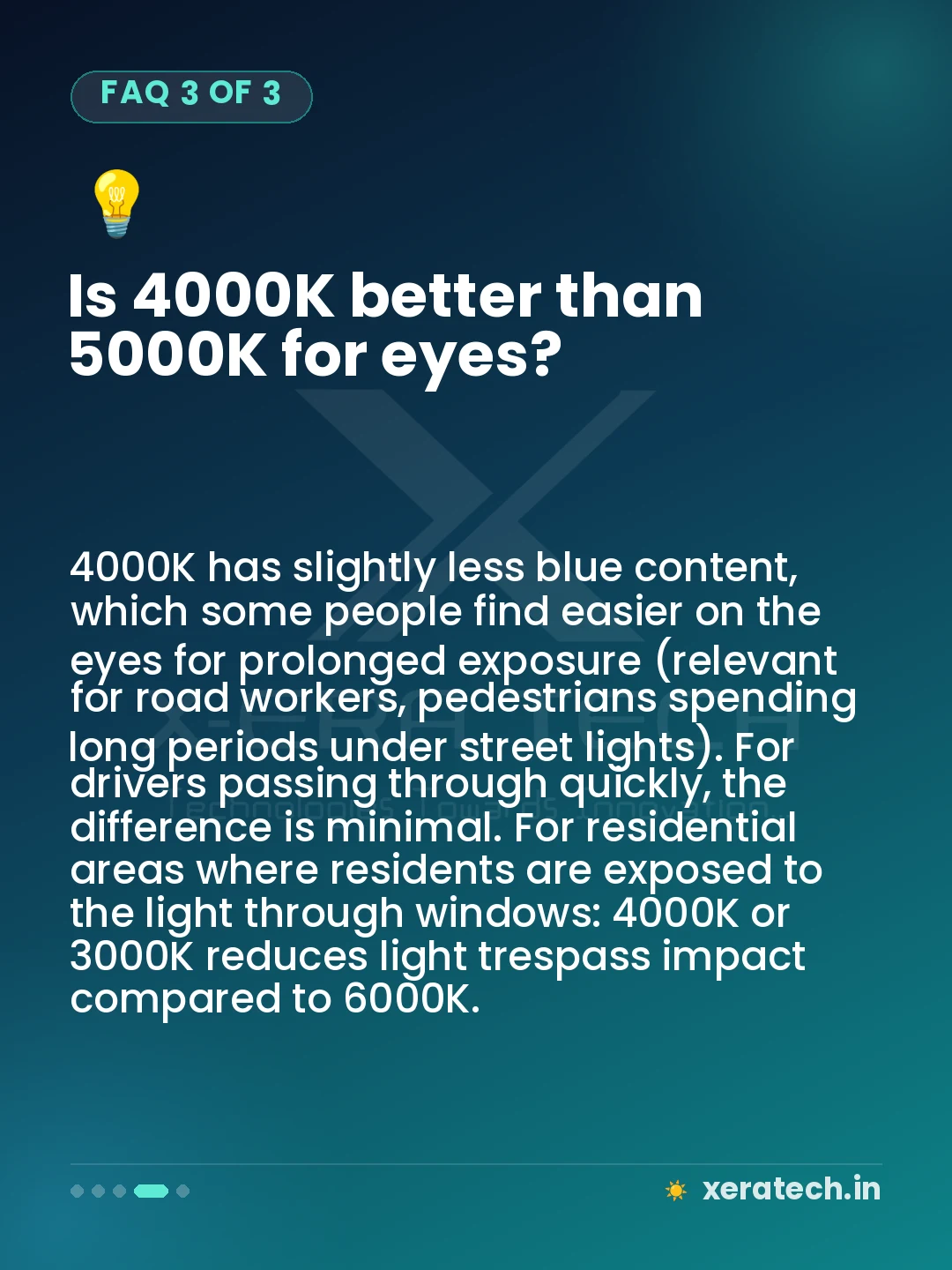
2700K (warm white): orange-yellow glow similar to old incandescent lights. Very warm, intimate atmosphere. Used in: luxury resorts, boutique hotels, upscale residential. Not recommended for roads - reduces contrast and visibility. 3000K (warm white): softer yellow-white. Good for residential streets where a warm neighbourhood feel is desired. Used in: colony internal roads, housing society main gates. 4000K (neutral white): balanced, natural-looking white light. A good compromise between warmth and visibility. Used in: urban commercial streets, shopping areas. 5000K (cool white): crisp, bright light close to midday sun. Best contrast for obstacle detection. Standard for most Indian road lighting. Used in: village roads, municipal roads, industrial areas. 6000–6500K (cool/daylight): blue-white, very bright and crisp. Maximum visibility for high-speed roads. Used in: highways, toll plazas, sports grounds.
Visibility Science - Why Cool White is Safer for Roads
Human vision has two systems: photopic (cone) vision for bright daylight and scotopic (rod) vision for low-light conditions. At night, scotopic vision dominates. Rod cells are most sensitive at approximately 505–507nm - in the blue-green range. Cool white LEDs (5000–6500K) have significantly higher blue-green spectral content than warm white (3000K). This means cool white light stimulates rod cells more effectively at night, improving: peripheral vision (seeing objects at the edge of the road). Contrast sensitivity (distinguishing a dark obstacle from the road surface). Reaction time (faster hazard recognition). Multiple traffic safety studies show 15–30% reduction in nighttime accidents after switching from warm white or sodium (2100K) to cool white LED.
Light Pollution Consideration
Blue-rich light (5000–6500K) contributes more to sky glow and can disrupt wildlife circadian rhythms. This has led some European countries to restrict cool white LED in rural areas. In India: light pollution standards are not yet formalised for street lighting. For wildlife-sensitive areas (national park buffer zones, coastal turtle nesting areas, forest edge roads): consider amber or warm white LEDs (2700–3000K) as a compromise - slightly less visibility performance but significantly lower ecological impact. For typical Indian town, village, and highway roads: 5000–6500K is appropriate and safe.
Recommendations by Application
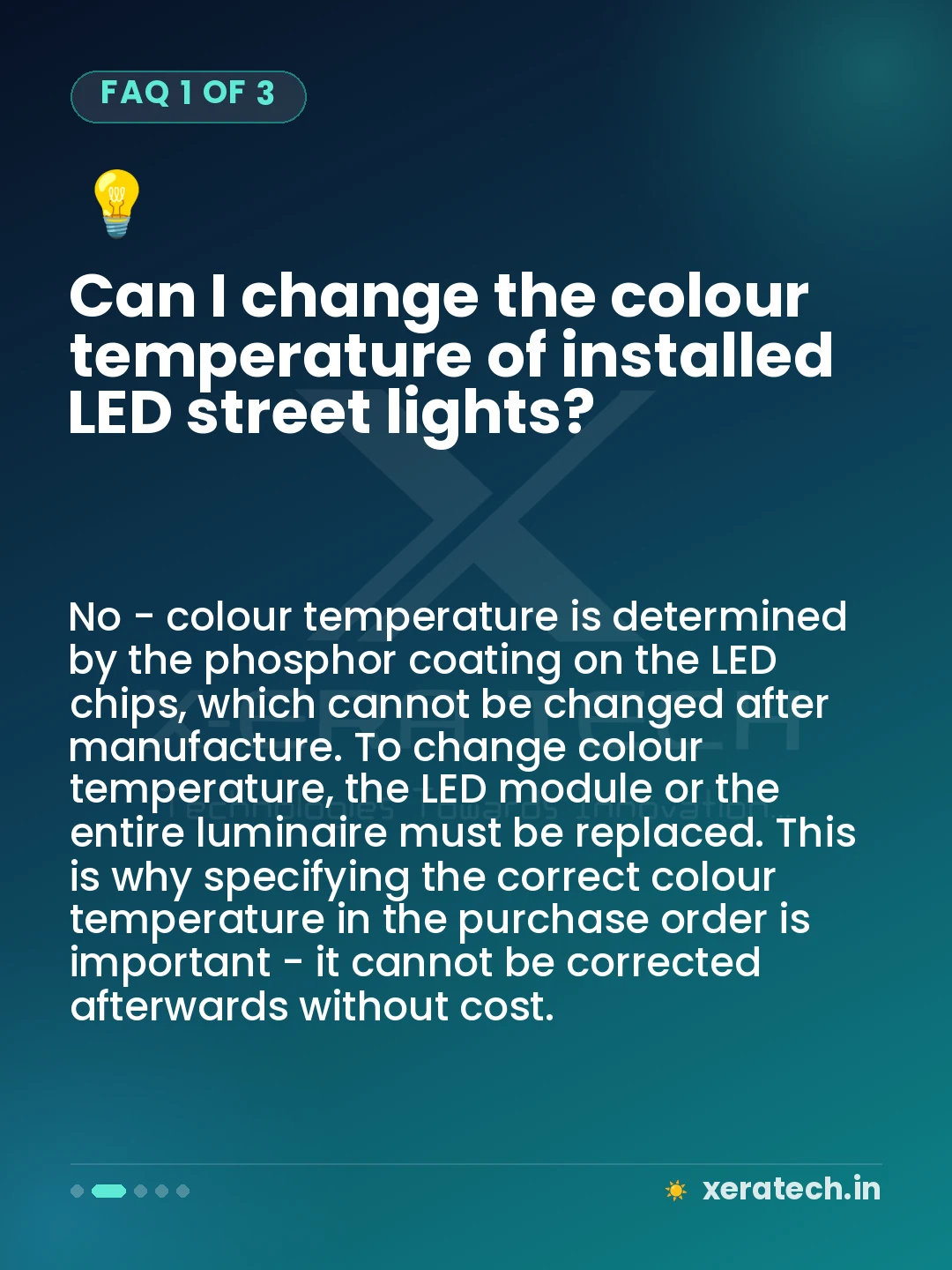
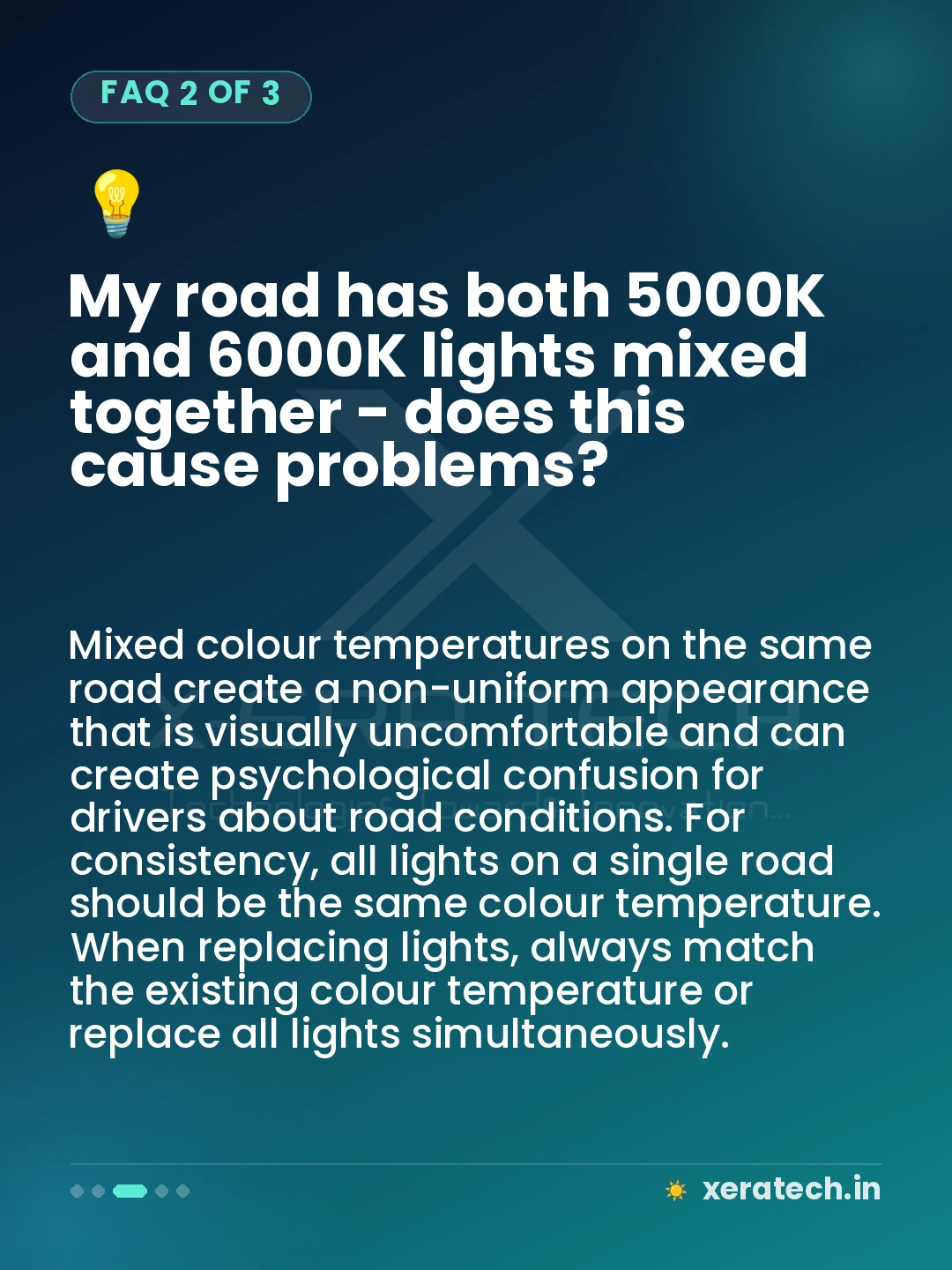
National and state highways: 6000–6500K - maximum visibility at high speed. Municipal main roads: 5000–5700K - standard visibility with reasonable colour rendering. Colony and residential streets: 4000–5000K - balance of visibility and comfort for slower-speed pedestrian and residential environment. Housing society internal paths: 3000–4000K - warm, welcoming residential ambience. Temple and heritage roads: 3000–3500K - warm traditional feel aligned with heritage context. Industrial roads and factory areas: 5700–6500K - safety-critical visibility in complex environments. All Xera Tech LED street lights are available in 4000K, 5000K, and 6000K - specify in the purchase order.