
The Colour Temperature Scale
2700–3000K (Warm White): soft yellowish light, similar to old incandescent or halogen bulbs. Creates a cosy, relaxing atmosphere. Best for: homes, restaurants, hotels, decorative garden lighting. 3500–4000K (Neutral White): balanced, natural-looking light. Best for: offices, classrooms, retail shops, hospital wards. 5000–5700K (Cool White / Daylight): bright, energising, blue-white light similar to midday daylight. Best for: roads, factories, warehouses, petrol pumps. 6000–6500K (Cold White): very blue-white, harsh, reduces sleepiness. Best for: security areas, inspection zones, sports grounds.
Which Colour Temperature for Road Lighting?
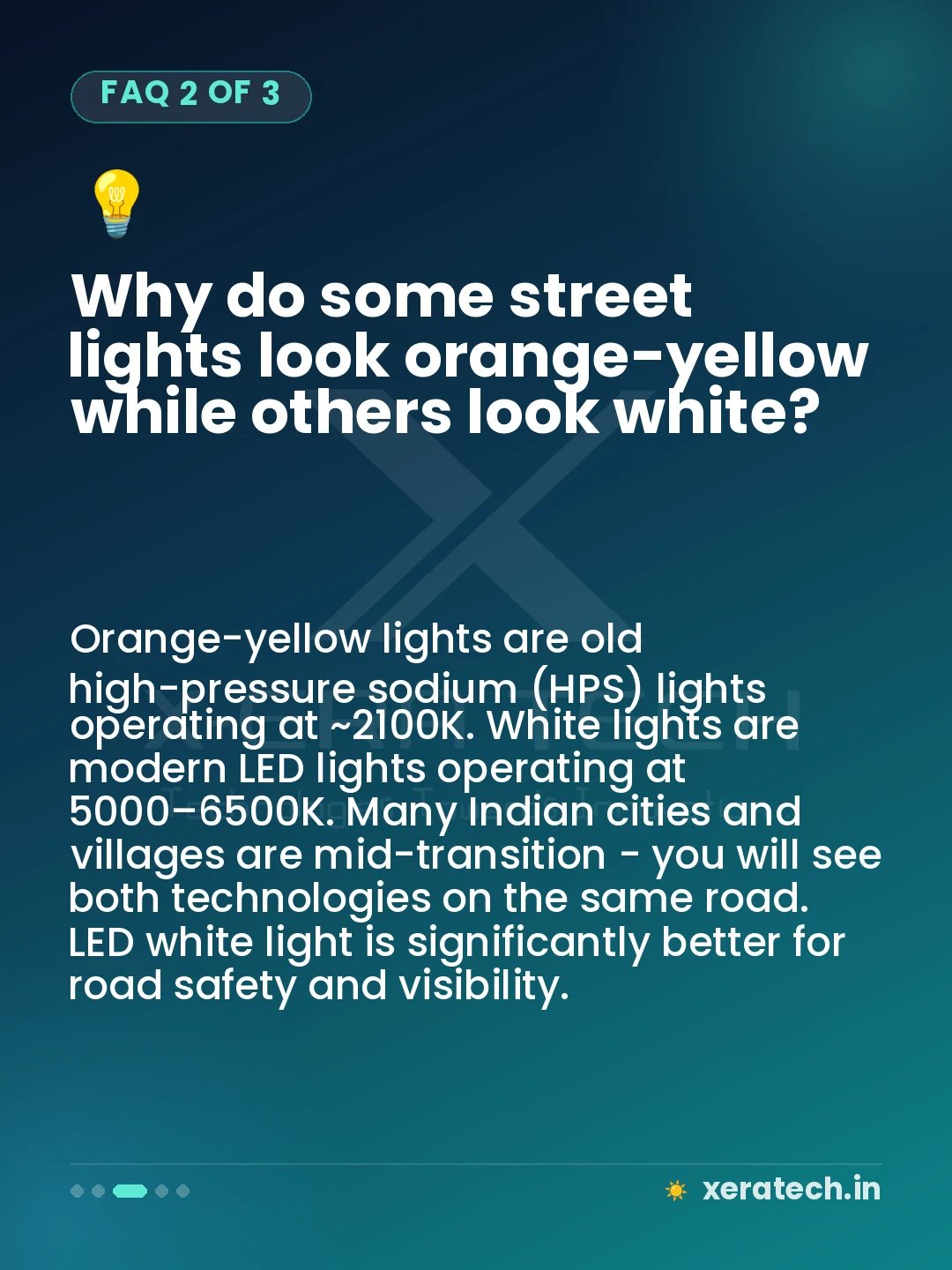
IS 1944 does not strictly mandate a specific colour temperature, but 5000–6500K is universally recommended for road lighting because: it provides the highest contrast for obstacle detection. The human eye (scotopic vision in low light) is most sensitive to blue-green wavelengths (around 507nm). Cool white LEDs improve peripheral vision and reaction time for drivers versus sodium (yellow, 2100K) lights. Studies in Indian cities show 20–30% reduction in nighttime accidents after switching from sodium to cool white LED.
Colour Temperature for Different Applications
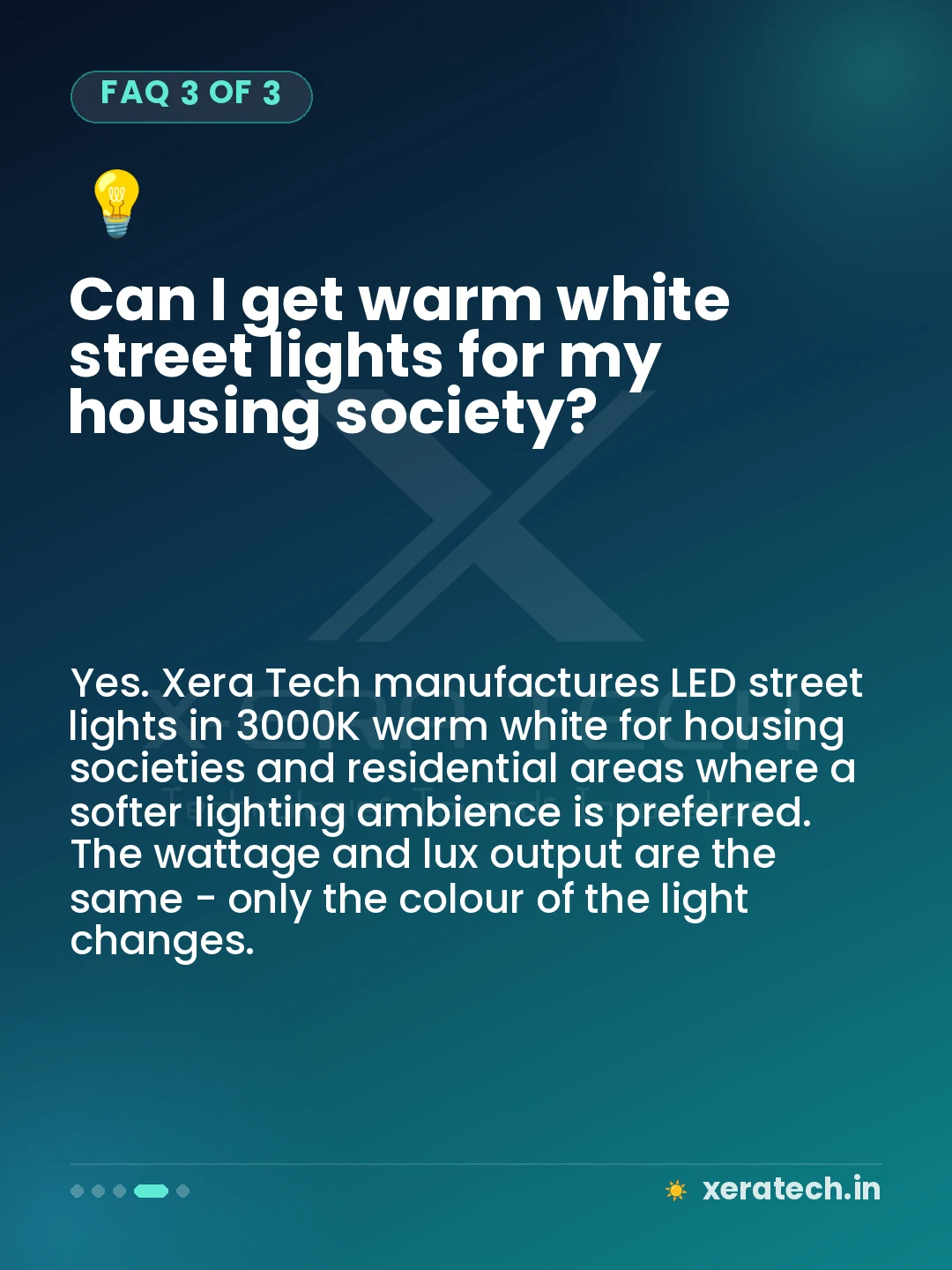
Village road and lane: 5000K (cost-effective, high visibility). City road and highway: 5700–6500K (maximum visibility). Industrial factory floor: 5000–6500K (task accuracy). Decorative street light on heritage road or temple: 3000–4000K (warm, traditional feel). Housing society garden: 2700–3000K (residential warmth). Petrol pump forecourt: 5000–6500K (safety critical). Sports ground: 5700K minimum. Shopping mall interior: 3500–4000K (retail preference). Park and bollard lights: 2700–3500K (pleasant ambience).