Poultry Farm Lighting
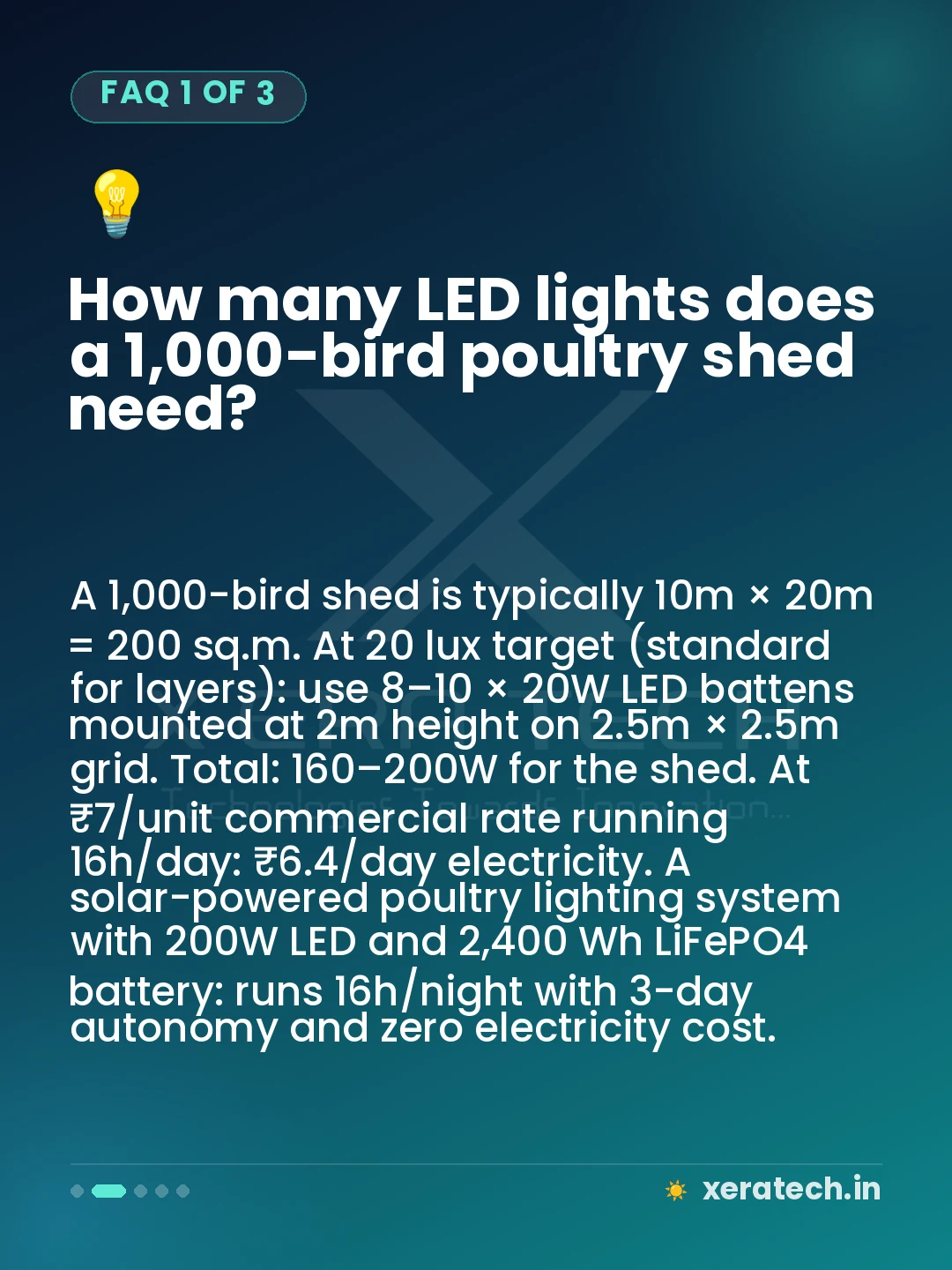
Artificial lighting in poultry sheds extends the perceived day length, stimulating egg production in layers and growth in broilers. Standard protocol for layers: 16 hours of light per day. LEDs have replaced incandescent and fluorescent in poultry sheds because: 60–70% energy saving. Red-enriched LED spectrum (specific wavelengths at 630–660nm) has been shown to increase egg production by 5–8% in peer-reviewed trials. Dimmable LED allows the gradual dawn and dusk simulation that reduces flock stress. Dust and ammonia resistant fixtures (IP65 minimum) - poultry sheds are extremely corrosive environments. For outdoor security lighting around poultry farms: standard IP65 LED flood lights on 5m poles at the perimeter.
Greenhouse and Poly-House Lighting
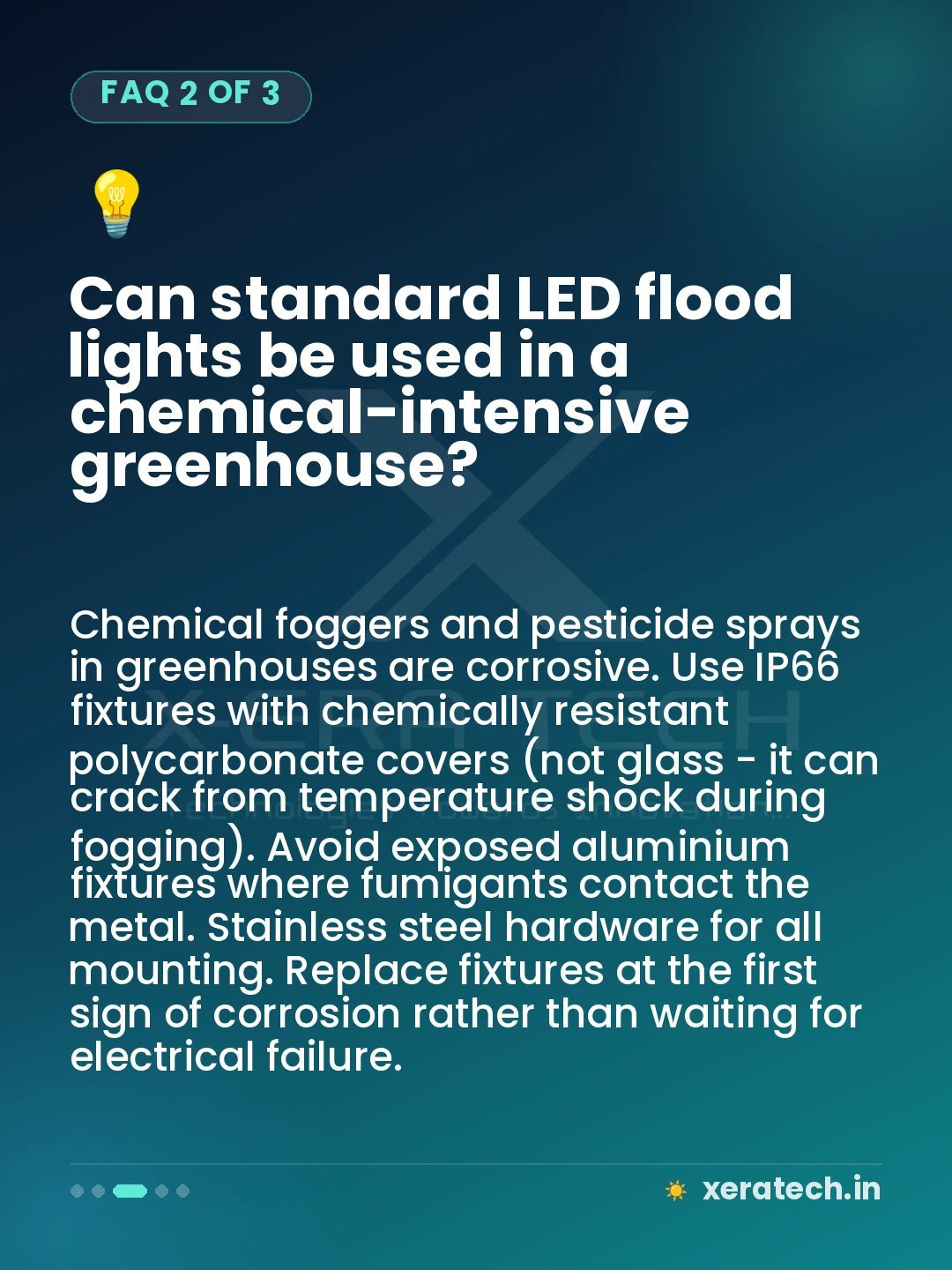
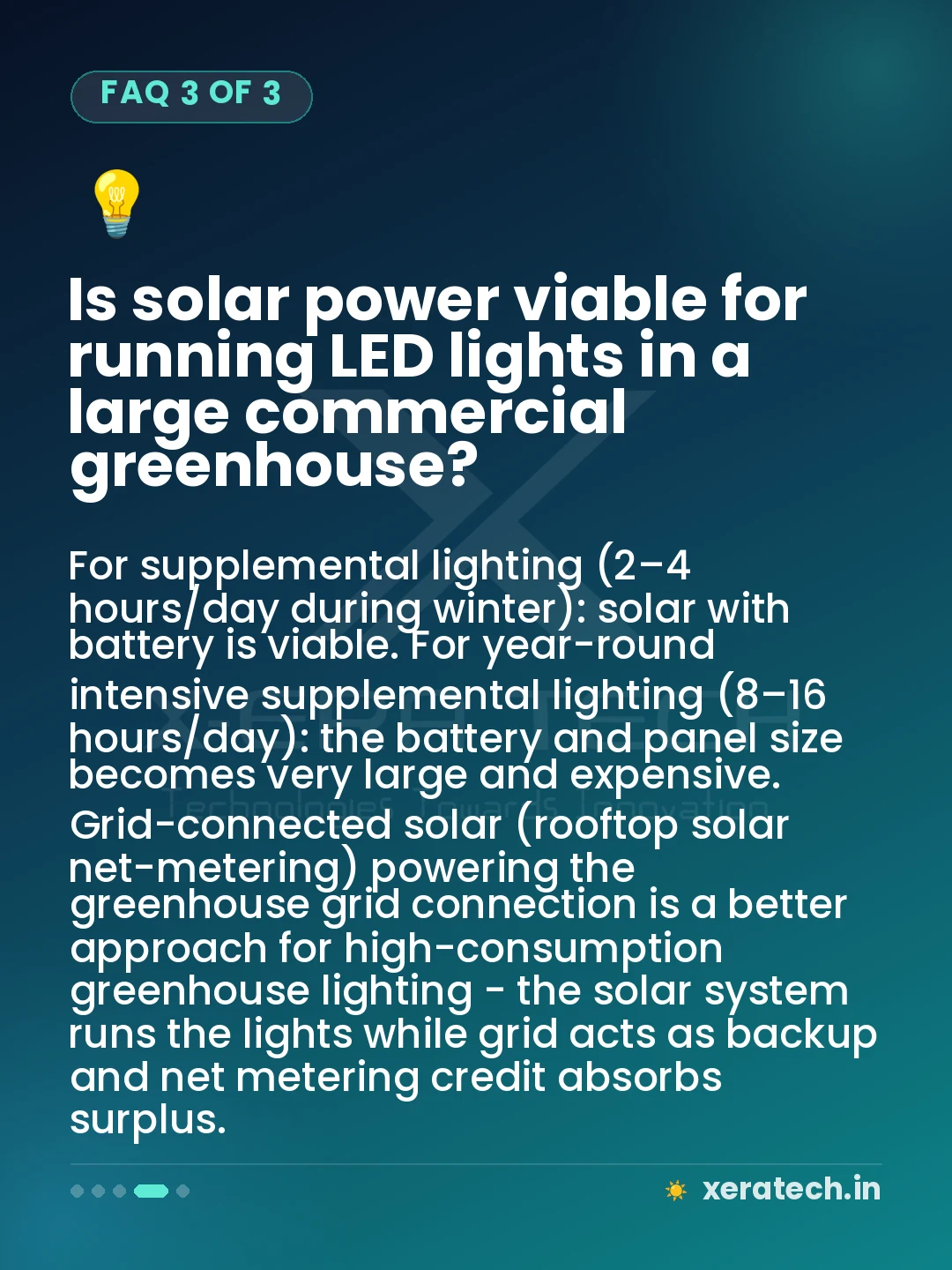
LED supplemental lighting in Indian greenhouses and poly-houses has grown rapidly with the expansion of high-value horticulture (capsicum, tomatoes, cucumber, flowers) in Maharashtra, Karnataka, and Himachal Pradesh. For supplemental lighting (extending photoperiod in winter): standard 5000–6500K LED flood lights provide adequate PAR (Photosynthetically Active Radiation) for most crops. Red:Blue LED grow lights (specialist horticultural LEDs) are more efficient at stimulating photosynthesis but cost 3–5× more than standard LED floods. For most Indian growers, general-purpose 6500K LED provides adequate supplemental lighting at far lower cost. Mounting: overhead on poly-house structure frame, spaced for even coverage at 200–400 lux at plant canopy level.
Night Harvesting - Nashik Grape Belt Application
Nashik, Sangli, Solapur, and Pune districts produce 80% of India's grapes and significant quantities of pomegranates, onions, and tomatoes. Night harvesting (typically 11pm–4am) avoids heat stress during the day in March–May. Farmers and contractors use: portable LED work lights (torch-type or headlamps) for individual harvesters. LED flood lights on telescopic poles (2–3m) mounted on tractors for row-level illumination. Fixed solar flood lights on 4–5m poles along tractor paths between rows. Requirement: 50 lux at field level for safe harvesting operations. Nashik's proximity to Xera Tech's factory makes next-day delivery of flood lights practical for seasonal needs.
Canal and Irrigation Infrastructure Lighting
Canal-side roads under Maharashtra's major irrigation projects (Jayakwadi, Kukadi, Godavari projects) are increasingly lit with solar street lights as part of water user association infrastructure. Canal pump house lighting: 40–100W LED flood lights for pump operator safety and theft deterrence. Canal check gate areas: 30–50W for staff visibility during water distribution shifts. Solar-powered canal-side lights are ideal: no grid along most canal banks. Self-powered during irrigation season when the canals themselves are flowing and water user associations are active. Low maintenance - only annual cleaning needed.