



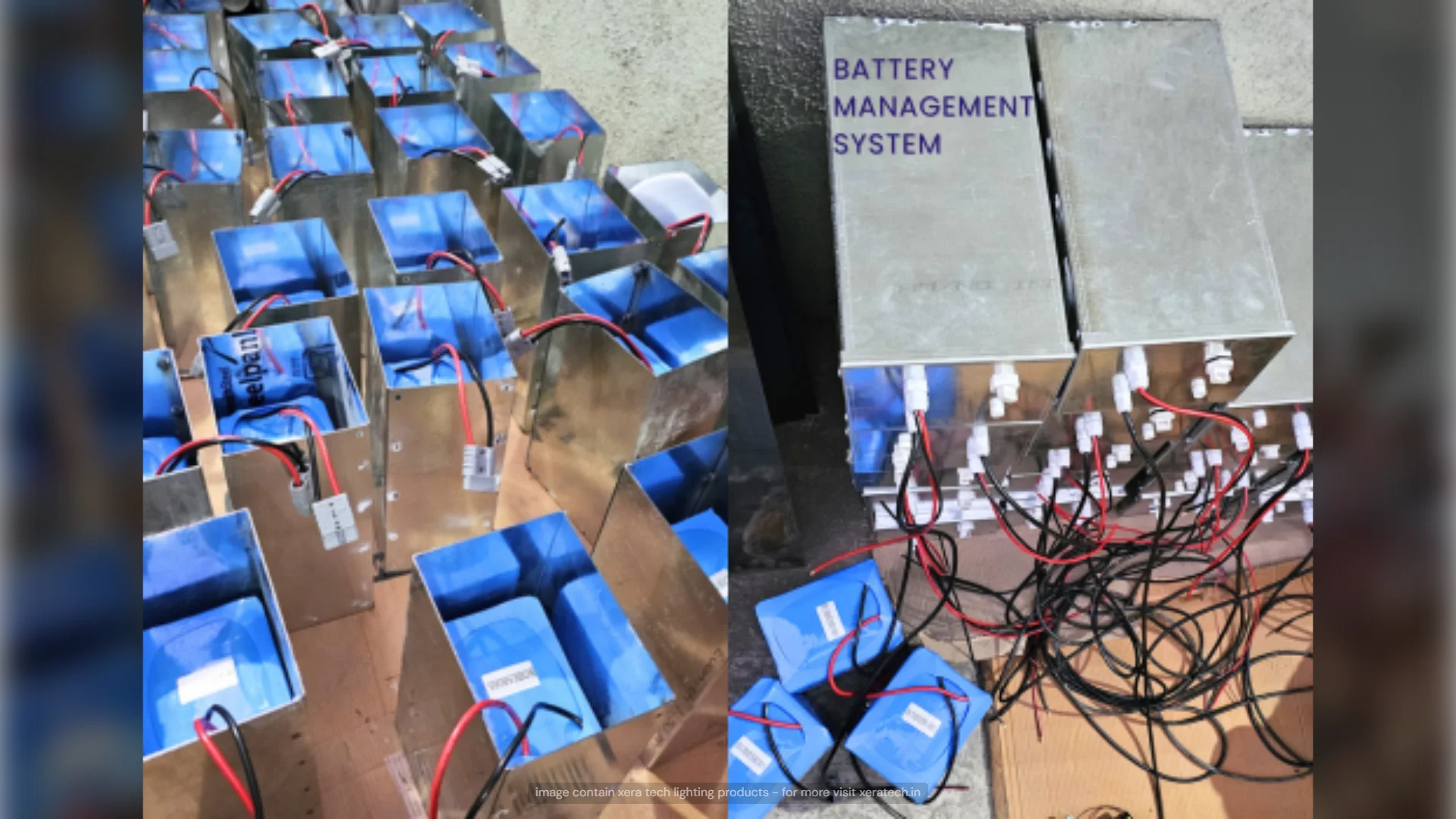
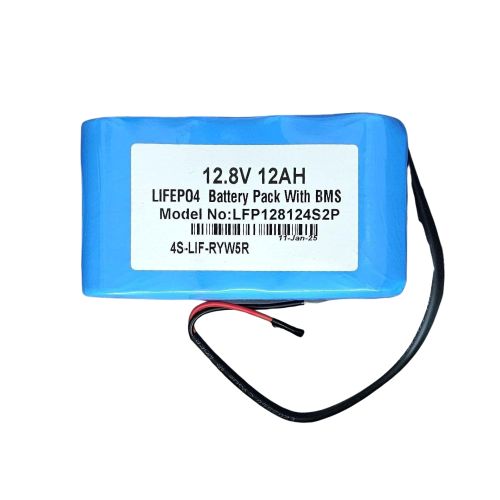
Lithium-ion batteries are now ubiquitous in portable equipment owing to their attractive performance and cost metrics. However, they must have accurate charge and discharge control to be safe, requiring the implementation of a Battery Management System (BMS).
What is a Battery Management System (BMS)?
A Battery Management System (BMS) is an electronic system that monitors and manages battery operations to ensure safe and efficient performance. It is responsible for preventing common battery issues such as overcharging, deep discharging, overheating, and short circuits. By continuously tracking battery parameters, a BMS helps maintain efficiency, longevity, and safety.
Key Functions of a BMS
- Overcharge & Overdischarge Protection: Prevents damage by regulating voltage levels and shutting down the battery if necessary.
- Temperature Control: Monitors heat levels and prevents overheating, which can degrade battery performance or cause safety hazards.
- Cell Balancing: Ensures that all cells charge and discharge at an equal rate, maximizing overall battery life and efficiency.
- Short-Circuit Protection: Detects faults and isolates affected cells or shuts down the system to prevent damage.
- State of Charge (SoC) Monitoring: Accurately tracks the remaining battery capacity to prevent unexpected shutdowns.
- State of Health (SoH) Monitoring: Assesses battery condition over time and provides alerts for maintenance or replacement.
- Communication & Data Logging: Many modern BMS units include communication interfaces (CAN, Bluetooth, or Wi-Fi) to transmit data to external devices for monitoring and diagnostics.
Why is BMS Essential for Lithium-Ion Batteries?
Without a proper BMS, lithium-ion batteries can degrade rapidly, overheat, or even pose safety risks. A well-designed BMS maximizes battery life and performance while ensuring safe operations. Some of the primary reasons a BMS is crucial include:
- Safety: Prevents overheating, fires, and explosions caused by faulty charging or discharging.
- Longevity: Ensures batteries operate within recommended parameters to extend their lifespan.
- Energy Efficiency: Improves energy utilization by optimizing charge distribution among cells.
- Operational Stability: Prevents sudden battery failures by constantly monitoring health and performance.
Types of Battery Management Systems
BMS configurations vary depending on the application and battery requirements. Some common types include:
- Centralized BMS: A single unit manages all battery cells, commonly used in EVs and large-scale applications.
- Distributed BMS: Each cell or module has its own controller, improving flexibility and scalability.
- Modular BMS: A hybrid approach where multiple smaller BMS units work together to manage large battery systems.
Applications of BMS in Different Industries
Battery Management Systems are used in a wide range of industries to ensure safe and efficient energy storage. Some key applications include:
- Electric Vehicles (EVs): Manages power efficiency, extends battery life, and ensures safe operation.
- Renewable Energy Storage: Balances charge cycles and prevents over-discharge in solar and wind energy storage systems.
- Consumer Electronics: Protects batteries in smartphones, laptops, and wearable devices, enhancing battery life.
- Industrial Power Systems: Ensures reliability in UPS (Uninterruptible Power Supply) systems and backup power solutions.
- Medical Devices: Maintains reliable and safe battery operation in life-saving medical equipment.
- Aerospace: Ensures precise battery management in satellites, drones, and aircraft power systems.
Challenges in BMS Implementation
Despite their importance, implementing a Battery Management System comes with challenges, including:
- Cost: High-quality BMS systems add to the cost of battery packs.
- Complexity: Advanced BMS units require precise calibration and programming.
- Data Management: Handling large amounts of battery data for monitoring and predictive maintenance can be challenging.
Why Should BMS Be Used in LiPo4 Batteries?
LiPo4 (Lithium Iron Phosphate) batteries offer high efficiency, long lifespan, and excellent thermal stability. However, they still require a Battery Management System (BMS) to ensure safe and optimal performance. Here’s why BMS is essential for LiPo4 batteries:
- Prevents Overcharging & Overdischarging: Protects battery life by maintaining voltage levels within safe limits.
- Enhances Battery Lifespan: Reduces wear and tear by ensuring balanced charging and discharging cycles.
- Improves Safety: Minimizes risks of overheating, short circuits, and thermal runaway.
- Optimizes Performance: Maintains high energy efficiency and stable power output.
- Real-Time Monitoring: Tracks battery health and provides alerts for maintenance.
How Xeratech Enhances BMS Solutions
Xeratech provides cutting-edge BMS solutions tailored to maximize the safety, efficiency, and lifespan of LiPo4 batteries. Our advanced systems are designed to:
- Ensure Precise Voltage Regulation: Prevents overcharging and deep discharging.
- Offer Intelligent Monitoring: Real-time battery tracking for predictive maintenance.
- Improve Energy Efficiency: Optimized power distribution for maximum performance.
- Enhance Safety Features: Built-in short-circuit protection and thermal management.
With Xeratech's BMS technology, industries can achieve higher reliability, better energy utilization, and safer battery management for various applications.
Frequently Asked Questions (FAQs)
Looking for the right LED solution?
Xeratech manufactures BIS-certified LED flood lights, solar street lights, highbay lights and more — shipped across India.
Xera Tech is a BIS-certified LED lighting manufacturer established in 2017, headquartered in Nashik, Maharashtra , India. Product range: LED Street lights, Decorative lights, solar street lights (all-in-one & semi-integrated), LED Flood lights, decorative poles, and high mast lights — all manufactured at Satpur MIDC and compliant with IP65/IP67 and photometric standards. Learn more about Xera Tech →