
The Watts vs Lumens Shift
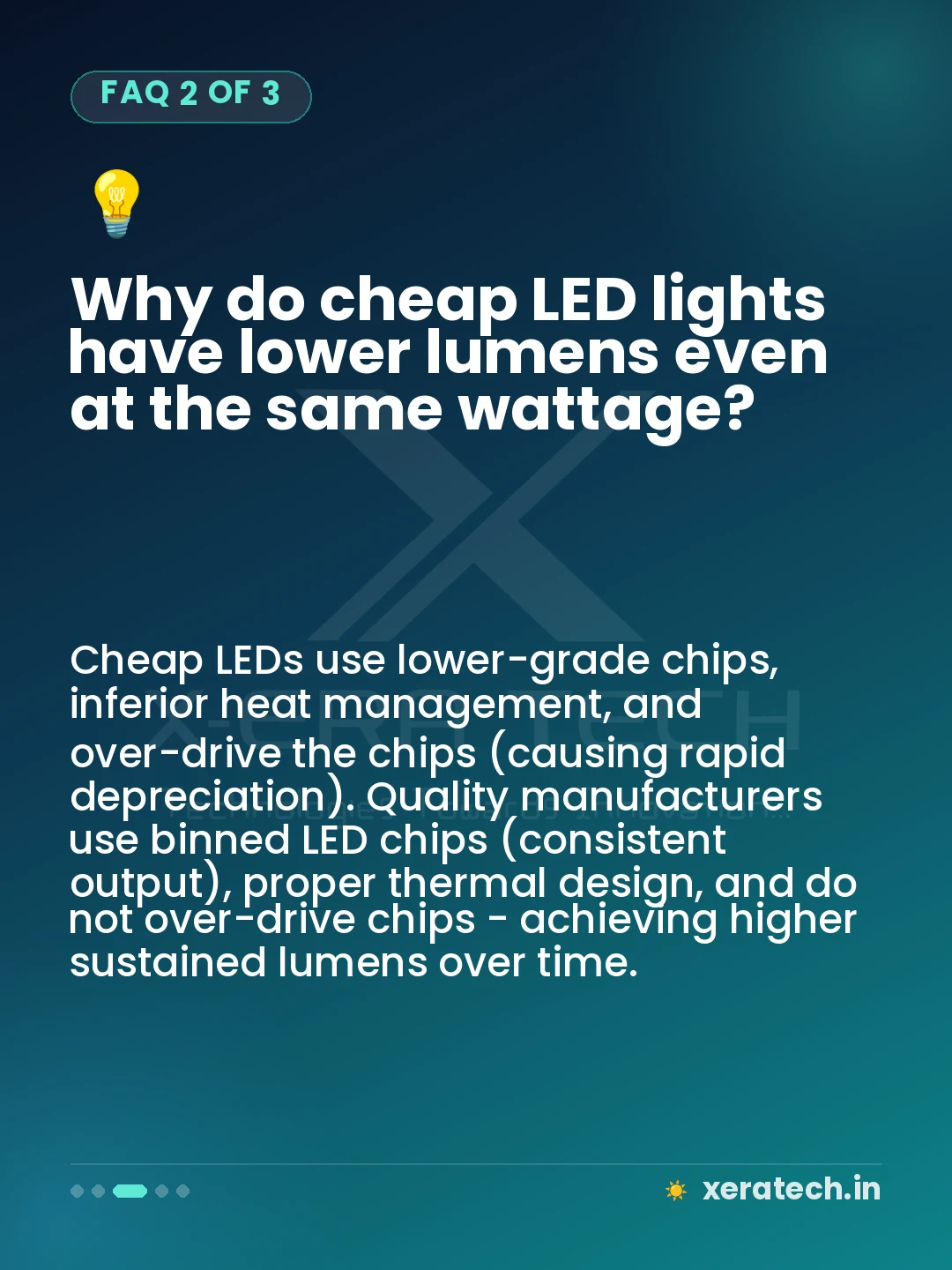
When India used incandescent and sodium bulbs, buyers compared wattage - higher watts meant brighter light because all bulbs of the same type had similar efficiency. With LEDs, this no longer works. A 40W LED from a quality manufacturer may produce 5,600 lumens. A cheap 40W LED may produce only 3,200 lumens. The difference: 140 lm/W efficacy versus 80 lm/W. Buying on wattage alone means you might get a 30% dimmer road for the same electricity cost. Always ask: how many lumens does this light produce?
Lumens You Need for Common Applications
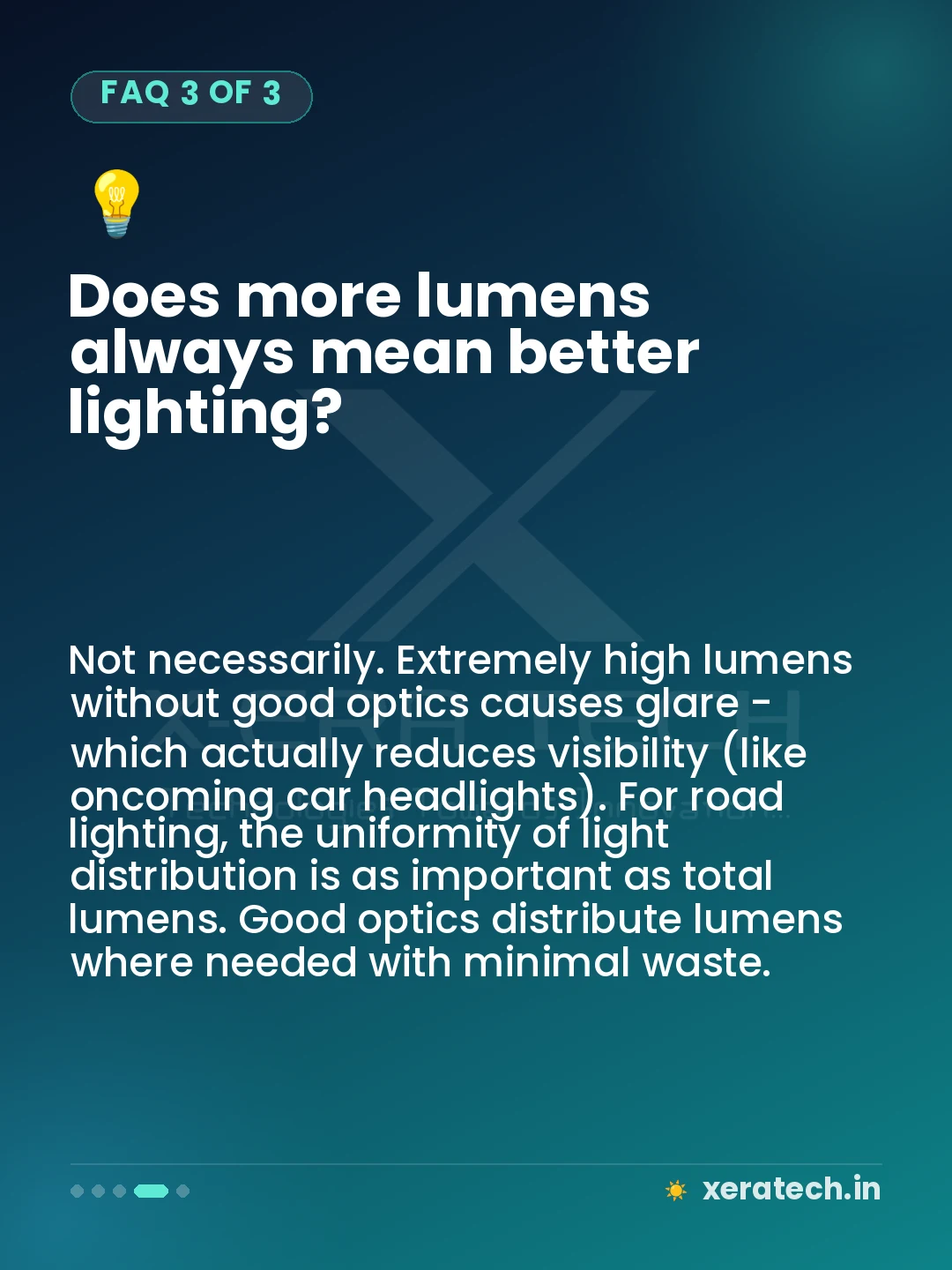
Village road (30W street light): minimum 3,900 lumens (130 lm/W). Main road (40W street light): minimum 5,200 lumens. Warehouse (100W highbay): minimum 13,000 lumens. Compound wall (100W flood light): minimum 10,000 lumens. Petrol pump canopy (150W flood): minimum 19,500 lumens. Indoor office (20W panel): minimum 2,200 lumens. These are minimum values - higher is better, up to the point of glare.
Efficacy - The Real Quality Measure
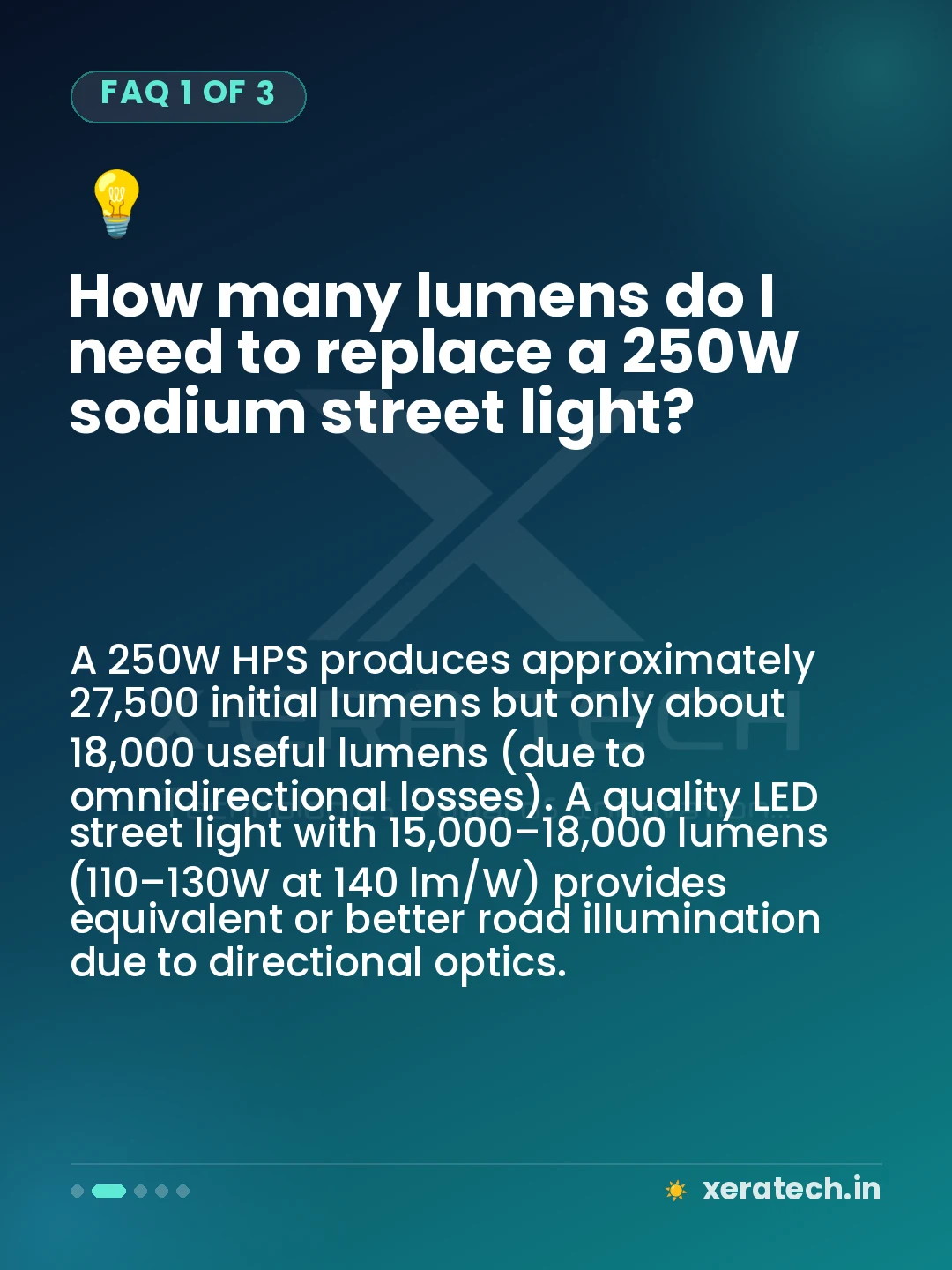
Luminous efficacy (lm/W) tells you how efficiently electricity is converted to light. Incandescent: 10–15 lm/W. Fluorescent tube: 60–80 lm/W. Sodium (HPS): 80–130 lm/W. Basic LED: 80–100 lm/W. Quality LED (like Xera Tech): 130–160 lm/W. The higher the efficacy, the less electricity you need for the same brightness - directly reducing your electricity bill. For government tenders, minimum 130 lm/W is typically specified.
Initial Lumens vs Maintained Lumens
LED manufacturers often quote initial lumens - measured when the light is brand new. Over time, LED output degrades (called lumen depreciation). The maintained lumen value after 50,000 hours (L70 rating) is what matters for road lighting design. An L70 rating means the light retains 70% of initial output at the end of its rated life. A light rated 5,000 lumens initial with L70 rating produces 3,500 lumens at end of life - this is the value to use in lux calculations.