Step 1 - Calculate Nightly Energy Consumption
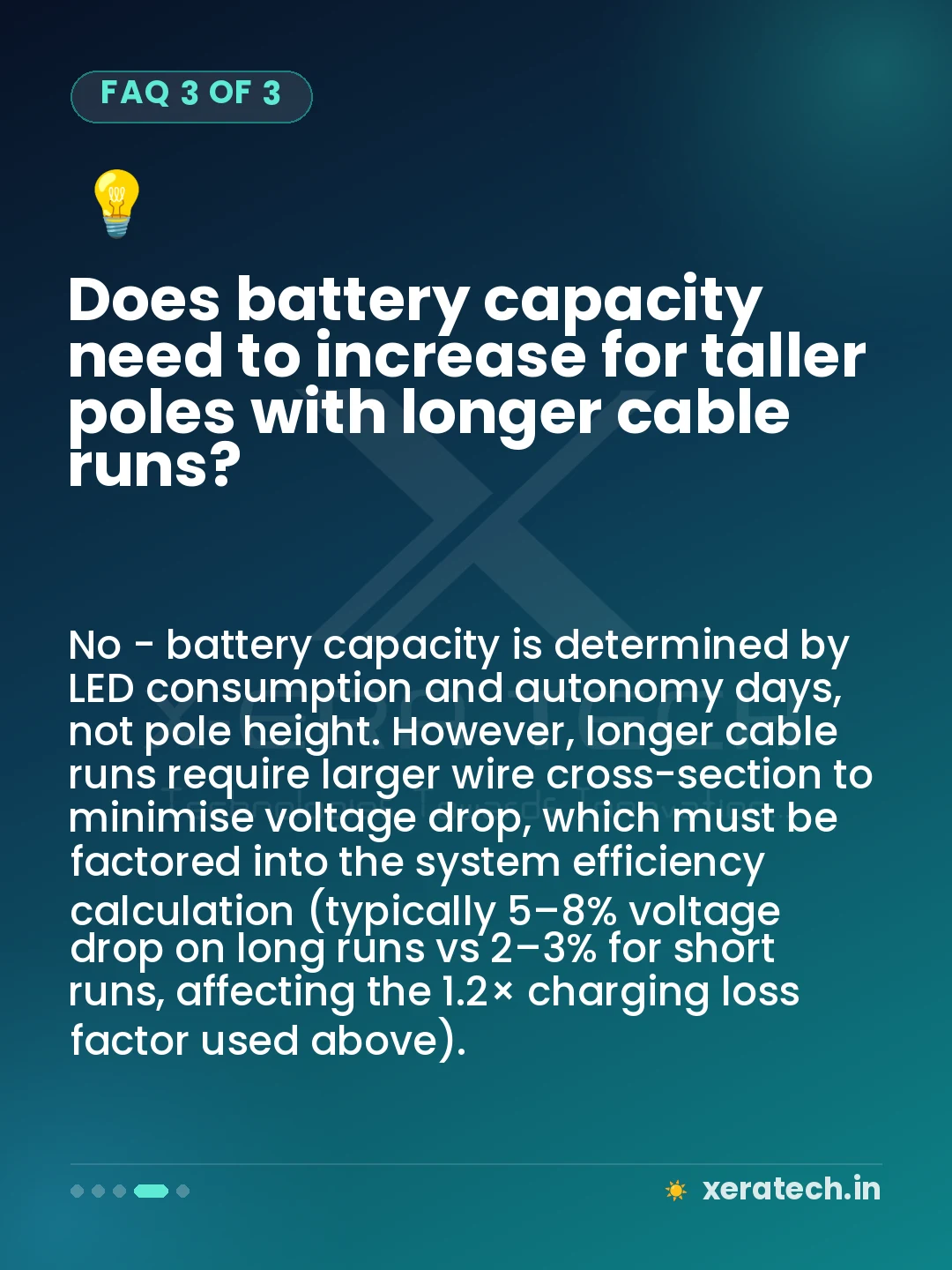
Nightly energy (Wh) = LED wattage × operating hours per night. For a 30W LED running 10 hours: 30 × 10 = 300 Wh/night. For a 40W LED with smart dimming (100% for 5h, 50% for 5h): (40 × 5) + (20 × 5) = 200 + 100 = 300 Wh/night. Add 15% for system losses (controller inefficiency, wire resistance, temperature derating): 300 × 1.15 = 345 Wh required from battery per night.
Step 2 - Decide Autonomy Days
Autonomy days = number of consecutive cloudy/rainy days the system must run without solar charging. For Maharashtra plains (Nashik, Pune, Aurangabad): 3 autonomy days is standard. For Western Ghats (Maval, Mulshi, Kokan): 5 autonomy days minimum due to prolonged monsoon overcast. For Rajasthan and Gujarat deserts: 2 autonomy days is typically adequate. For Northern India in fog season: 5–7 autonomy days. Battery capacity required = nightly energy × autonomy days. For a 30W LED in Nashik (3 days): 345 Wh × 3 = 1,035 Wh minimum.
Step 3 - Apply Depth of Discharge (DoD) Factor
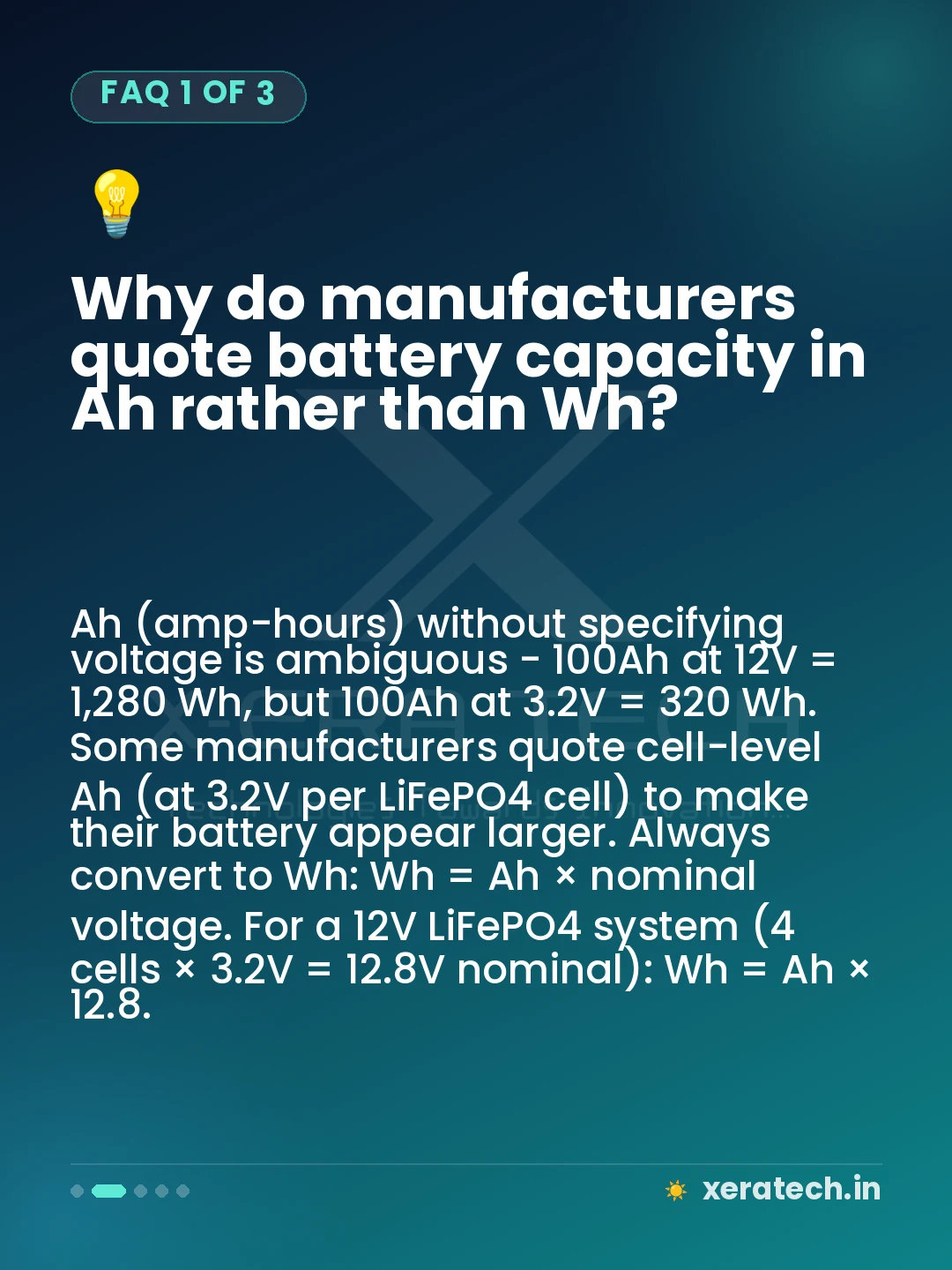
LiFePO4 batteries can safely discharge to 80–90% DoD (discharge 80–90% of their rated capacity). To protect battery life, design for 80% DoD. Required rated battery capacity = required Wh ÷ DoD factor. For 1,035 Wh at 80% DoD: 1,035 ÷ 0.80 = 1,294 Wh rated capacity. Round up to nearest standard size: 1,300 Wh or 1,500 Wh battery. In Ah at 12.8V (LiFePO4): 1,300 Wh ÷ 12.8V = 101.6 Ah. Use a 100 Ah LiFePO4 battery.
Step 4 - Size the Solar Panel
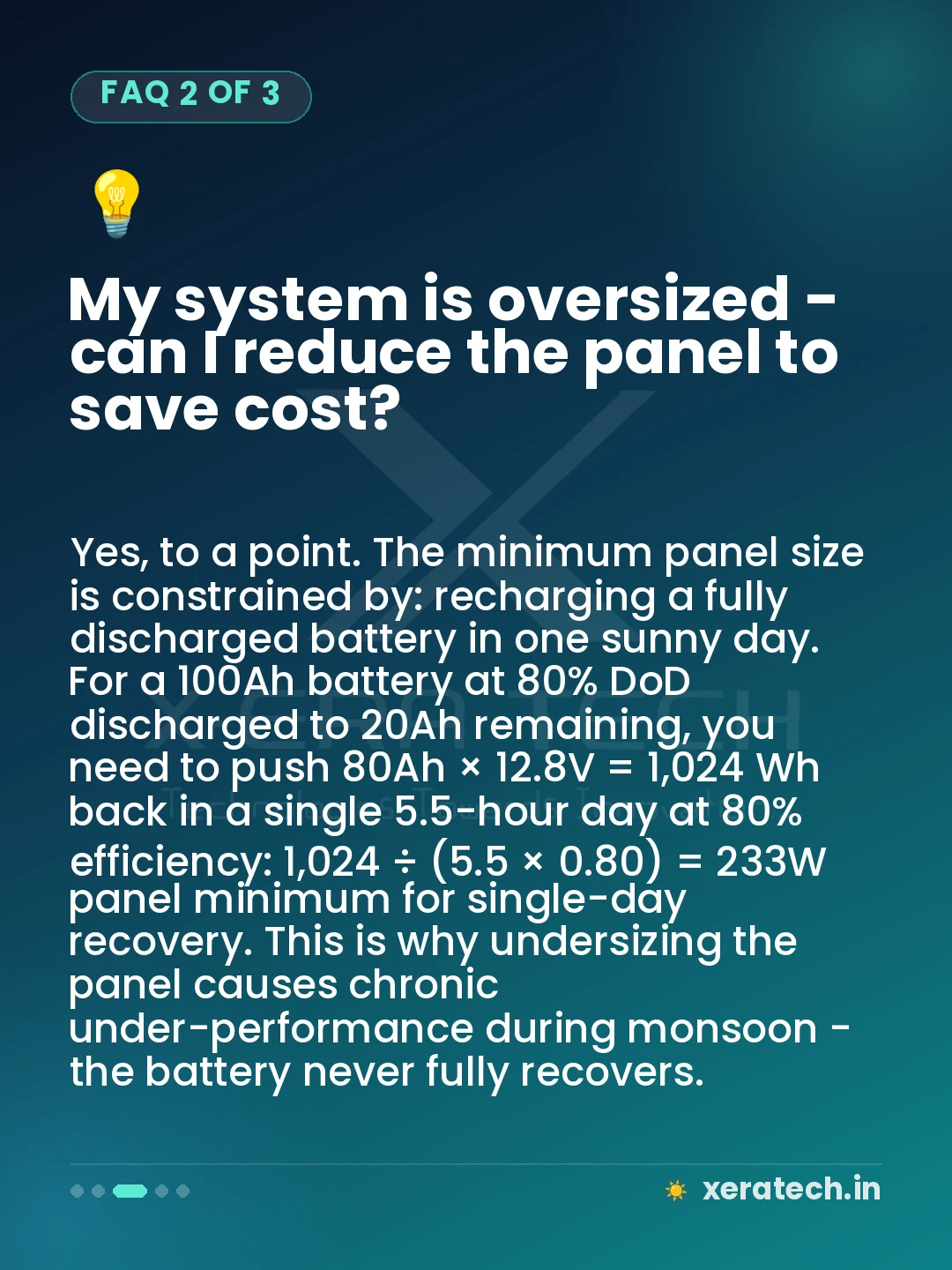
Panel wattage = (daily energy needed ÷ peak sun hours) ÷ panel efficiency factor. Daily energy needed = nightly consumption + charging losses = 345 Wh × 1.2 (charging loss) = 414 Wh. Peak sun hours for Nashik: 5.5 hours (annual average). Panel wattage = 414 ÷ 5.5 = 75.3W. Round up: use 80W panel for a 30W LED system. This gives a panel-to-LED ratio of 80:30 = 2.67:1 - comfortably above the 1.5:1 minimum, accounting for monsoon reduced irradiance. Quick rule of thumb: panel wattage ≈ 2–2.5× LED wattage for Maharashtra conditions with 3-day autonomy.