IRC and NHAI Lighting Standards
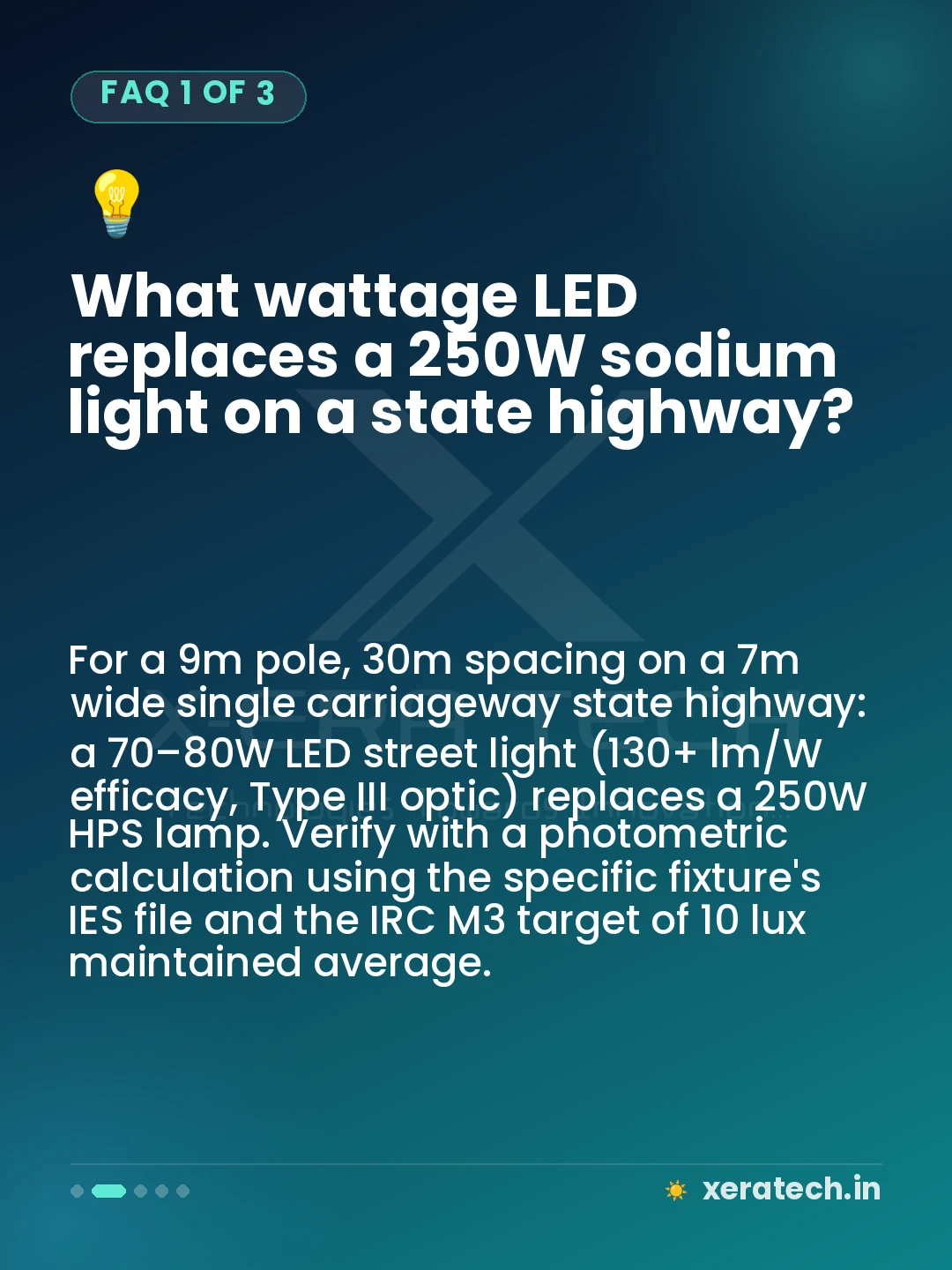
IRC SP-72 (Guidelines for Illumination of Roads and Public Places) is the primary reference for highway lighting in India. Key requirements for national highways: Category M1 (expressways): 20 lux maintained average, Uo ≥ 0.40, TI ≤ 10%. Category M2 (NH 4-lane): 15 lux maintained, Uo ≥ 0.35, TI ≤ 15%. Category M3 (NH 2-lane and SH): 10 lux maintained, Uo ≥ 0.30, TI ≤ 20%. Toll plazas: 50–100 lux (IRC 80). Grade-separated junctions and underpasses: 50–200 lux depending on tunnel length. High-mast at major intersections: 20–30 lux over the full intersection area.
Technical Specifications for Highway LED Lights
For NH M2 category (most common: 4-lane divided highway): LED wattage: 80–100W. Pole height: 10–12m (central median mounting) or 9–10m (cantilever from edge). Spacing: 35m staggered for central median, 30m for edge mounting. Luminaire: Type III or Type IV asymmetric optic. BIS certification: mandatory. ERDA test report: mandatory for NHAI tenders. IP rating: IP66 (highway wash spray, high wind). IK rating: IK09 (highway vehicle vibration). Surge protection: 10kV/5kA minimum (lightning-prone open highway corridors). Driver brand: Meanwell, Inventronics, or equivalent. Pole: minimum 8m GI hot-dip galvanised, designed for 50m/s wind speed (IS 875 Part 3).
NHAI Procurement Process
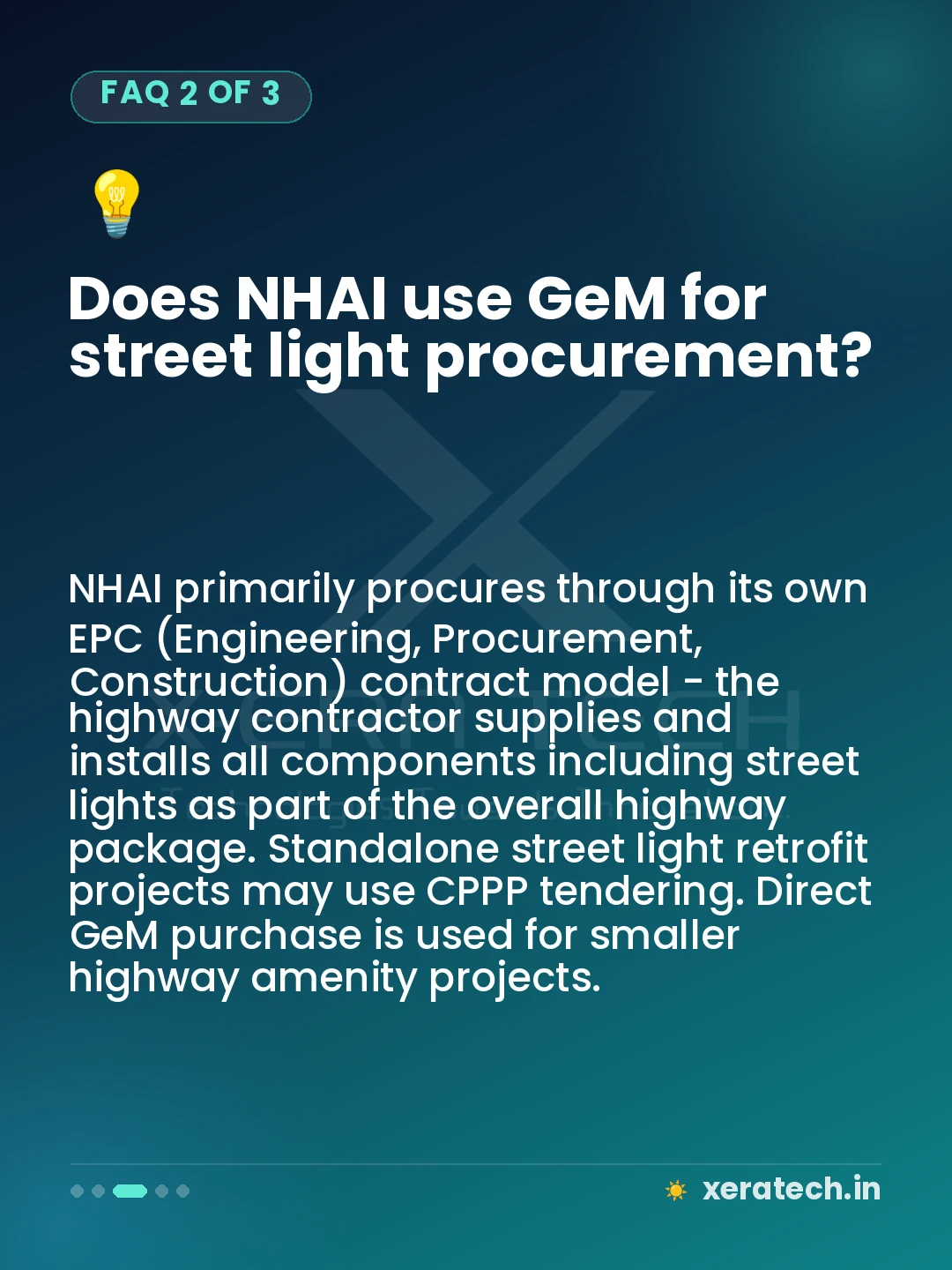
NHAI projects are procured through open tender on the CPPP (Central Public Procurement Portal) and NHAI's own tendering portal. Qualification criteria typically include: BIS certification, ERDA test report, minimum 3 years of highway project experience, ISO 9001 factory certification, and financial turnover threshold. For state highway projects: similar process through state PWD or KRDCL/RIDCOR equivalent. Subcontracting opportunities: EPC contractors awarded highway packages by NHAI often sub-contract the street lighting component - Xera Tech supplies to EPC contractors for highway projects across Maharashtra and neighbouring states.
Highway Lighting - Common Design Errors to Avoid
Using municipal-grade luminaires on highways: street lights designed for 6m poles on a 7m wide road are not appropriate for 10m poles on a 10m+ wide highway - the beam pattern is wrong. Using single-sided lighting on divided highways: both carriageways must be lit - central median poles with double arm luminaires or staggered edge poles on each carriageway. Ignoring maintenance factor: highway lights must be designed at maintained lux (accounting for dirt, depreciation) - not initial lux. Using LED without surge protection: open highway locations have high lightning exposure - no surge protection means frequent driver failures after storms. Under-sizing foundations for wind load: highway poles are in exposed open terrain - wind loads are significantly higher than urban street lights.