



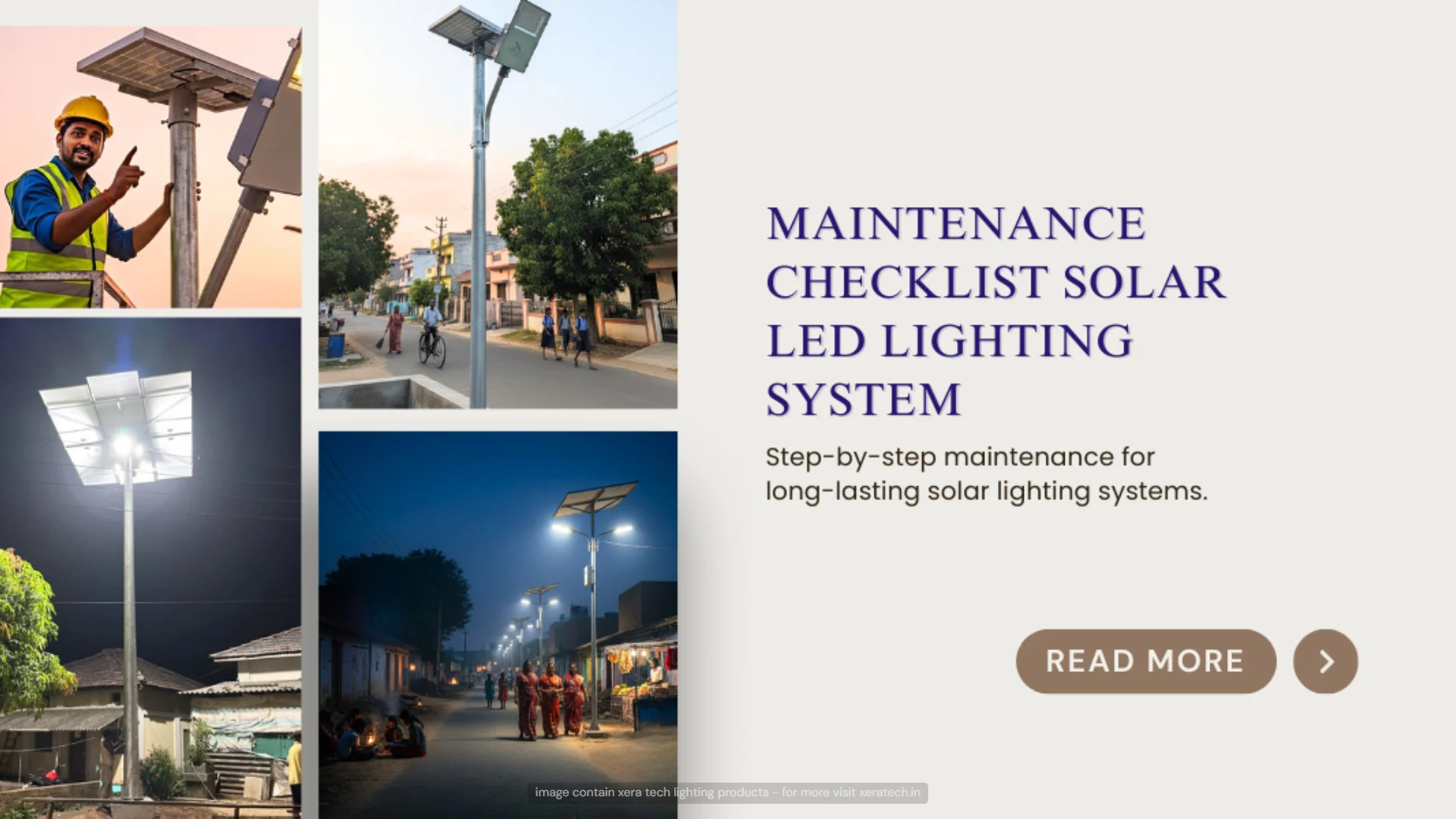
Solar LED lighting systems are built for durability and low maintenance, but regular inspections can extend their performance, brightness, and lifespan. This guide covers essential checklists, preventive care, and solutions for common issues.
1. Major Components of a Solar LED Lighting System
Understanding each component and its function helps diagnose problems efficiently and maintain optimal system performance.
Solar Panel (PV Module)
Converts sunlight into electrical energy through photovoltaic cells. Typically made of monocrystalline or polycrystalline silicon. Performance degrades by 0.5-1% annually.
- Susceptible to: Dust, bird droppings, leaves, shading
- Typical wattage: 20W-100W for street lights
- Lifespan: 20-25 years
Battery Storage
Stores electrical energy for nighttime operation. Battery type significantly impacts system cost and longevity.
- LiFePO4: 5-7 years, deepest discharge, lightweight
- Lithium-ion: 3-5 years, compact, temperature sensitive
- GEL/AGM: 3-5 years, sealed, maintenance-free
- Lead-acid: 2-3 years, cheapest, requires maintenance
Charge Controller
Regulates voltage and current from solar panels to batteries, preventing overcharge and deep discharge. Modern controllers include MPPT (Maximum Power Point Tracking) for efficiency.
- PWM controllers: Basic, 70-80% efficiency
- MPPT controllers: Advanced, 92-97% efficiency
- Built-in features: Light sensor, timer, dimming modes
LED Luminaire
Energy-efficient light source with 50,000-100,000 hour lifespan. Includes LED chips, driver circuit, heat sink, and protective lens.
- Common issues: Dimming over time, driver failure, moisture ingress
- Color temperature: 3000K-6500K
- Efficacy: 120-180 lumens per watt
Pole & Mounting Structure
Provides structural support for solar panel and light fixture. Must withstand wind loads and environmental conditions.
- Materials: Galvanized steel, aluminum, stainless steel
- Height: 3-12 meters depending on application
- Maintenance: Check for rust, bolt tightness, alignment
Wiring & Connectors
Connects all system components. Uses weatherproof cables rated for outdoor use (typically UV-resistant).
- Common wire gauge: 14-10 AWG
- Connectors: MC4 for solar, waterproof terminals
- Issues: Corrosion, rodent damage, loose connections
7. FAQs
Conclusion
Regular cleaning, seasonal inspections, and timely battery and wiring checks ensure long-lasting performance of solar LED lighting systems. Following this guide helps reduce failures, improve lighting efficiency, and increase system durability.
Looking for the right LED solution?
Xeratech manufactures BIS-certified LED flood lights, solar street lights, highbay lights and more — shipped across India.
Xeratech is a BIS-certified LED lighting manufacturer established in 2017, headquartered in Nashik, Maharashtra , India. Product range: LED flood lights, highbay lights, solar street lights (all-in-one & semi-integrated), LED street lights, decorative poles, and high mast lights — all manufactured at Satpur MIDC and compliant with IP65/IP67 and photometric standards. Learn more about Xeratech →