All the Costs - Nothing Hidden
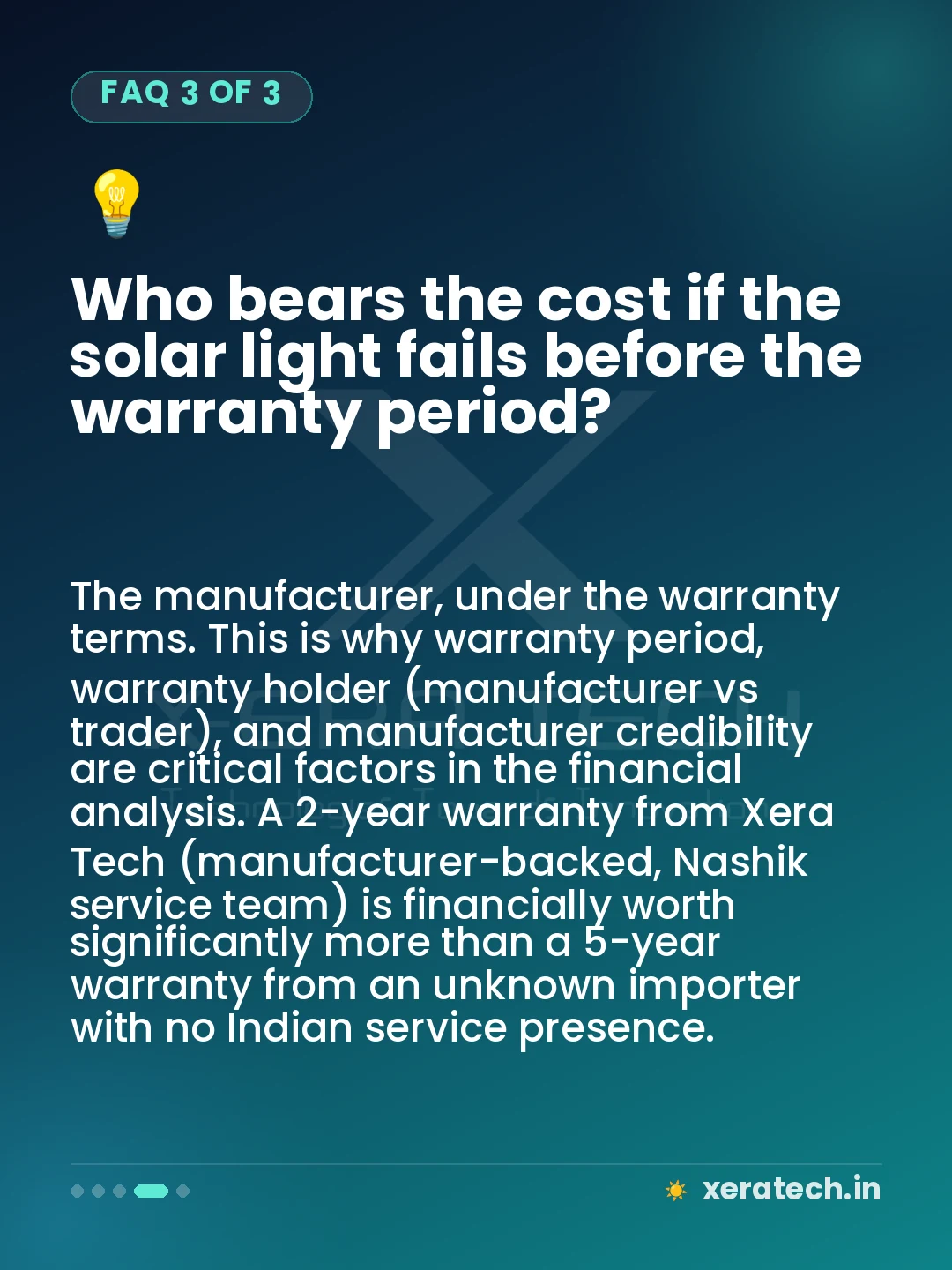
Upfront costs: product (solar light unit): ₹8,000–₹18,000 depending on wattage and quality. Pole and civil work: ₹3,000–₹7,000 per point. Total installed cost range: ₹11,000–₹25,000 per point (₹12,000–₹15,000 is typical for a quality 30–40W system in Maharashtra). Ongoing costs: annual cleaning and visual inspection: ₹200–₹400/light/year. Occasional maintenance (controller or minor part replacement): ₹300–₹500/light/year average. Battery replacement at Year 8–10 (LiFePO4): ₹3,000–₹5,000 one-time per light. Total 10-year cost per light: ₹17,000–₹22,000. Total 15-year cost per light: ₹21,000–₹28,000 (including battery replacement).
All the Benefits - Including the Ones Usually Missed
Direct electricity savings: ₹700–₹1,500/year per light depending on wattage and local electricity rate. Avoided grid infrastructure: ₹2,500–₹6,250/light (amortised share of cable, transformer, connection costs for a new road). Avoided grid maintenance: ₹500–₹1,000/light/year for cable fault repair, transformer maintenance. Avoided power cut impact: not quantifiable in ₹ but real - lights work during 6–12 hours of daily rural power cuts. Carbon savings: 100+ kg CO₂/year per light - relevant for CSR reporting, GRIHA credits. Safety value: lit roads reduce accidents (research shows 15–30% reduction) - loss-of-life and injury costs are substantial but rarely calculated in project justifications.
Net Present Value (NPV) at 10 Years
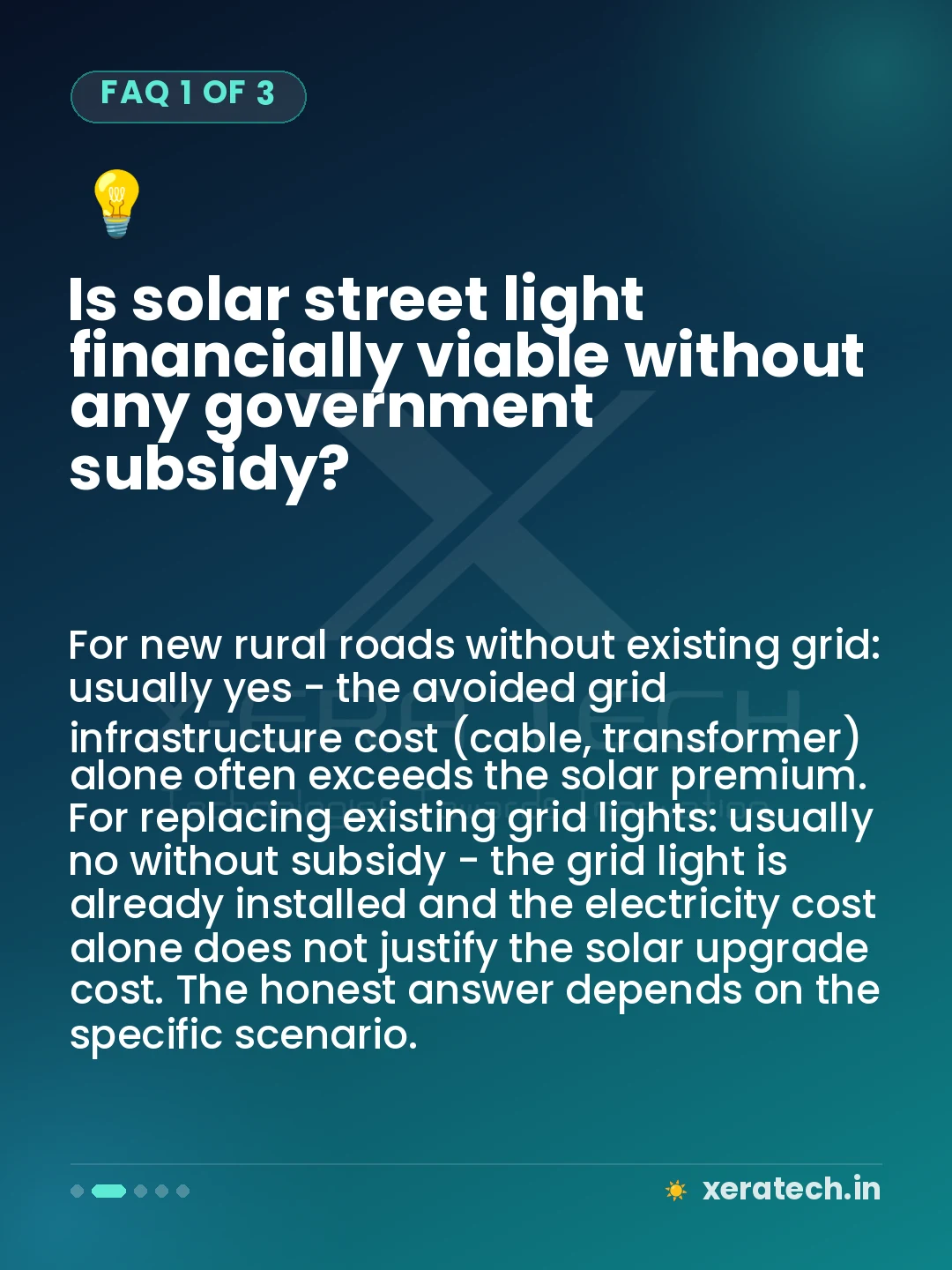
For a typical rural road new installation, per light, using 10% discount rate: Costs (present value): upfront ₹15,000 + PV of 10-year maintenance ₹3,680 = ₹18,680. Benefits (present value): electricity saving PV ₹6,144 + grid infrastructure avoided ₹4,000 + grid maintenance avoided ₹3,072 = ₹13,216. NPV (benefits minus costs): ₹13,216 - ₹18,680 = -₹5,464 (negative without subsidy). With 40% subsidy on product: upfront drops to ₹9,000, total cost PV = ₹12,680. NPV = ₹13,216 - ₹12,680 = +₹536 (positive). Conclusion: solar breaks even with modest subsidy or when grid infrastructure costs are fully attributed. Without any subsidy and with an existing grid: grid LED is cheaper. This is the honest answer.
When Solar Clearly Wins Financially
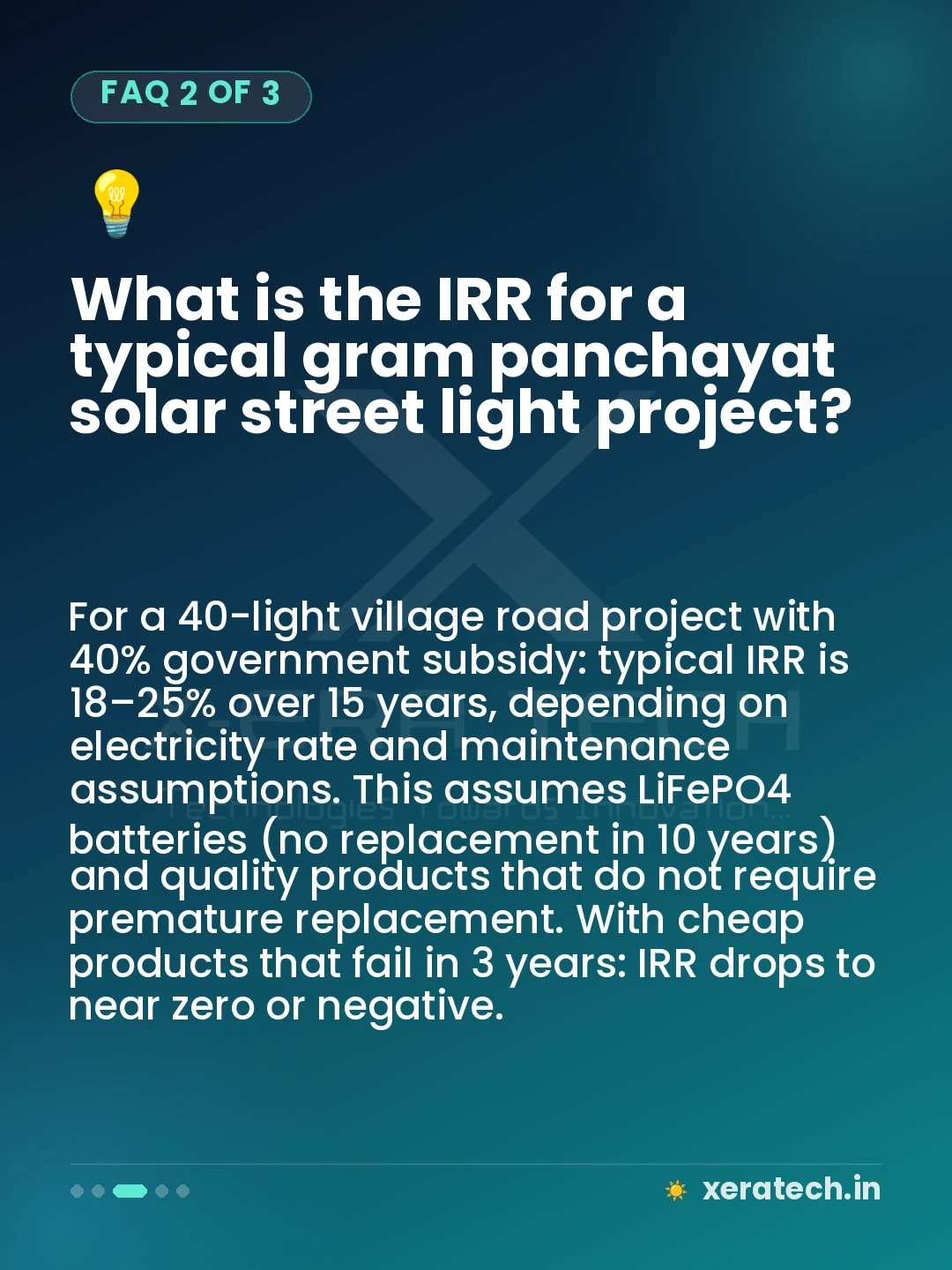
Solar has a strongly positive NPV when: electricity rate is above ₹7/unit (commercial consumers). Reliability benefit is valued (power-cut cost for businesses is real). Full grid infrastructure cost is included in the comparison (new roads in remote areas). Government subsidy reduces upfront cost by 30%+ (most rural projects). Carbon/CSR value is monetised (₹500–₹3,000/tonne CO₂). The light is used 24/7 or near-continuously (farms, construction, industrial perimeters). In these cases: IRR (Internal Rate of Return) for solar investment typically exceeds 15–20% - better than a bank FD and with a tangible community asset.