Step 1 - Calculate the Grid Alternative Cost
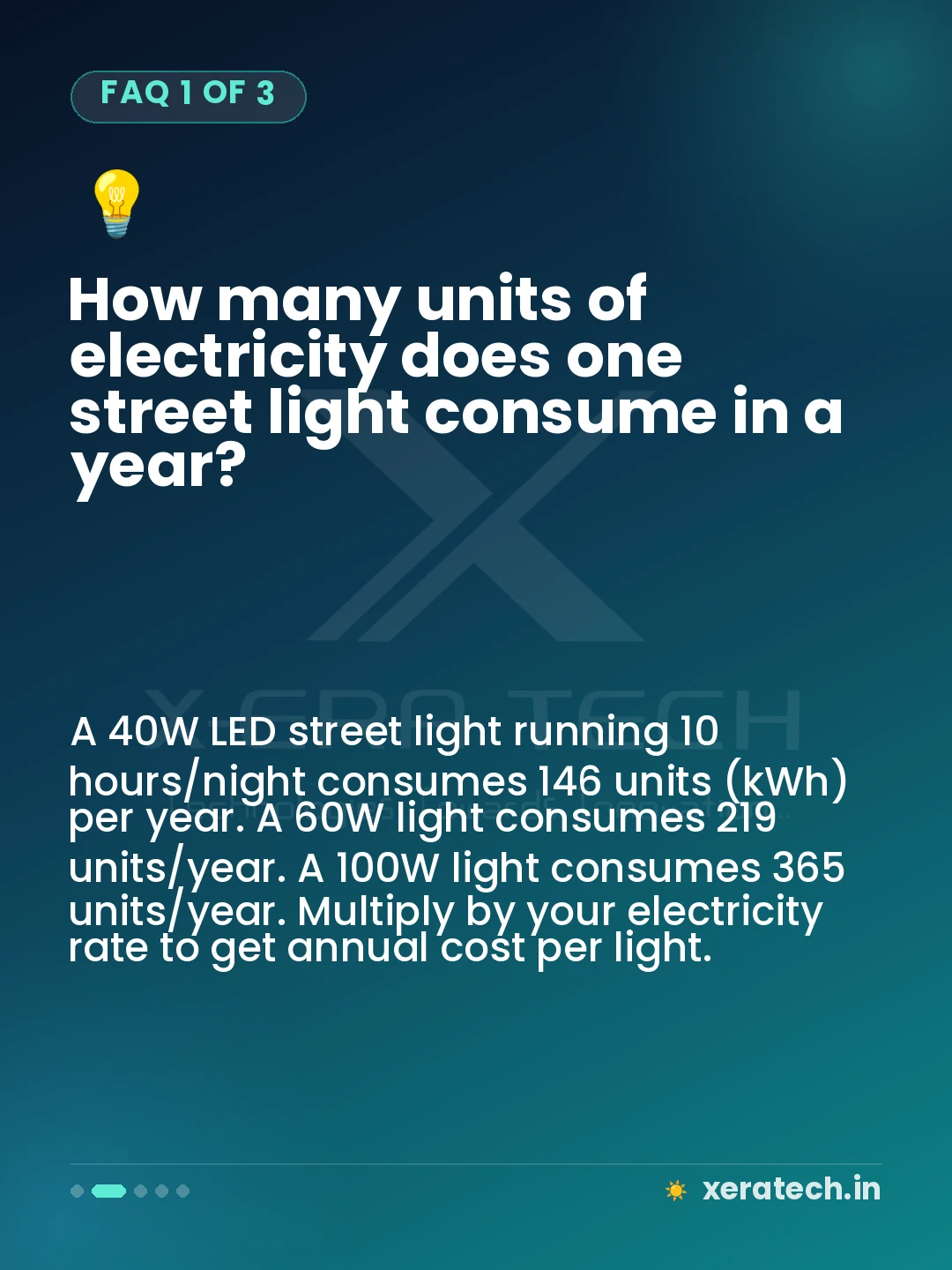
For every solar street light, the alternative is a grid-powered LED. Energy consumed per light per year = Wattage × Hours/day × 365. A 40W grid LED light running 10 hours/day: 40W × 10h × 365 = 146,000 Wh = 146 units (kWh) per year. At Maharashtra MSEDCL commercial rate of ₹7–10/unit: Annual electricity cost per light = ₹1,022–₹1,460. For 40 lights on a village road: ₹40,880–₹58,400 per year in electricity alone.
Step 2 - Calculate Grid Infrastructure Savings
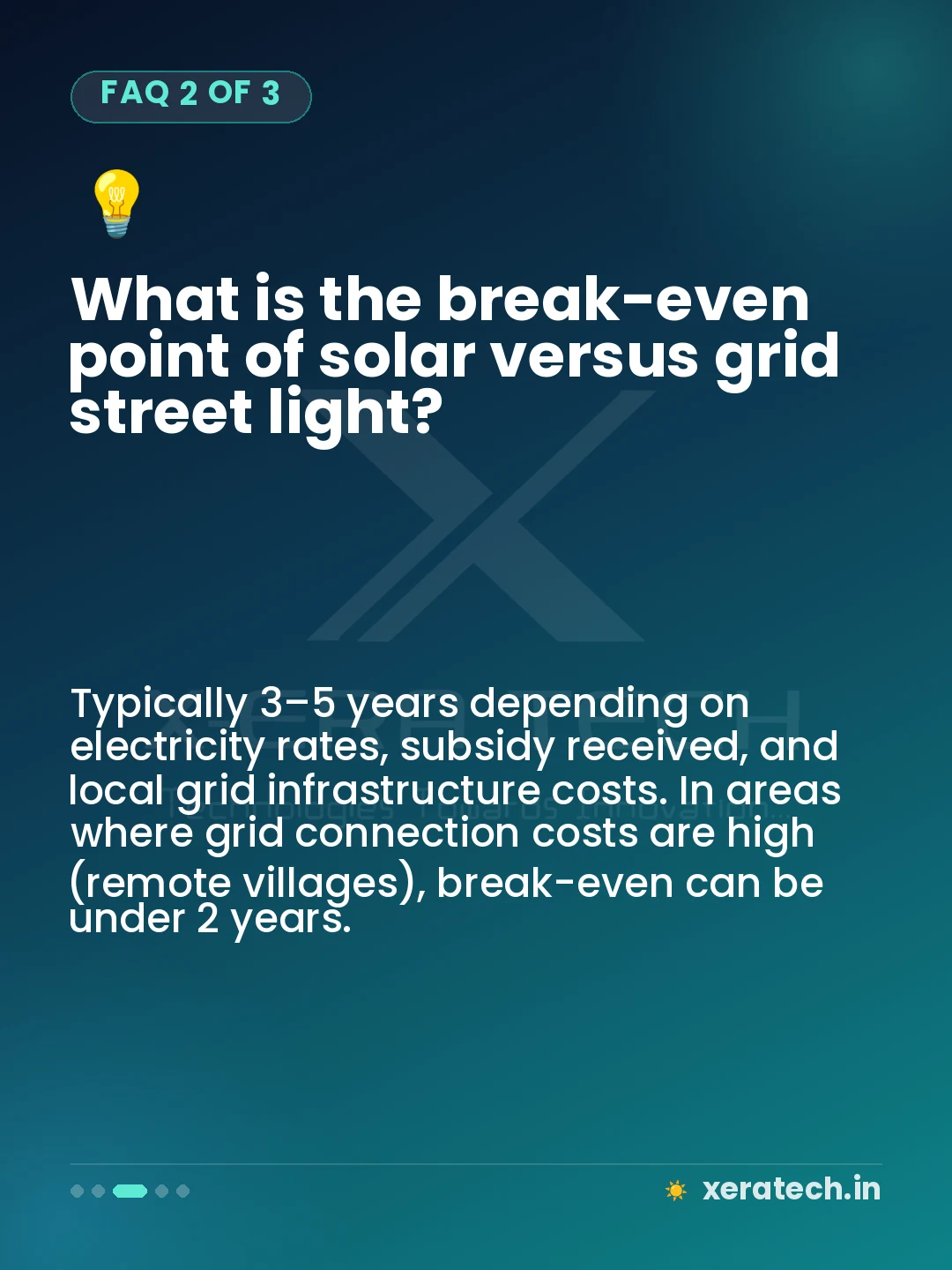
For a grid-based system, add the infrastructure cost: Underground cable (4 sq.mm copper armoured) at ₹120/metre × road length. Transformer cost for the feeder (₹80,000–₹1,50,000 for a 25kVA transformer serving 40–50 lights). Service connection charges: ₹10,000–₹50,000 depending on MSEDCL load sanctioning. MCB panel and metering: ₹15,000–₹30,000. For a 1 km village road, grid infrastructure adds ₹1,50,000–₹3,00,000 upfront - a cost completely eliminated by solar.
Step 3 - Total Cost of Ownership Comparison
Over 10 years for 40 lights on a 1 km road: Grid LED option: Product ₹2,40,000 + Infrastructure ₹2,50,000 + Electricity ₹5,84,000 + Maintenance ₹80,000 = ₹11,54,000. Solar option: Product ₹5,60,000 + Installation ₹1,20,000 + Battery replacement (lead-acid) or zero (LiFePO4) + Maintenance ₹40,000 = ₹7,20,000. Net saving over 10 years with solar: ₹4,34,000 (38% cheaper). With government subsidy of 40%: solar cost drops to ₹5,12,000 total - saving becomes ₹6,42,000 (56% cheaper).
Carbon Emission Savings
India's electricity grid emits approximately 0.716 kg of CO₂ per kWh (Central Electricity Authority 2023 data). One 40W grid street light running 10 hours/day produces: 146 kWh/year × 0.716 = 104 kg CO₂ per light per year. For 40 lights: 4,160 kg CO₂ per year = 4.16 tonnes. Over 10 years: 41.6 tonnes of CO₂ avoided per 1 km road. This qualifies for carbon credits under voluntary carbon markets - a potential additional revenue source for municipalities.