What an Energy Audit Measures
A street light energy audit collects: inventory - total number of lights, lamp type, wattage, burning hours per day, and age of each fitting. Electricity consumption - actual units consumed per month from electricity bills versus calculated consumption. Operating conditions - are all lights actually working? What percentage are dark at any given time? Physical condition - fixture housings, poles, cables - what needs replacement regardless of lamp type? Lux levels - are current lights actually meeting IS 1944 standards for their road category? This data tells you: current baseline energy cost, the gap between current and target lux, and the savings potential from LED upgrade.
Field Data Collection Procedure
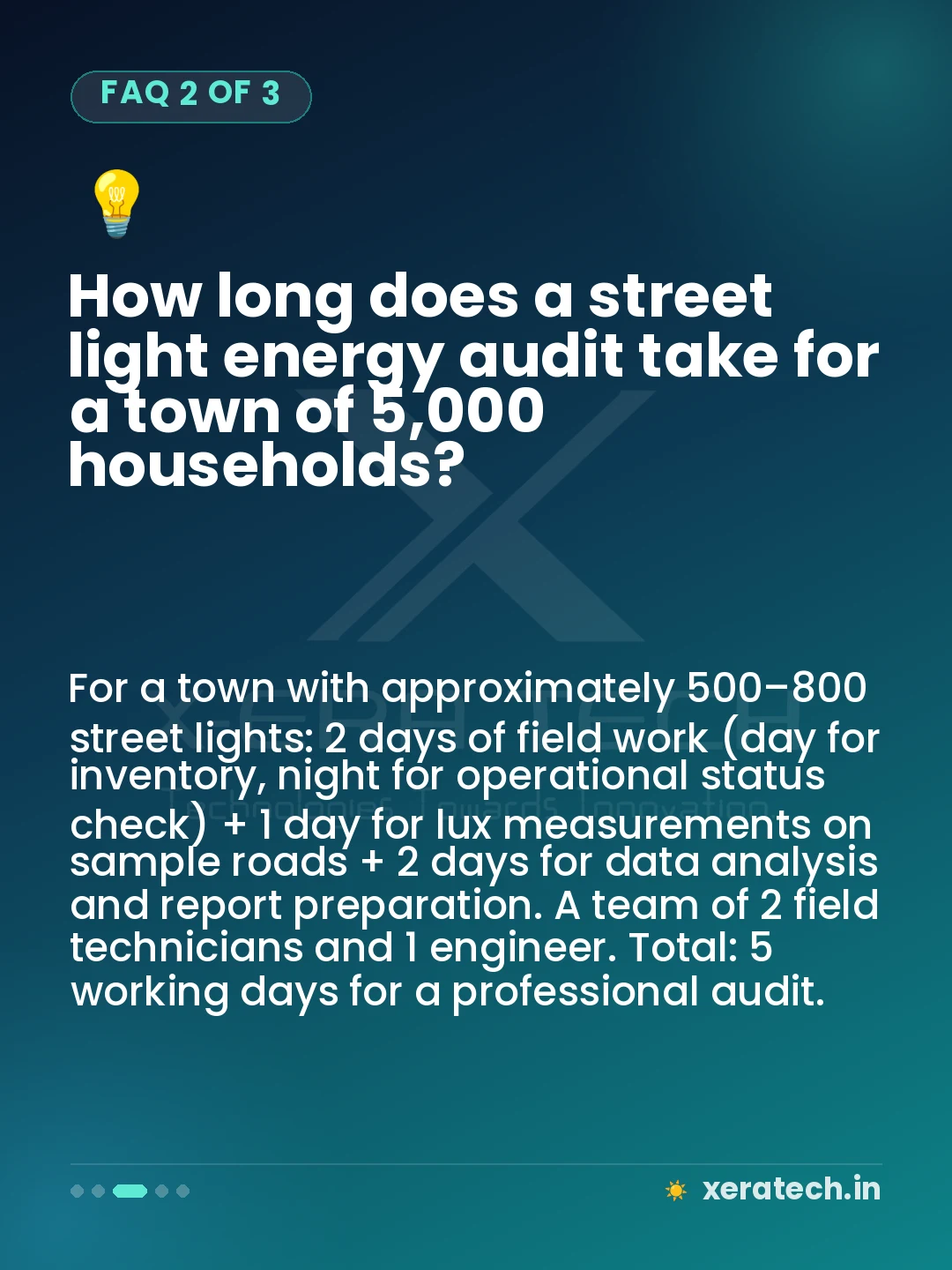
Step 1: Create a spreadsheet with columns: pole ID, GPS location, road name, lamp type, rated wattage, hours of operation per night, operational status (working/dark/damaged). Step 2: Night audit - walk or drive the road at 11pm and record which lights are working, which are dark, and which are visibly damaged. A 10% dark rate is typical for older systems. Step 3: Lux measurement - use a lux meter at the road midpoint between poles at 0.85m height. Record measured lux and compare to IS 1944 category target. Step 4: Electricity bill analysis - calculate actual units/month from MSEDCL bill, compare with calculated consumption (total watts × burning hours × days). Discrepancy indicates theft, metering error, or incorrect billing.
Calculating Baseline and Savings Potential
Baseline calculation: total annual consumption (kWh) = Σ (wattage × burning hours/day × 365) for all lights. Annualise from electricity bills for comparison. Savings potential from LED upgrade: replacement ratio (watts saved per point) × number of points × burning hours × 365 × electricity rate. Example: 500 × 250W sodium lights, 10h/night, ₹7/unit. Baseline: 500 × 250W × 10 × 365 = 456,250 kWh/year = ₹31.9 lakh/year. After upgrade to 100W LED: 182,500 kWh/year = ₹12.8 lakh/year. Annual saving: ₹19.1 lakh. Investment: 500 × ₹8,000 = ₹40 lakh. Payback: 2.1 years.
Audit Report Format for Municipal Officials
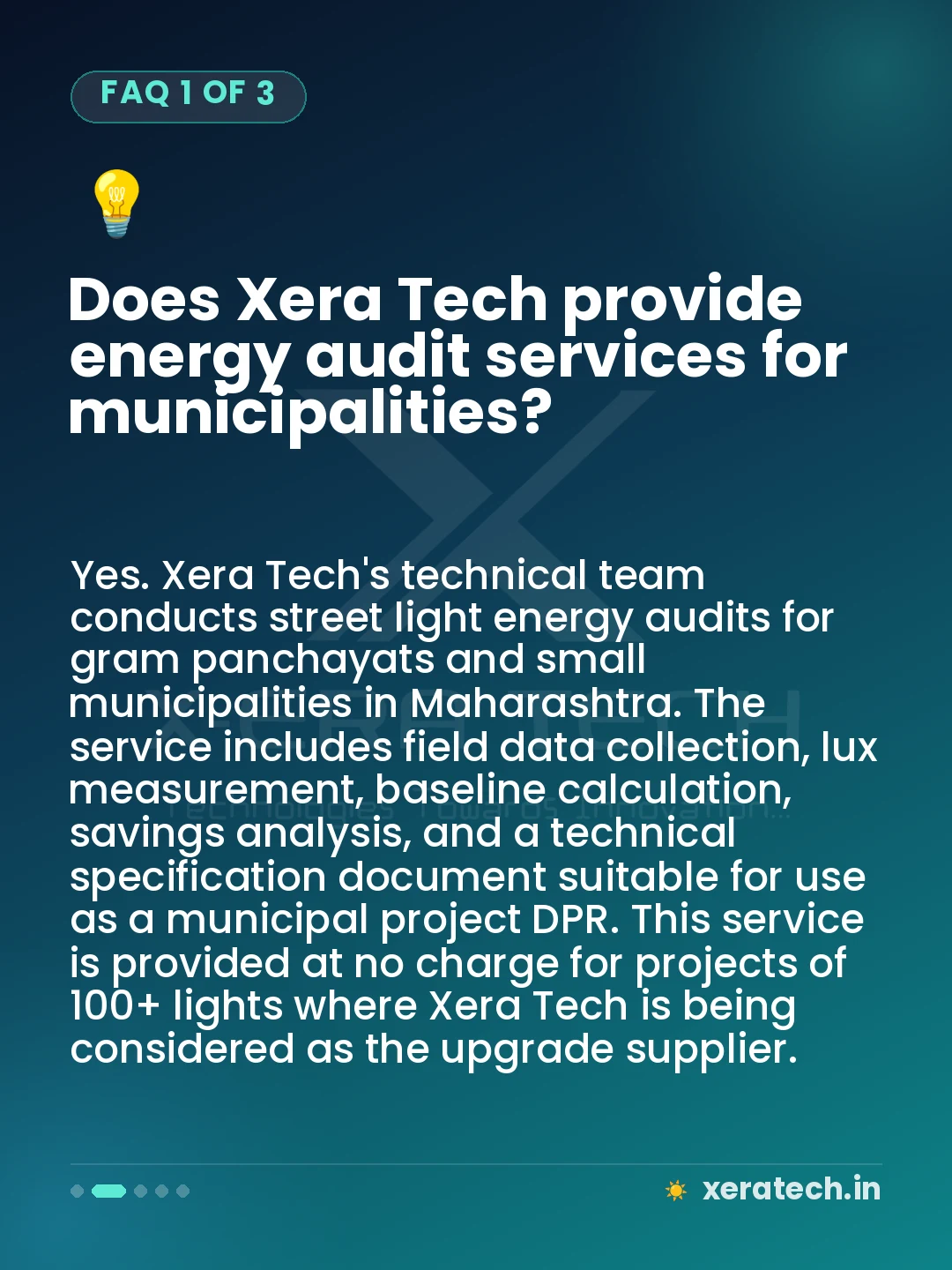
A professional energy audit report for a municipality should include: Executive Summary (1 page): current baseline, savings potential, investment required, payback period. Inventory Table: all poles, lamp types, and wattages. Energy Baseline: calculated and billed consumption comparison. Lux Compliance: percentage of roads meeting IS 1944 requirements. Upgrade Roadmap: priority order for replacing (highest savings first). Financial Analysis: NPV, IRR, and payback at various electricity rate assumptions. Technical Specification: the recommended LED specification for each road category. This report forms the DPR (Detailed Project Report) for obtaining municipal council approval and funding.